
Insights & Updates
Small Beverage Production Line Selection Guide for Small Factories
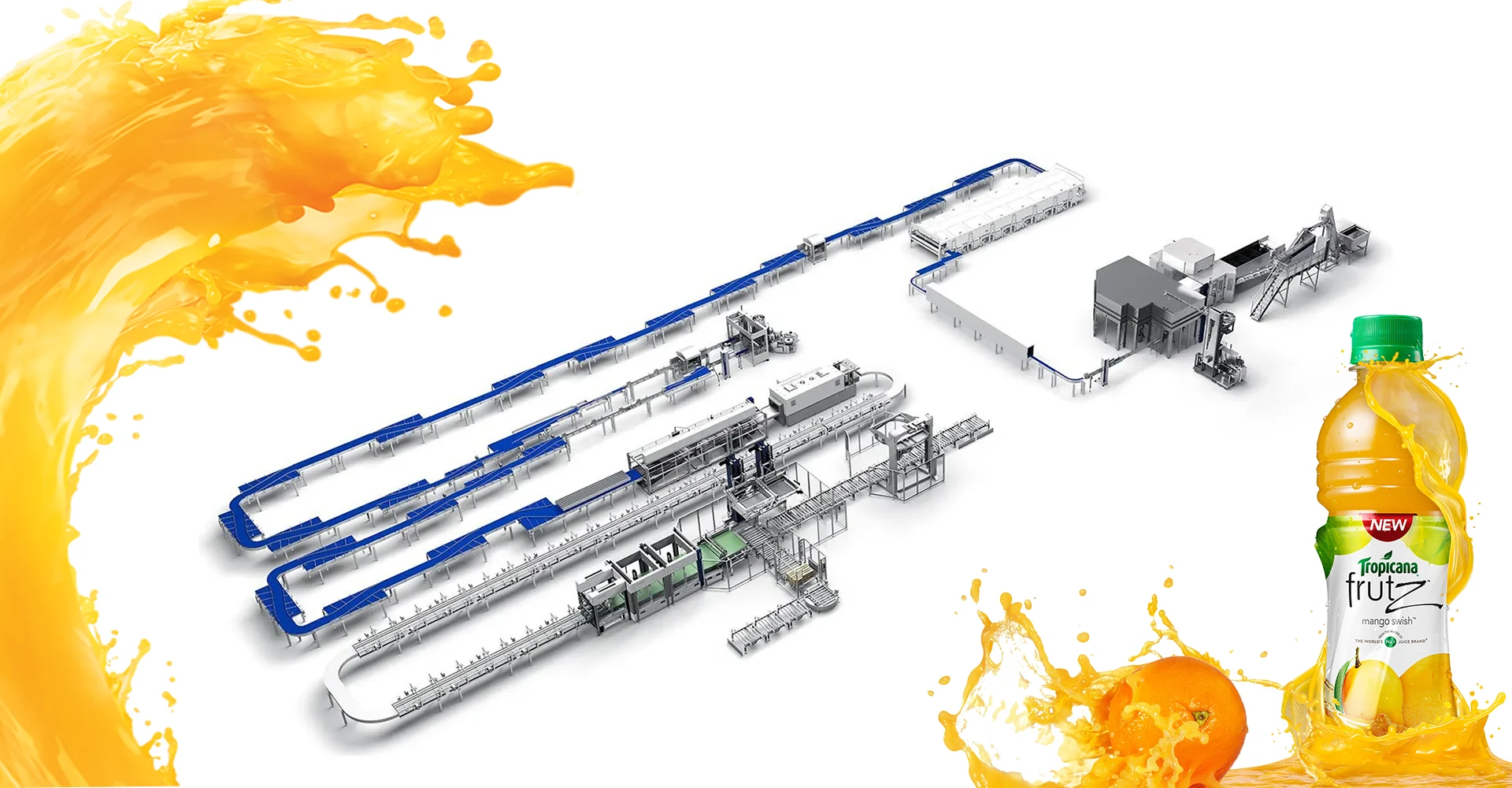
1. Select Scale by Production Capacity (500ml bottle reference)
-
Micro Trial Production (Workshop / Startup)
500–1,500 bottles/hour; daily output below 10,000 bottles; mainly semi-automatic; floor area 20–30㎡; investment 5,000–20,000 USD.
Suitable for small-batch multi-product trial sales in local markets, operated by 2–3 workers.
-
Standard Small Scale (Mass Production / Regional Sales)
2,000–3,000 bottles/hour; daily output 10,000–50,000 bottles; compact integrated automatic rinsing-filling-capping machine; floor area 30–50㎡; investment 20,000–50,000 USD.
Most versatile, compatible with fruit juice, tea drinks and bottled water; operated by 3–4 workers.
-
Medium Entry Level (Capacity Expansion / Stable Orders)
4,000–6,000 bottles/hour; daily output 50,000–100,000 bottles; modular fully automatic line; floor area 50–80㎡; investment 50,000–100,000 USD.
For factories with steady order flow and future expansion plans.
2. Select by Factory Area
- Under 50㎡: Choose compact line of 500–2,000 bottles/hour, linear layout, 10–15 meters in length.
- 50–100㎡: Choose 2,000–3,000 bottles/hour standard small line; U-shaped layout saves space.
- Over 100㎡: Upgrade to 4,000–6,000 bottles/hour entry medium line with reserved expansion interface.
3. Budget Selection (2026 Reference, USD)
- 10,000–20,000 USD: Semi-automatic line (manual bottle unscrambling/capping), including basic water treatment, filling, sealing and date coding; for trial production only.
- 20,000–50,000 USD: Compact fully automatic integrated rinsing-filling-capping line with 304 stainless steel; optional hot filling / normal temperature filling, equipped with basic CIP cleaning system.
- 50,000–100,000 USD: Modular fully automatic line, equipped with homogenizer, deaerator and UHT sterilization; supports multi-product switching, with complete CIP and automatic control system.
4. Configuration by Beverage Type
- Purified / Mineral Bottled Water: Only water treatment + atmospheric filling required; recommended 2,000–3,000 bottles/hour, lowest investment.
- Fruit Juice / Tea Drinks (Hot Filling): Requires sterilization + hot filling; high-temperature resistant model; capacity 1,500–2,500 bottles/hour (hot filling runs slower).
- Carbonated Drinks: Requires carbonation mixing + isobaric filling; dedicated carbonated line, 2,000–3,000 bottles/hour.
- Plant Protein / Milk Drinks: Requires homogenization, deodorization & aseptic filling; higher configuration, capacity 1,000–2,000 bottles/hour.
5. Key Tips to Avoid Pitfalls
- Do not blindly pursue excessive capacity. Small factories usually run 8–10 hours daily; 3,000 bottles/hour produces 24,000–30,000 bottles per day, enough for regional wholesale, supermarket and e-commerce supply. Overcapacity causes idle equipment and longer payback period.
- Match automation with labor: 2–3 workers → compact full-automatic line; 5+ workers → choose semi-automatic to cut cost.
- Reserve expansion space: Prioritize modular design; can add bottle blowing, labeling and secondary sterilization modules later without replacing the whole line.
6. Direct Recommended Solutions
-
General Small Factory (Juice / Tea / Water):
2,000 bottles/hour automatic hot filling line; floor area 40㎡; investment around 30,000 USD; 3 operators, daily output 20,000 bottles, perfect for local supermarket and wholesale business.
-
Tight Budget for Trial Production:
1,000 bottles/hour semi-automatic line; investment 12,000–15,000 USD; 2 operators, floor area 25㎡; start with small orders first then expand capacity.
Talk to our engineering team
Need help planning your packaging line?
Share your product, bottle and capacity requirements for a practical equipment recommendation.