
Insights & Updates
Conveyor VFD Trips on Overcurrent: Electrical or Mechanical?
A repeatable diagnosis of repeated variable-frequency-drive overcurrent trips begins with three questions: when did it start, where does it first appear, and what changed immediately beforehand? Those answers are more valuable than a quick reset.
Controls and utility faults are best diagnosed from the load back toward the source. First determine whether the stop was commanded, protective, mechanical or caused by an unstable supply. In this case, the trip occurs during acceleration is the key observation to preserve. Use the guide to rank likely causes and document the restored condition.
Quick answer: Record the exact fault and operating state before reset. With qualified electrical personnel, separate mechanical binding and acceleration load from motor, cable, parameter, supply and drive faults.
What operators usually see
Before opening the machine, compare the visible and measured symptoms. Note whether each one is continuous, intermittent or tied to a specific station: For this case, preserve evidence that shows whether the trip occurs during acceleration.
- The trip occurs during acceleration
- Current rises as bottles accumulate
- The drive trips even with the conveyor unloaded
- Fault returns immediately after reset
Make the equipment safe and protect the product
Electrical tests must be performed by qualified personnel using the site electrical-safety and lockout/tagout procedures. Release pneumatic pressure and verify stored energy before touching actuators.
Capture the first fault, timestamp, drive current, supply pressure or voltage, PLC state, interlock chain and machine condition before resetting anything. Repeated resets destroy useful evidence. Explicitly record whether the trip occurs during acceleration.
Most likely causes, in practical checking order
1. Mechanical jam or excessive friction
A seized bearing, tight chain or product backpressure demands abnormal torque To test this explanation without guessing, record exact drive code, current, speed and line state before reset Record the result before moving to the next cause.
2. Acceleration too aggressive or motor data wrong
The drive commands current beyond the motor and inverter operating condition A practical confirmation step is to lock out and inspect conveyor chain, bearings and free movement. Compare the finding with a known-good run.
3. Motor or cable fault
Short circuit, ground fault, loose connection or insulation damage creates protective current Do not compensate for this condition in the recipe. First, compare unloaded and loaded current with the approved baseline Keep the original setting and measured result in the fault record.
4. Drive cooling or hardware issue
Overtemperature and damaged power electronics can accompany or mimic load problems Separate this cause from the others with one controlled check: qualified personnel inspect motor connections, cable and insulation Use the same product, format and speed for the comparison.
Step-by-step diagnostic procedure
Use the last known-good run as the baseline. If a check needs energized access or pressure exposure, use the manufacturer’s approved specialist procedure.
- Record exact drive code, current, speed and line state before reset
- Lock out and inspect conveyor chain, bearings and free movement
- Compare unloaded and loaded current with the approved baseline
- Qualified personnel inspect motor connections, cable and insulation
- Verify motor nameplate data, control mode and acceleration settings against commissioning records
- Inspect drive ventilation, temperature and fault history
Corrective actions that address the root cause
Apply a correction only to the cause demonstrated by the checks. Save the old parameter, removed part and measured condition for review.
- Remove mechanical binding and correct accumulation load
- Restore approved motor data and acceleration
- Repair or replace damaged motor cable or motor
- Service the drive cooling or hardware through qualified support
How to verify the repair before full-speed production
Before releasing full-speed production, reproduce the operating condition that originally exposed the fault. Then complete this acceptance check: Confirm that repeated variable-frequency-drive overcurrent trips is absent for multiple consecutive cycles, not only for one sample. Review the alarm history and keep diagnostic product segregated until the site’s quality procedure releases it.
- Confirm that repeated variable-frequency-drive overcurrent trips is absent for multiple consecutive cycles, not only for one sample.
- Compare the repaired result for “The trip occurs during acceleration” with the approved quality limit and the last known-good baseline.
- Check adjacent stations and downstream package quality for side effects associated with mechanical jam or excessive friction.
- For “Conveyor VFD Trips on Overcurrent: Electrical or Mechanical?”, record the final settings, measurements, parts used and restart authorization.
Prevent the problem from returning
Add the checks below to the operator, sanitation or preventive-maintenance standard and assign a measurable acceptance condition.
- Trend motor current by production state
- Lubricate and maintain conveyor mechanics
- Protect drive parameters
- Keep cabinet cooling clean
- Investigate the first trip instead of repeated resets
When to stop troubleshooting and call a specialist
Stop and contact the machine or component supplier when repeated variable-frequency-drive overcurrent trips cannot be isolated with non-invasive checks, when it returns after an approved repair, or when calibration requires protected service tools. Specialist support is also required when the same protective fault returns after an approved repair or structural damage is suspected. Send the service engineer the fault history, photos, samples, trend data, recipe revision and work already completed.
Relevant equipment for this application
For a project-level comparison related to repeated variable-frequency-drive overcurrent trips, see HZM Machinery’s Bottle Conveyor. Use actual product, container and utility data when evaluating whether the configuration fits the duty.
Frequently asked questions
What should be checked first when repeated variable-frequency-drive overcurrent trips?
Record the exact fault and operating state before reset. With qualified electrical personnel, separate mechanical binding and acceleration load from motor, cable, parameter, supply and drive faults. Preserve the original settings and take representative samples before repair work begins.
How can we distinguish mechanical jam or excessive friction from acceleration too aggressive or motor data wrong?
A seized bearing, tight chain or product backpressure demands abnormal torque In contrast, the drive commands current beyond the motor and inverter operating condition Compare the two mechanisms under the same operating condition by completing these checks: record exact drive code, current, speed and line state before reset Then lock out and inspect conveyor chain, bearings and free movement
Can production continue while repeated variable-frequency-drive overcurrent trips?
Only when the plant’s documented risk assessment and quality procedure allow it. For repeated variable-frequency-drive overcurrent trips, stop and segregate production when package integrity, sanitation, validated processing, pressure safety, electrical protection or an uncontrolled reject trend is involved.
What evidence will help the equipment supplier respond faster?
Provide the model and serial number, product and format, target speed, first fault, timestamps, photos or video, affected station pattern and maintenance history. For this issue, also include the trip occurs during acceleration and the measured result from this check: inspect drive ventilation, temperature and fault history
Talk to our engineering team
Need help planning your packaging line?
Share your product, bottle and capacity requirements for a practical equipment recommendation.
Equipment
Bottle Conveyor
The bottle conveyor transfers containers between filling, labelling and packing machines.
Learn more
Equipment
Bottle Water & Beverage Conveyor System
The bottled-water and beverage conveyor system connects container supply, filling and packaging.
Learn more
Equipment
Conveyor Belt System For PET Bottle And GLASS Bottle
The conveyor system transfers PET and glass bottles between production machines.
Learn more
Equipment
Packs Conveyor
The packs conveyor moves finished packs, cartons and other packaged products between packing and handling stations.
Learn more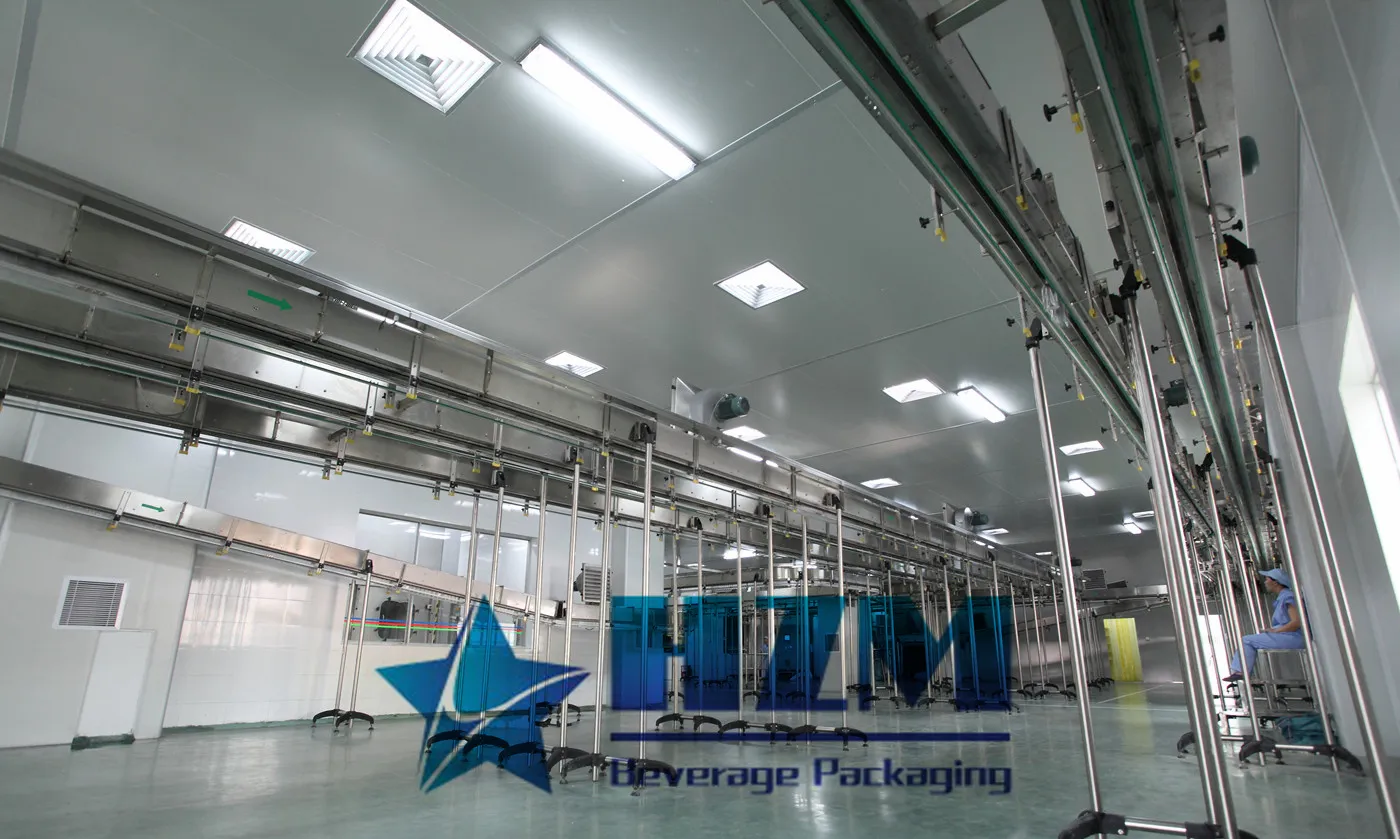
Equipment
Bottle Air Conveyor
The bottle air conveyor transfers empty PET bottles from the blowing machine to the filler.
Learn more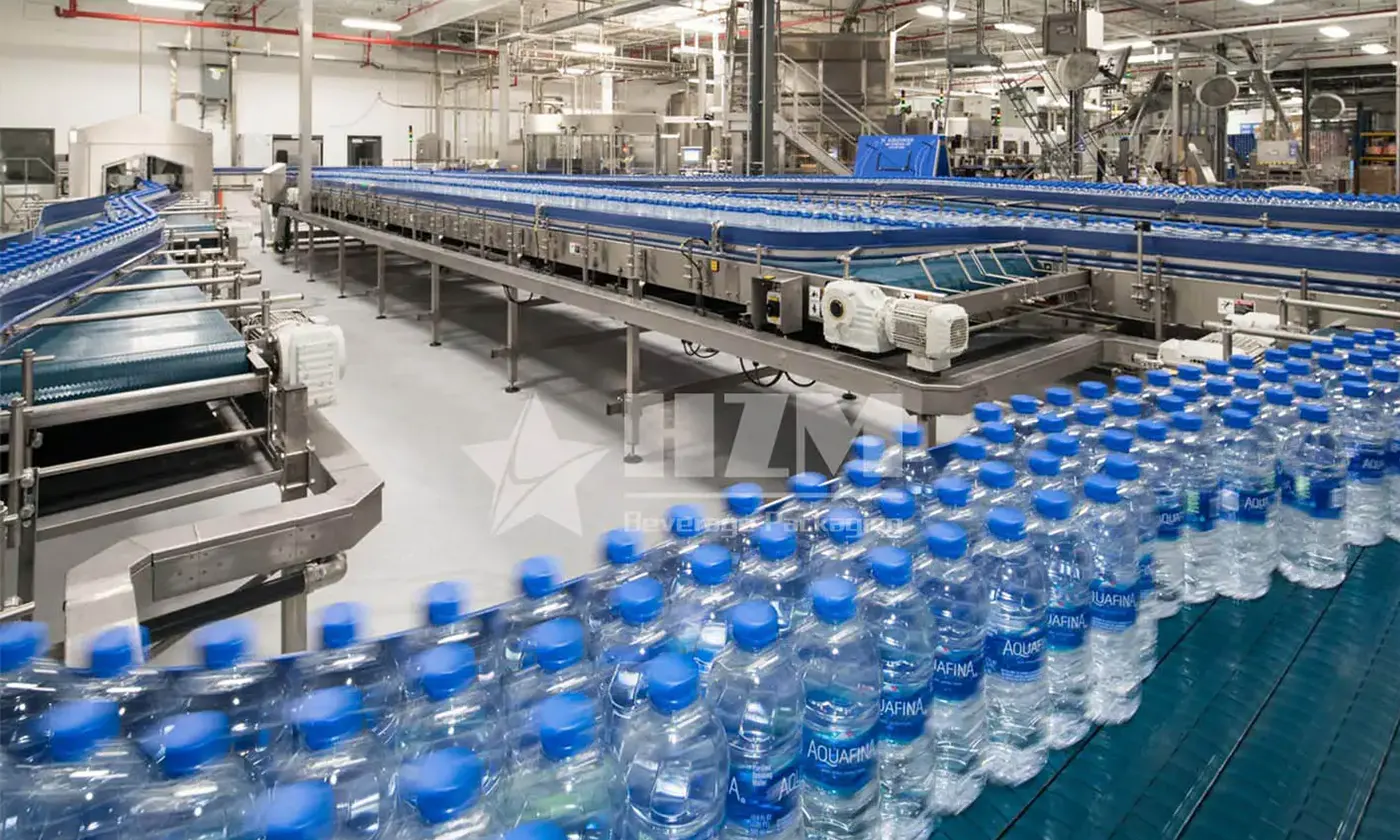
Equipment
Conveyor Belt For Bottle Water Production Line
This conveyor belt system moves bottles through a bottled-water production line, from empty-bottle feeding to filled-bottle labelling and packing.
Learn more2023-07-13
bottle conveyor
A bottle conveyor is a specialized manufacturing equipment utilized in factories and bottling plants to facilitate the smooth transportation of bottles. While sharing similarities with standard conveyor belts, the design of a bottle conveyor is tailored specifically to hold bottles upright and prevent spills
Learn more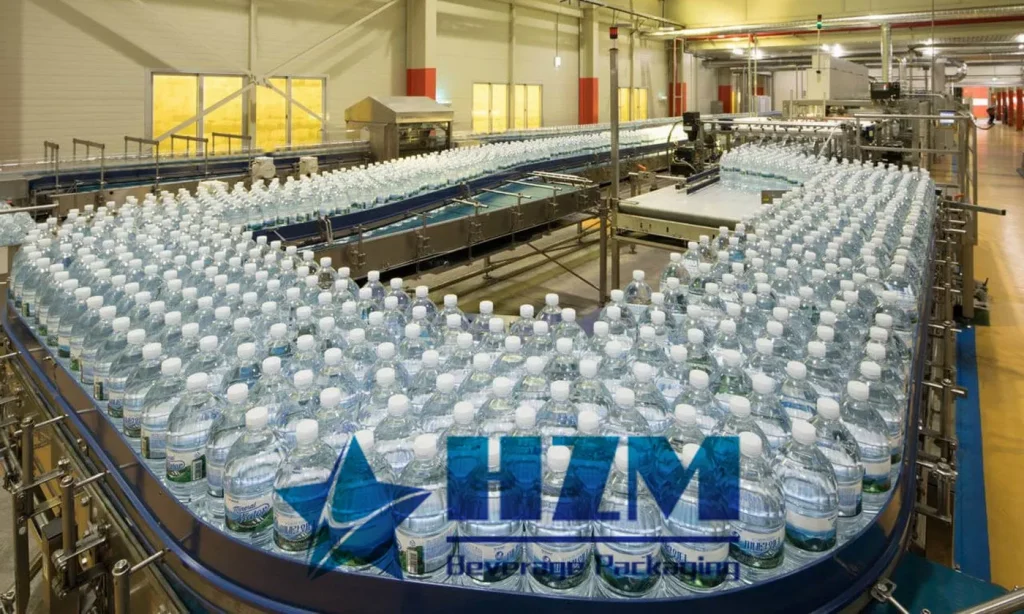
2023-07-06
Your Reliable Conveyor Machine Manufacturer
In modern industrial production, Conveyor Machines are indispensable for efficient material transportation and automated production. When seeking a trusted manufacturer, HZM Machinery stands out as a reliable partner.
Learn more2026-08-30
PET Bottles Fall Over on the Conveyor
Evaluate bottle stability, fill level, base shape, guide height and clearance, conveyor speed transitions, air movement and accumulation. Lightweight bottles need controlled support without being squeezed. Follow this practical fault-isolation, repair and prevention guide for bottling-line operators and maintenance teams.
Learn more2023-07-12
Air conveyor systems
The air conveyor, also known as a pneumatic conveyor, serves the purpose of efficiently transporting empty bottles between machines within a filling line. It also acts as a buffer, allowing for automatic operation of the entire line. Primarily, it is employed to transfer empty PET bottles from the blowing machine to the filling machine, also known as the filler.
Learn more2026-08-20
Bottle Conveyor Jams at the Same Location Every Shift
Mark the first contact point and inspect guide transitions, chain condition, dead plates, speed change, bottle dimensions, lubrication and upstream accumulation. The pile-up often occurs downstream of the actual interference. Follow this practical fault-isolation, repair and prevention guide for bottling-line operators and maintenance teams.
Learn more2026-09-09
Conveyor Chain Is Noisy, Surging or Wearing Too Fast
Inspect lubrication, chain tension and elongation, sprocket alignment, return path, wear strips, contamination and load. Do not tighten a worn chain until the root cause is known. Follow this practical fault-isolation, repair and prevention guide for bottling-line operators and maintenance teams.
Learn more