Equipment
Automatic Water Bottle Filling Machine
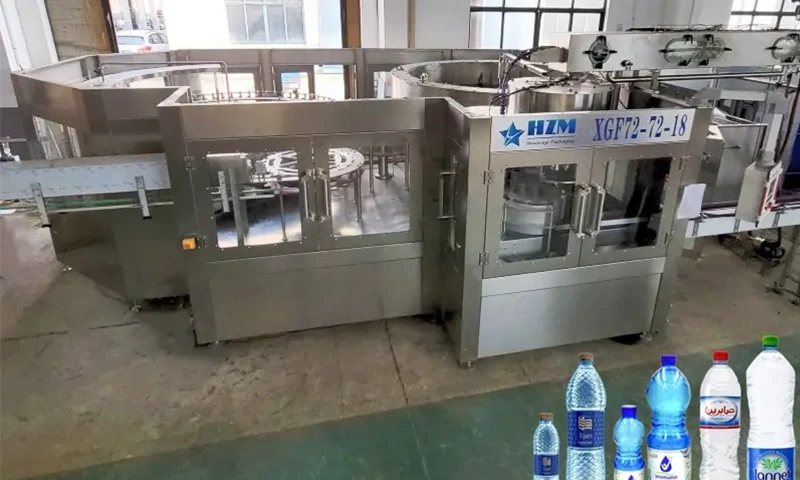
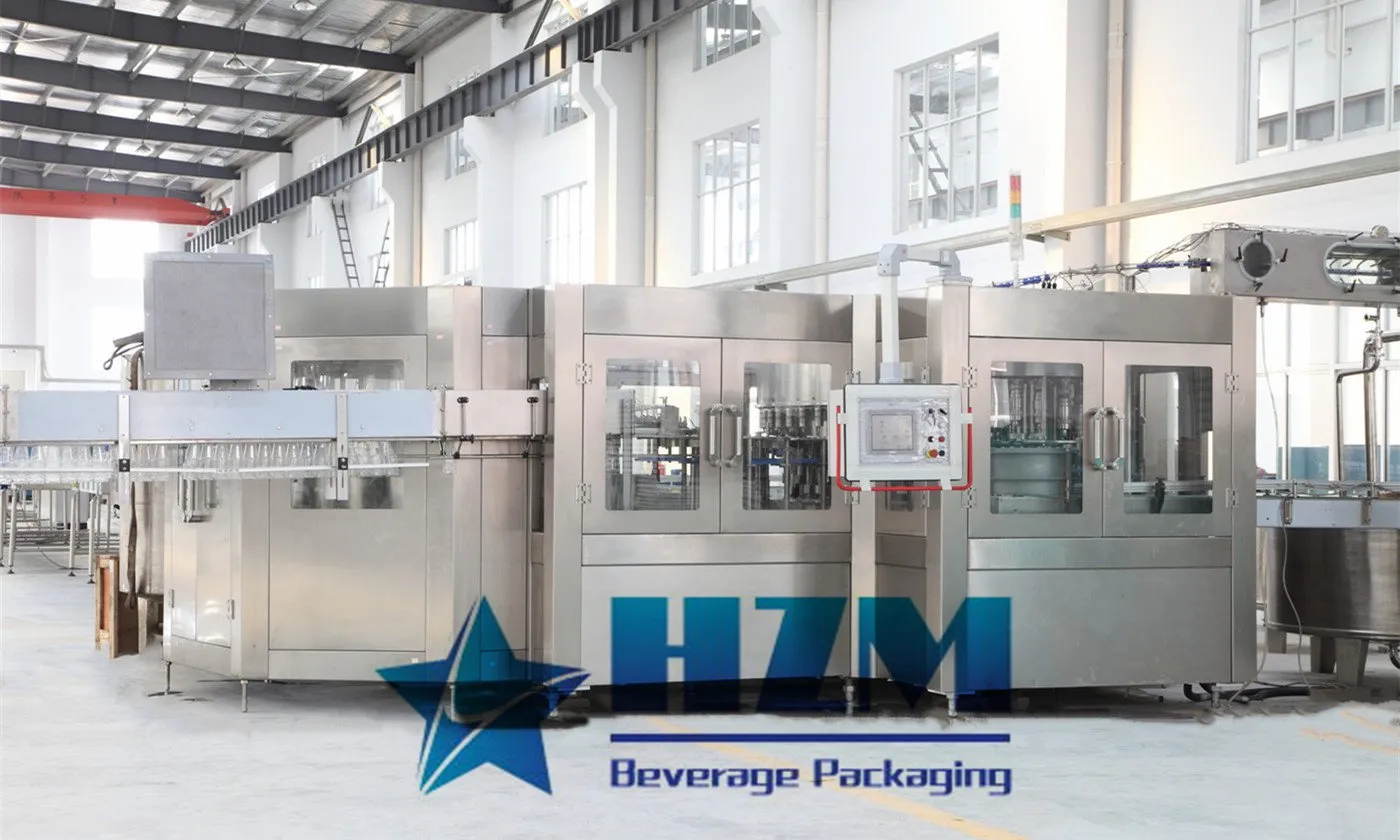
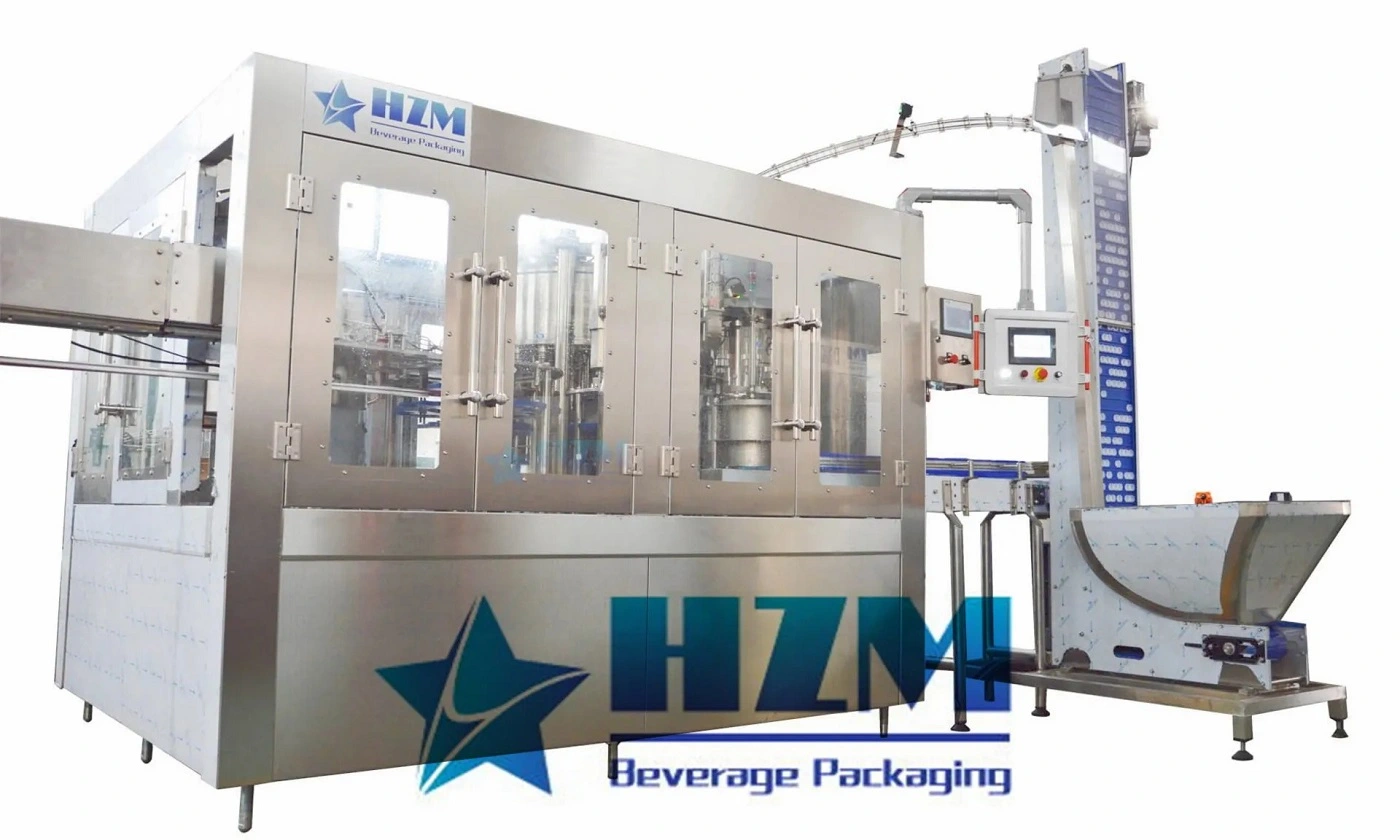
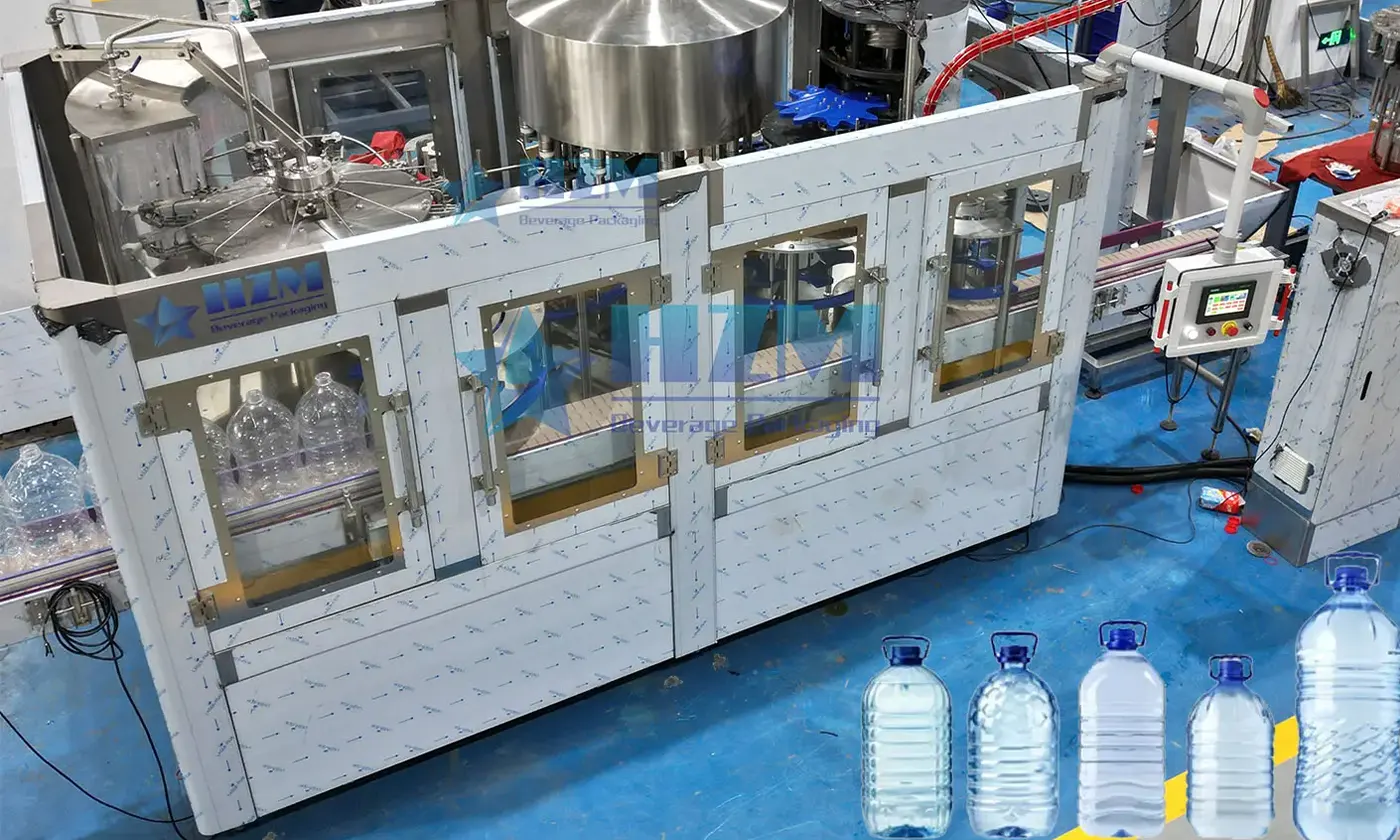
Automatic rinsing, filling and capping for purified and mineral water in PET bottles, with capacities of 5,000–42,000 bottles/hour at 500 ml.
Learn more
Tip: You can request pricing for individual machines or a complete production line solution.
HZM configures each Bottled Water Filling Machine around the source-water process, finished-water specification, bottle, closure and required saleable output. The scope can start with an automatic rinse-fill-cap monoblock or extend to a complete turnkey water bottling line with water treatment, PET bottle blowing, labeling, coding and secondary packaging.
Standard small PET bottles, 3–10L containers and 5-gallon returnable jars require different handling and filling systems. Share your raw-water analysis, bottle drawings or samples, cap specification, target output and factory conditions so our engineers can prepare a practical equipment proposal without treating one machine as universally suitable.
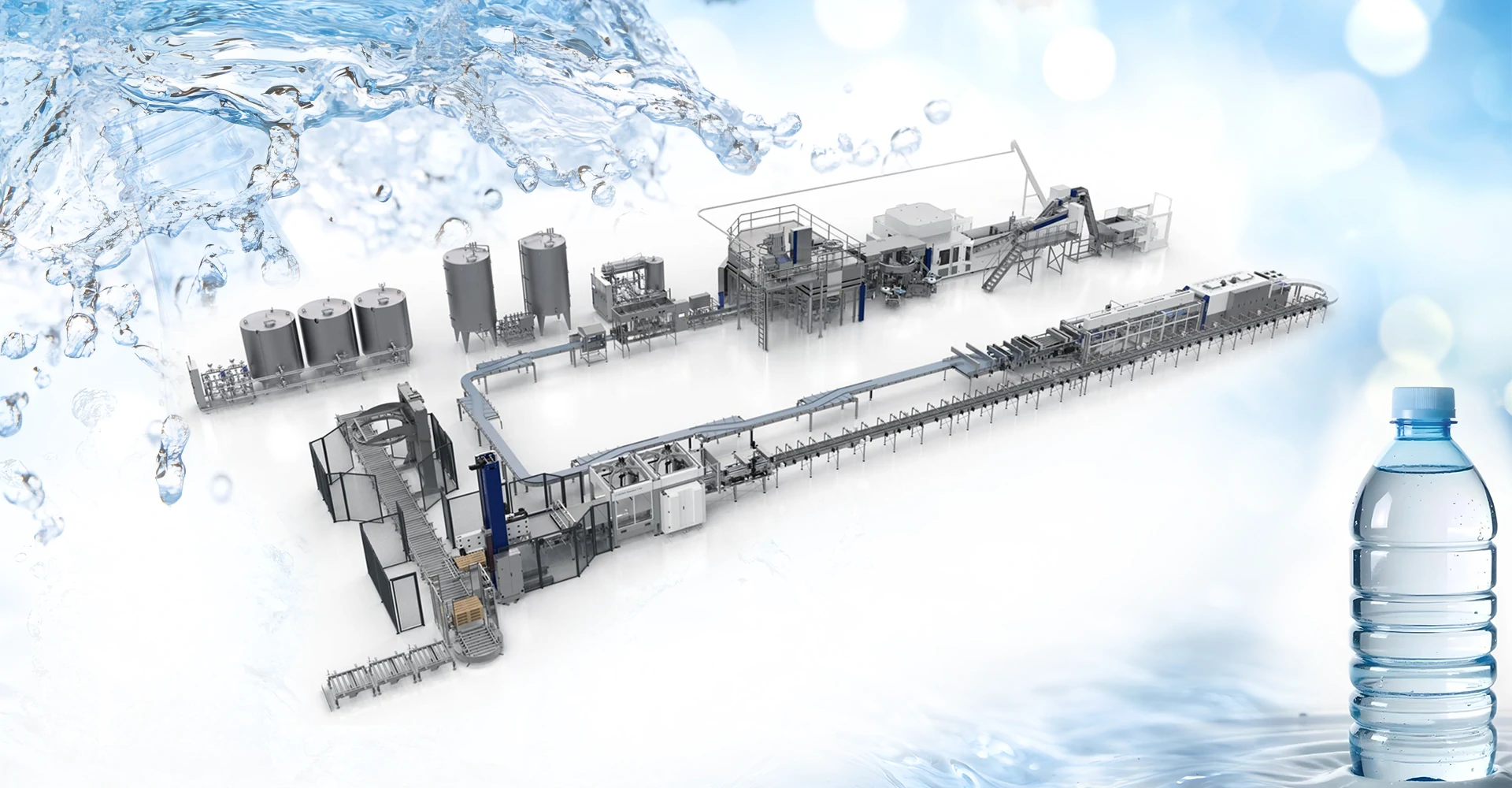
A reliable bottled water project is more than a filler. Source-water treatment, hygienic storage, bottle preparation, filling, closure application and final packaging must work as one controlled process. HZM can supply an individual Water Filling Machine or coordinate a full Bottled Water Production Line from raw-water treatment to packed product.
The proposal is developed from the actual package and production plan. Bottle volume, neck finish, cap, empty-bottle weight, water specification, scheduled operating hours and cleaning method all affect the correct machine and line layout. This project-specific approach makes performance expectations measurable and prevents an unsuitable nameplate speed from becoming the basis of the purchase.
| Container format | Typical equipment configuration | Important project inputs |
|---|---|---|
| Standard small PET bottles, commonly 200ml–2L | Automatic 3-in-1 rinsing, filling and capping monoblock with air conveyor and bottle-neck handling where suitable | Bottle drawing, neck finish, cap, nominal volume, bottle rigidity and required BPH |
| Large PET bottles, commonly 3–10L | Dedicated large-bottle rinsing, filling and capping system with package-specific transfers | Filled weight, handle design, bottle dimensions, closure and required containers/hour |
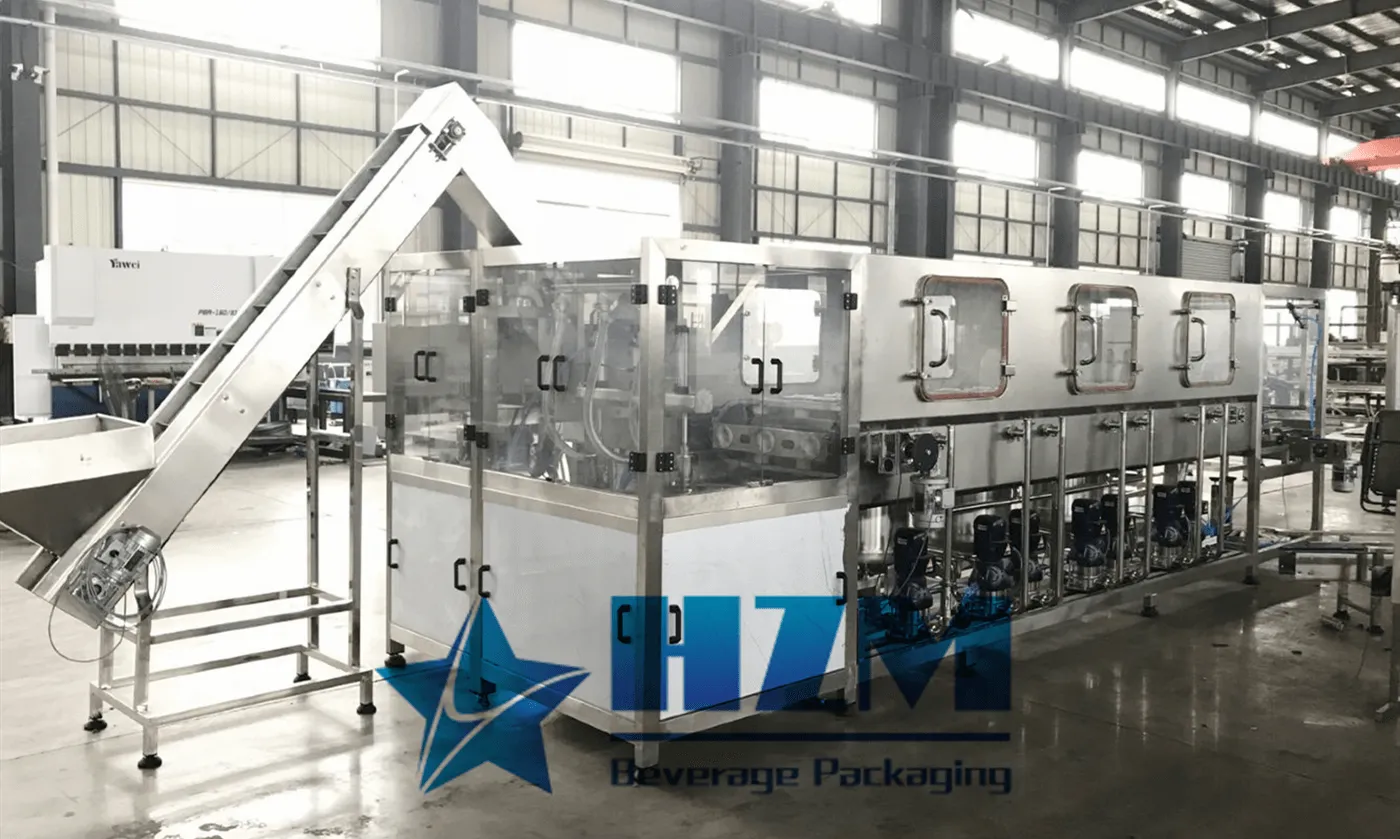
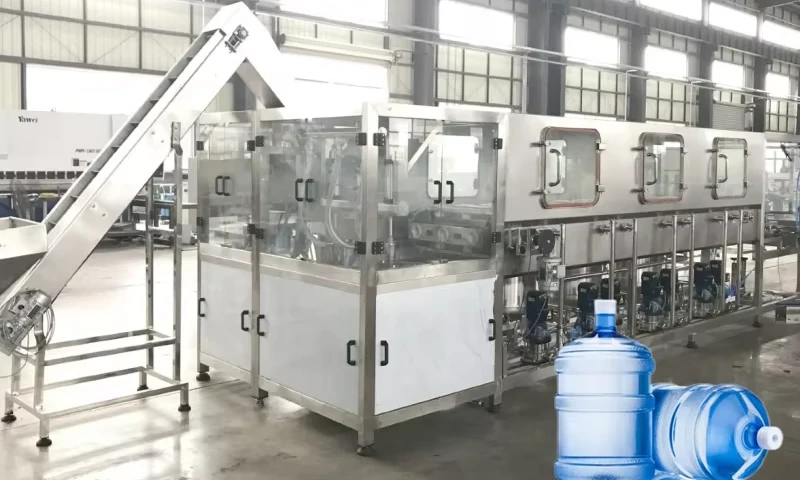
| Returnable 5-gallon jars | Dedicated de-capping, external/internal washing, filling and capping line | Jar condition, return loop, washing chemistry, cap type and hygiene requirements |
| Glass water bottles | Glass-bottle handling, filling and closure system selected for the approved bottle and cap | Bottle tolerances, crown/screw closure, breakage control and inspection plan |
Current HZM small-PET machine families cover nominal outputs from approximately 5,000 to 42,000 bottles per hour. The final commitment depends on the approved bottle volume, bottle geometry, cap, water supply, line efficiency assumptions and downstream equipment. Large-bottle and 5-gallon systems use separate capacity ranges.
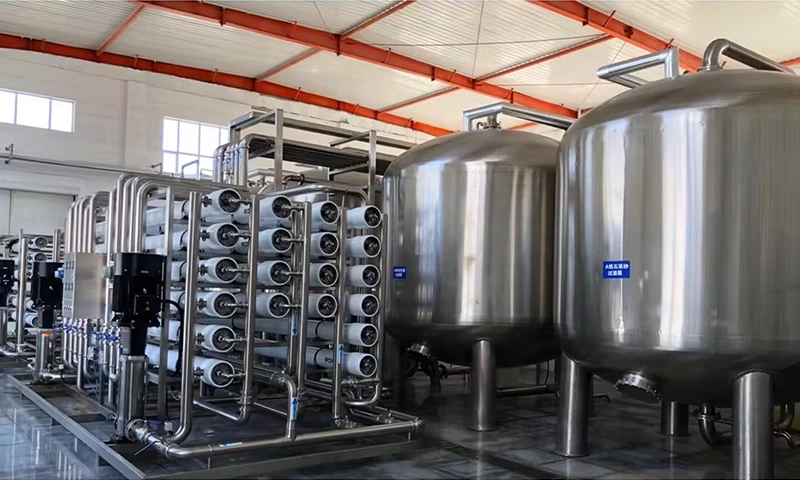
The filling machine cannot correct unstable or unsuitable product water. A water-treatment process should be selected from a current source-water analysis and the required finished-water specification. Depending on the project, the system may include multimedia filtration, activated carbon, softening or antiscalant dosing, cartridge filtration, ultrafiltration or reverse osmosis, and a validated disinfection stage.
UV, ozone and other controls must be designed around actual flow, water quality, contact conditions and downstream protection. Treated-water tanks and distribution piping should limit recontamination and support the intended cleaning method. HZM can integrate treatment and filling interfaces, while the customer remains responsible for confirming local product, environmental and regulatory requirements.
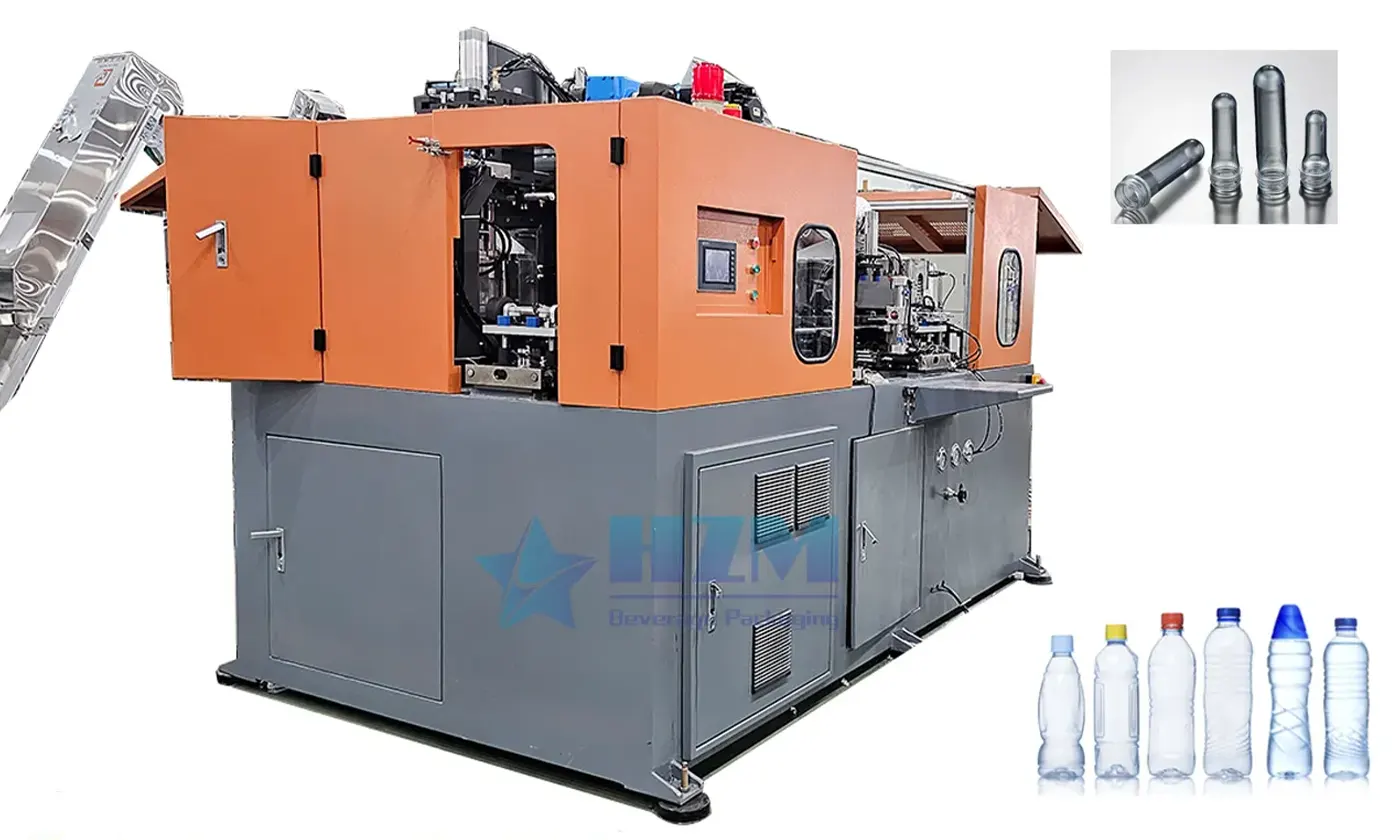
A complete Water Bottling Machine project may include PET preform heating and stretch blow molding. The bottle design, preform weight, neck finish and required output determine the blowing-machine configuration. The bottle must retain sufficient strength for conveying, filling, capping, labeling, packing and distribution.
Empty bottles are transferred to the filler by air conveyor or another package-appropriate system. The layout should minimize uncontrolled bottle storage and manual contact between blowing and filling. When the customer purchases bottles from a third party, incoming bottle cleanliness, dimensional tolerance and transport protection must be included in the quality plan.
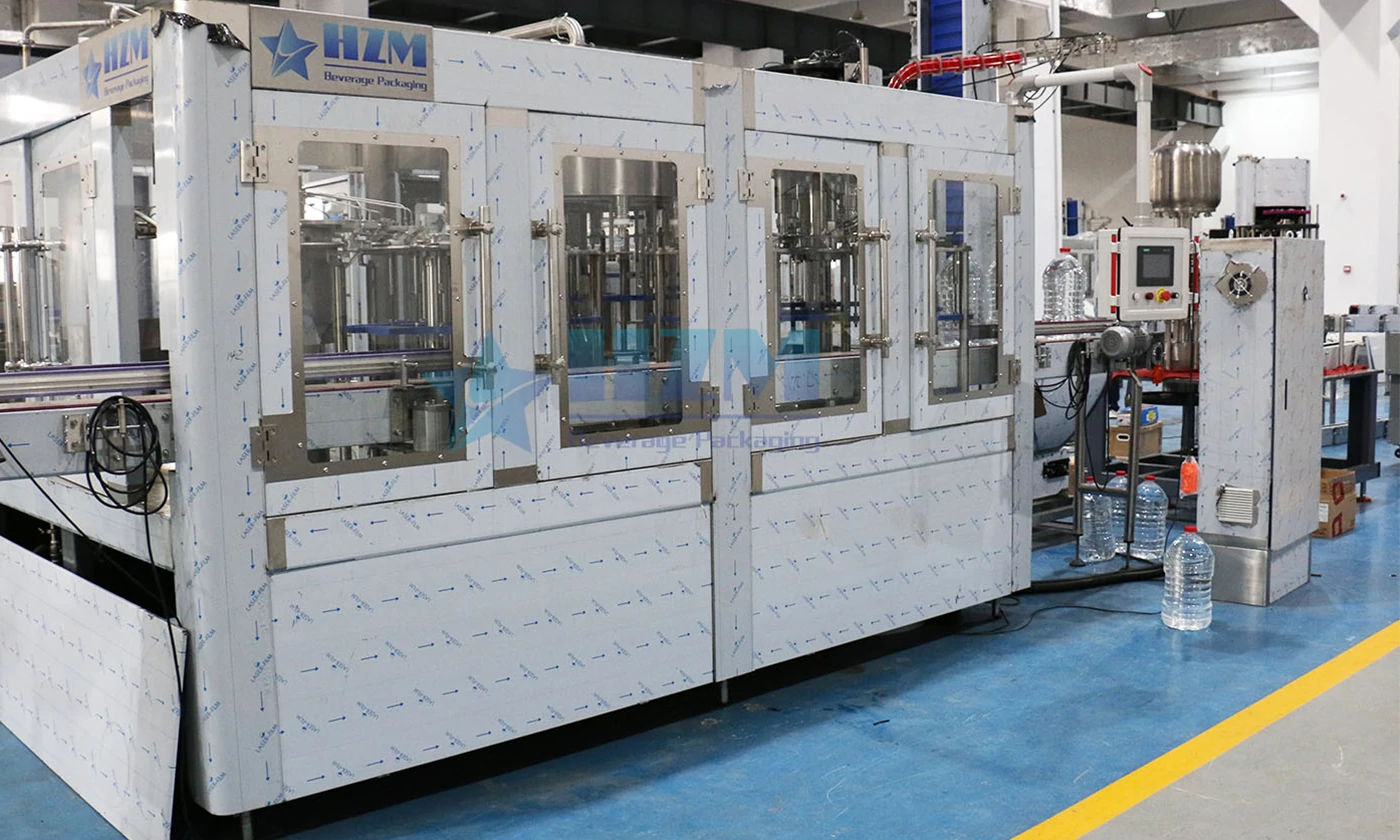
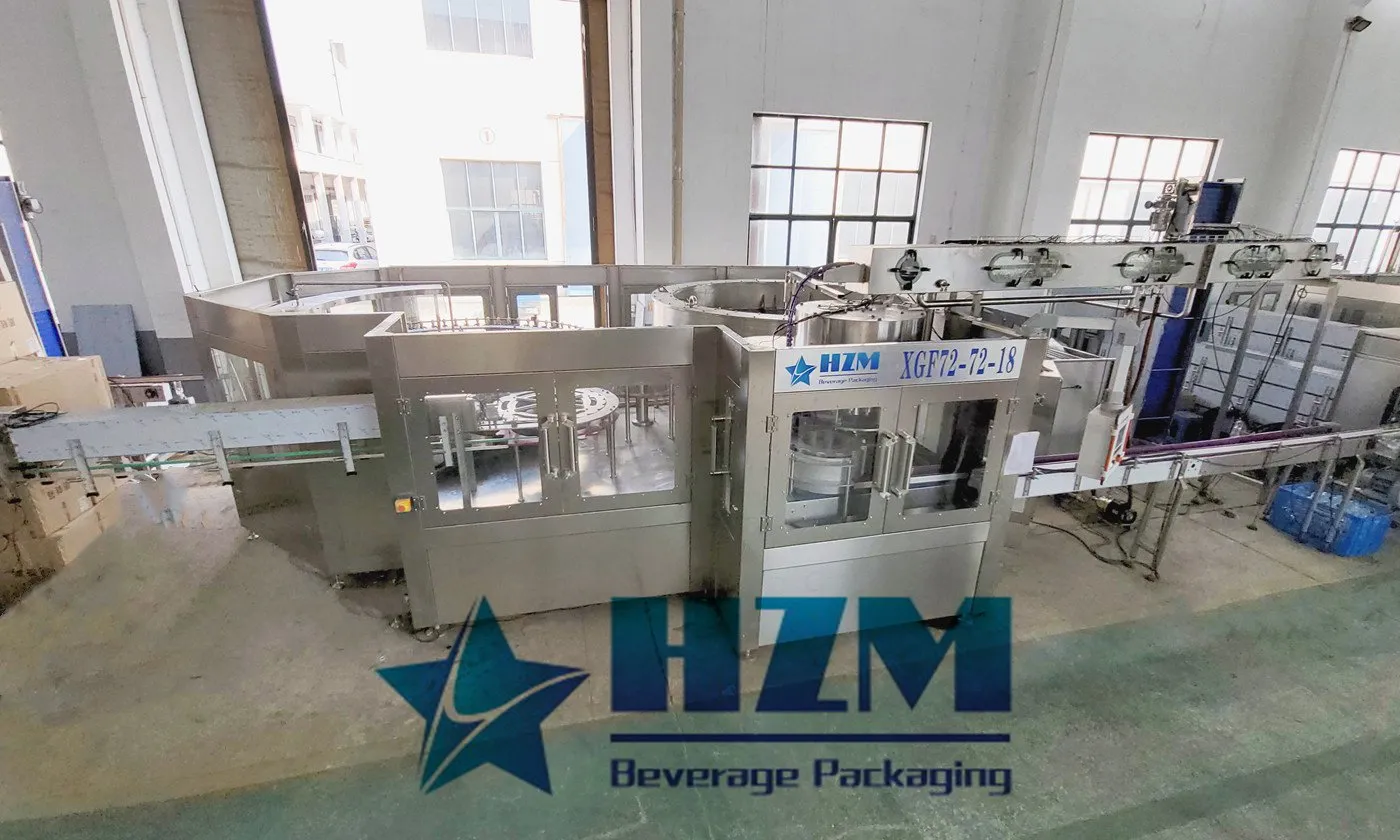
The standard small-bottle Automatic Water Filling Machine combines bottle rinsing, water filling and cap application in one synchronized unit. PLC and HMI controls coordinate machine states, bottle flow, filling, capping, alarms and production counting. The final configuration is selected for purified water, mineral water or other approved still drinking water.
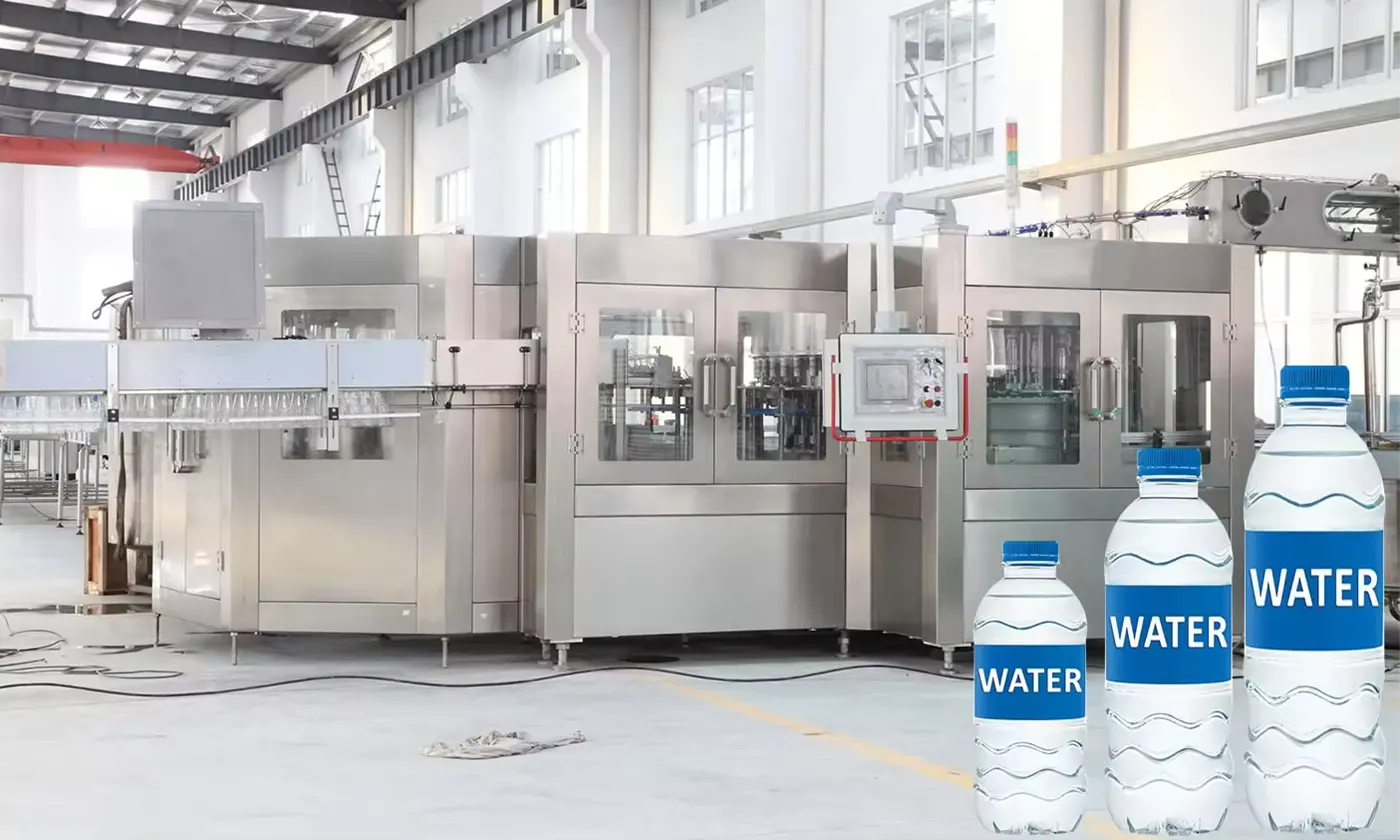
Approved bottles are gripped and inverted for internal rinsing. Spray coverage, rinse media, drain time and bottle handling are configured for the hygiene plan. Rinsing performance still depends on incoming bottle condition and a controlled empty-bottle supply.
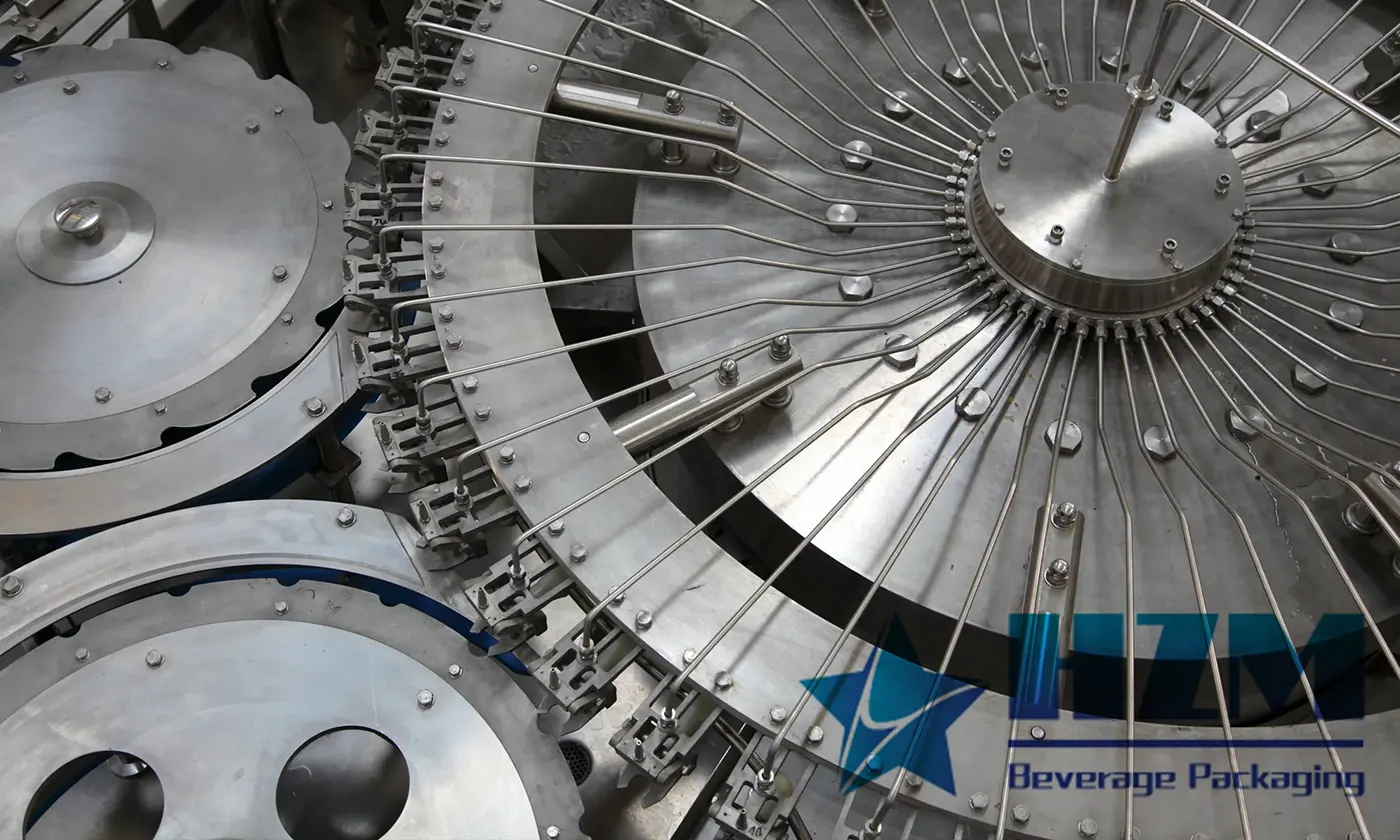
Water enters the bottle through filling valves selected for the required output and package. Stable treated-water supply, adequate buffer capacity and correct venting help maintain repeatable fill level. Product-contact materials and seals are selected for the water and cleaning chemicals.
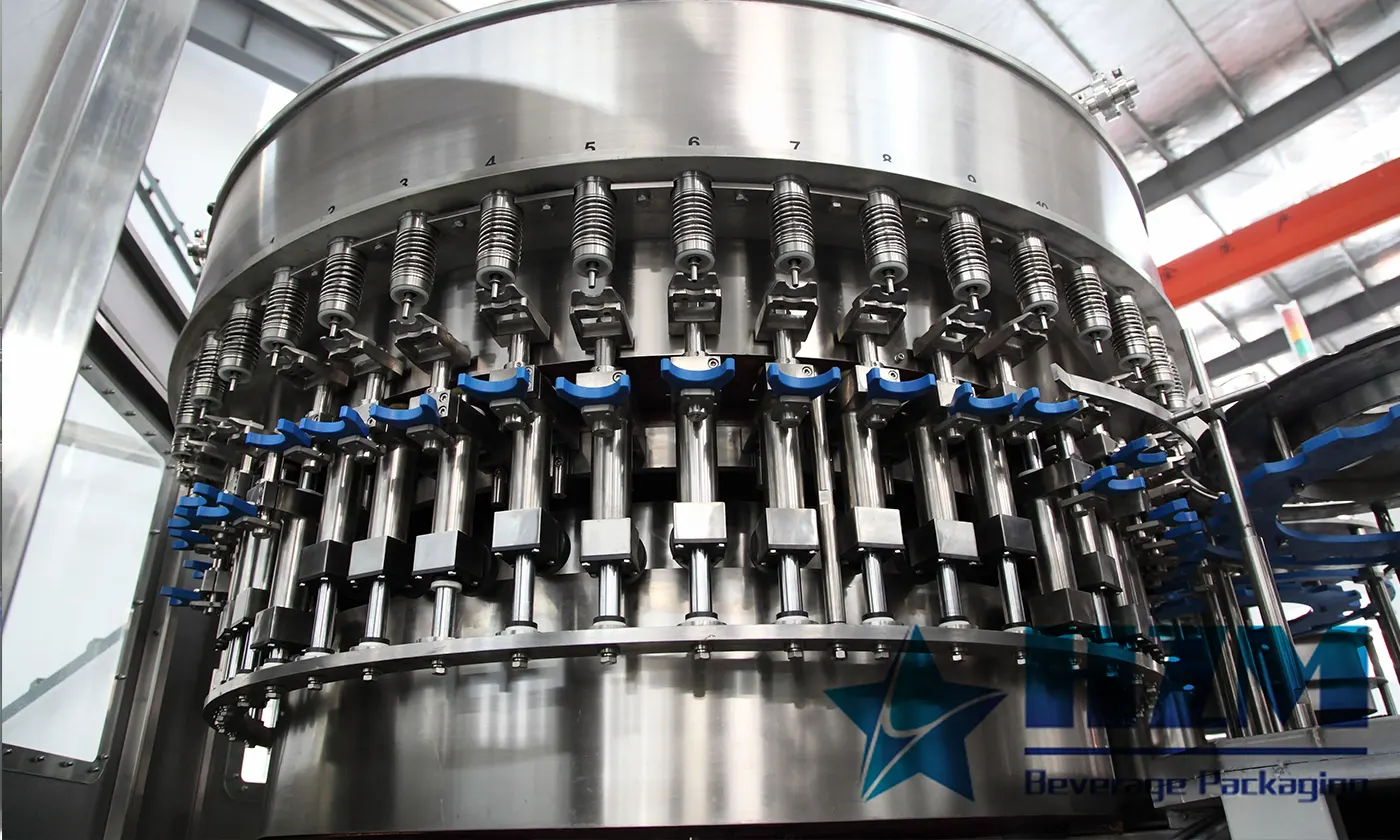
Caps are sorted, delivered and applied to the approved bottle neck. Cap quality, torque or application force, bottle-neck dimensions and cap feeding all affect closure integrity. Production checks should verify that caps are present, correctly applied and free from visible damage or leakage.
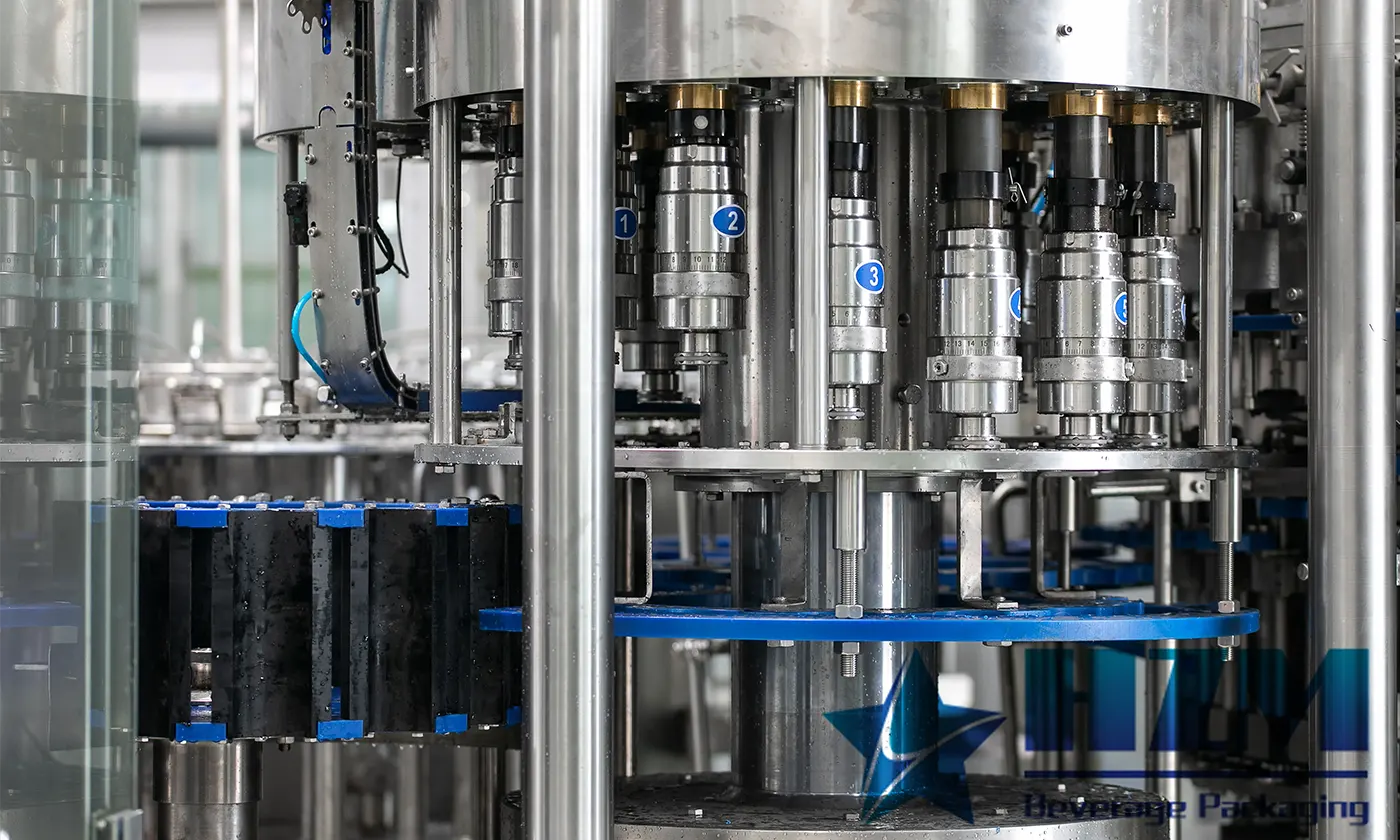
After filling, the line can include level and closure inspection, bottle drying, date or batch coding, sleeve labeling, self-adhesive labeling or BOPP labeling. The correct labeler depends on bottle contour, label material, artwork, production speed and changeover plan.
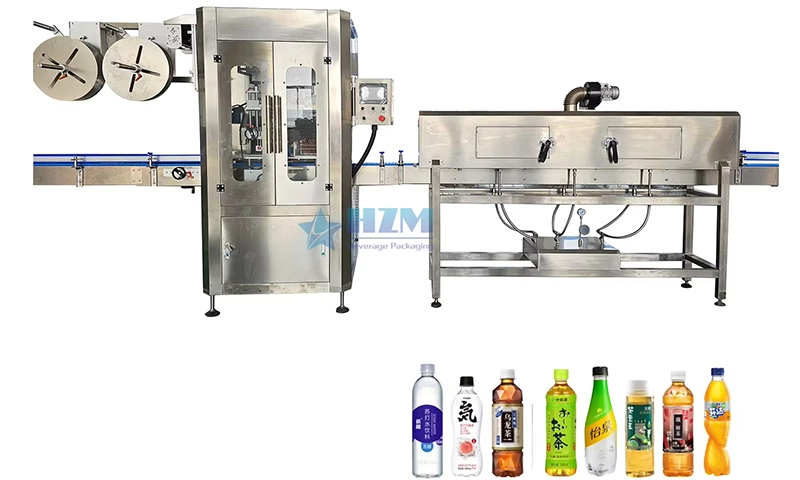
Finished bottles may be packed in shrink film, trays, cartons or another agreed format. Conveyor accumulation and control signals should allow short downstream stops without immediately blocking the filler. Palletizing and stretch wrapping can be added where the required output and labor plan support further automation.
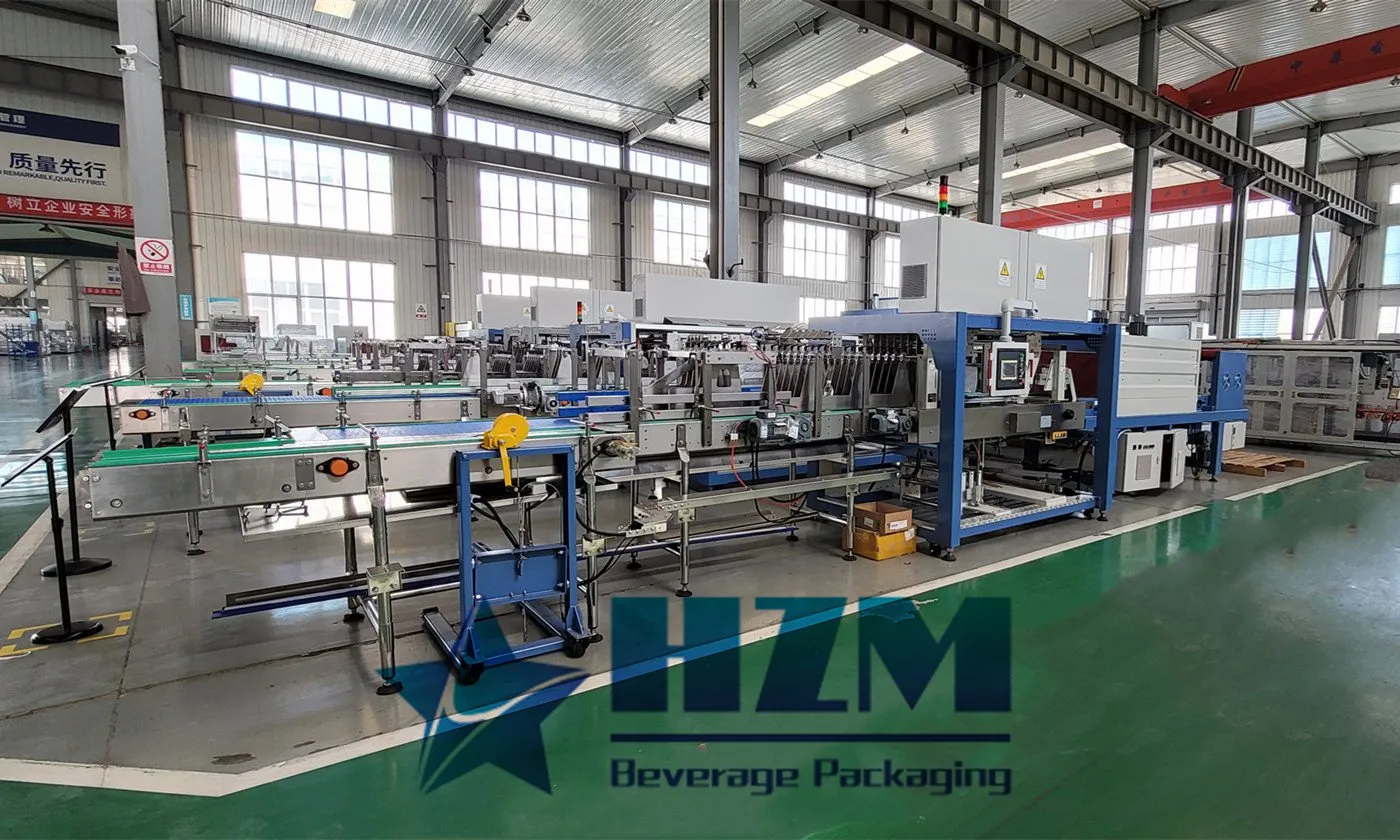
A complete project can be configured from the following modules:
| Item | Available project scope |
|---|---|
| Finished products | Purified water, mineral water and approved still drinking water |
| Standard containers | Small PET bottles; separate machine families for 3–10L bottles, 5-gallon jars and glass bottles |
| Small-PET nominal capacity | Approximately 5,000–42,000 BPH across current machine families; final output confirmed by bottle |
| Core monoblock | Automatic bottle rinsing, normal-pressure filling and capping |
| Product-contact construction | SUS304 or project-specified alternatives selected for water and cleaning compatibility |
| Control | PLC and HMI with alarms, machine-state indication, production counts and specified interlocks |
| Electrical supply | Configured for the destination factory |
| Project documentation | Equipment list, layout, utility requirements, operating documents and agreed acceptance criteria |
| Service | Factory testing, installation guidance or on-site installation, commissioning, training and spare-parts support |
All capacities and specifications are configuration-dependent. The final technical proposal and acceptance protocol define the supplied equipment and committed operating conditions.
A Pure Water Filling Machine or Mineral Water Filling Machine should be evaluated as part of the complete hygienic process. Treated-water storage, piping drainage, cleaning access, bottle condition, cap handling and operator practices can affect finished product quality. Cleaning conditions and verification methods should be agreed for the actual plant.
Factory testing should use representative bottles, caps, labels and packaging materials. Acceptance criteria may include saleable output, fill level, cap integrity, bottle appearance, code and label quality, pack quality, normal stops and restarts, and agreed changeovers. Testing only empty containers at a single machine does not demonstrate complete-line production performance.
After review, HZM can provide a recommended process flow, equipment list, layout concept, utility schedule, commercial quotation and project timeline.
No universal configuration should be assumed. Small PET bottles and large 3–10L containers create different loads and handling requirements. HZM selects a compatible range for one machine or recommends separate systems.
Current small-PET equipment families cover approximately 5,000 to 42,000 bottles per hour. The committed result depends on bottle size, cap, water supply and the complete line. Large-bottle and 5-gallon systems have different output ranges.
Yes. The treatment scope can be configured after reviewing the source-water analysis and finished-water requirement. The customer should also confirm applicable local regulations and obtain any required validation.
Yes. A complete line can include PET bottle blowing, air conveying, filling, inspection, labeling, coding, shrink or carton packing and palletizing.
Price depends on water treatment, bottle and cap, required output, automation level, inspection, label and pack format, utilities and service scope. A project-specific quotation is prepared after these details are reviewed.
A single integrator can define the interfaces between treatment, bottle supply, filling and packaging, coordinate controls and layouts, and test the agreed production result. The commercial and technical scope should still state responsibilities clearly.
Send your water analysis, bottle and cap information, required output, final pack format and destination country. HZM will review the project and recommend suitable water bottling equipment for a standalone filler or complete turnkey water bottling line.
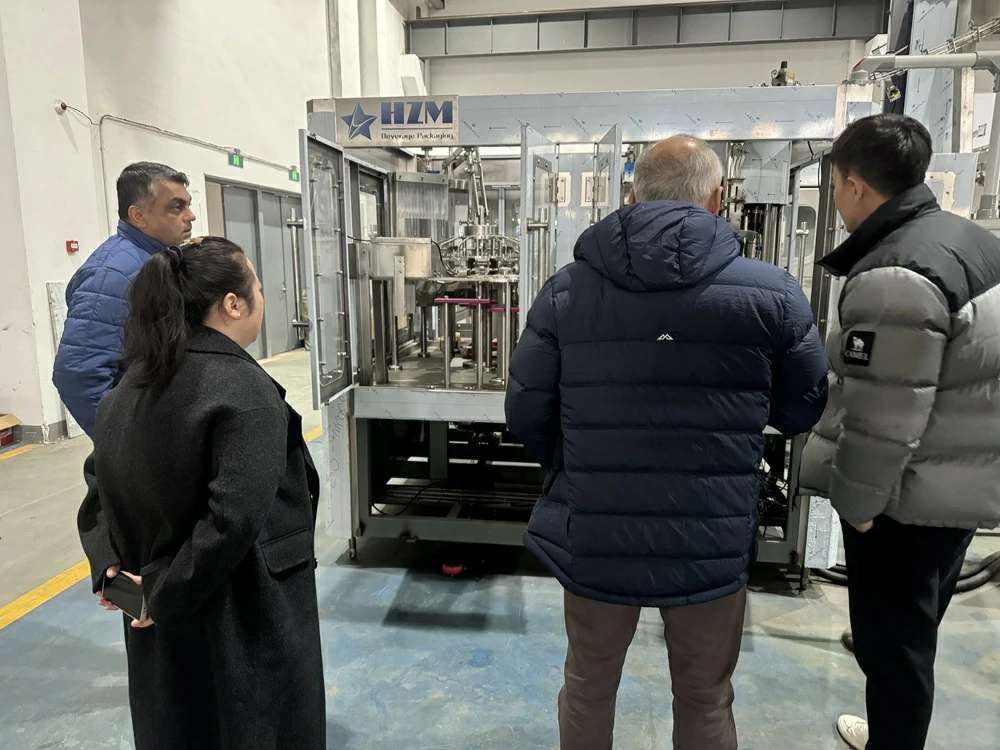
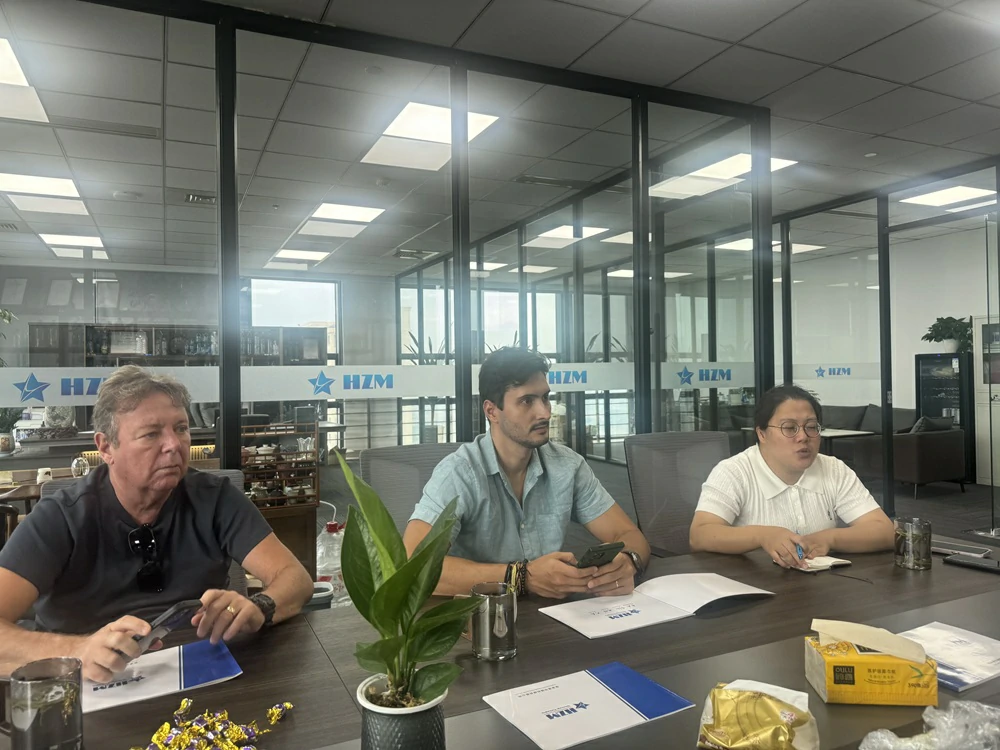
Talk to an engineer
Send your capacity, bottle specification and beverage type for a complete proposal.
Equipment
Automatic rinsing, filling and capping for purified and mineral water in PET bottles, with capacities of 5,000–42,000 bottles/hour at 500 ml.
Learn moreEquipment
A 3-in-1 PET bottle rinsing, filling and capping machine for drinking water, from 5,000 to 18,000 bottles/hour at 500 ml.
Learn moreEquipment
PET-bottled drinking-water production with automatic rinsing, filling and capping, plus water treatment and packaging equipment.
Learn moreEquipment
PET bottle water filling with automatic rinsing and capping, for purified water, mineral water and still drinking water.
Learn moreEquipment
Drinking-water bottling equipment with automatic rinsing, filling and capping, plus conveying, labelling and packing options.
Learn moreEquipment
Beverage filling machines and turnkey lines for juice, soft drinks, water and beer in PET bottles, glass bottles or cans.
Learn moreEquipment
XGF12-12-4 rinsing, filling and capping for 5 L and 10 L water bottles, with stable outputs of 1,200 and 700 bottles/hour respectively.
Learn moreEquipment
Automatic washing, filling and capping for 3–5 gallon drinking-water jars, with QGF models from 120 to 900 jars/hour at 5 gallons.
Learn moreEquipment
The automatic 3–5 gallon water filling line washes, fills and caps returnable jars for purified-water and mineral-water production.
Learn moreSolution & application
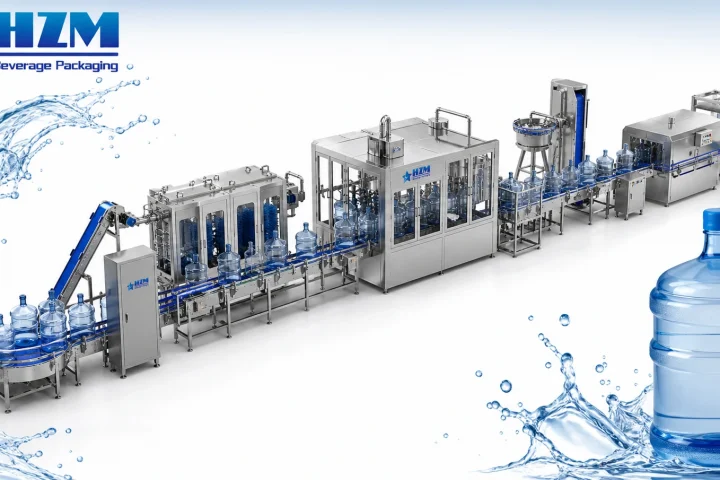 Complete production line
3-5 Gallon Water Production Line
Explore solution →
Complete production line
3-5 Gallon Water Production Line
Explore solution →
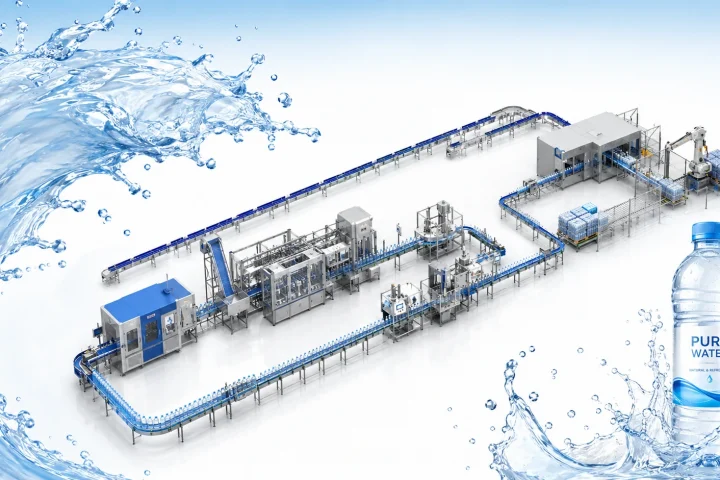 Complete production line
Bottled Water Production Line
Explore solution →
Complete production line
Bottled Water Production Line
Explore solution →
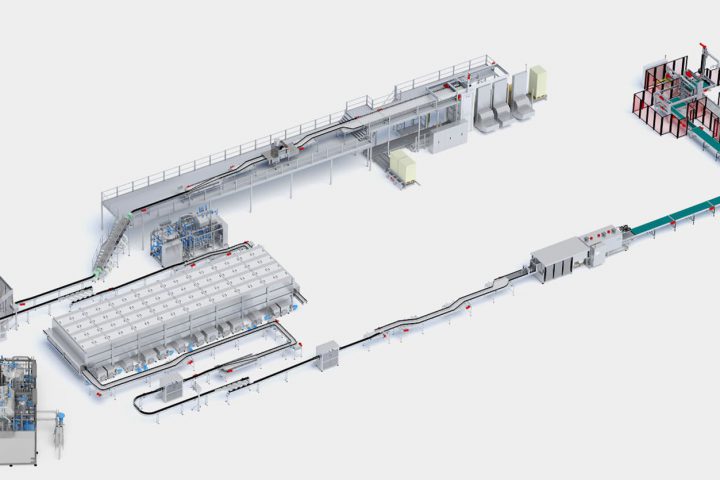 Complete production line
Cans Filling Production Line
Explore solution →
Complete production line
Cans Filling Production Line
Explore solution →
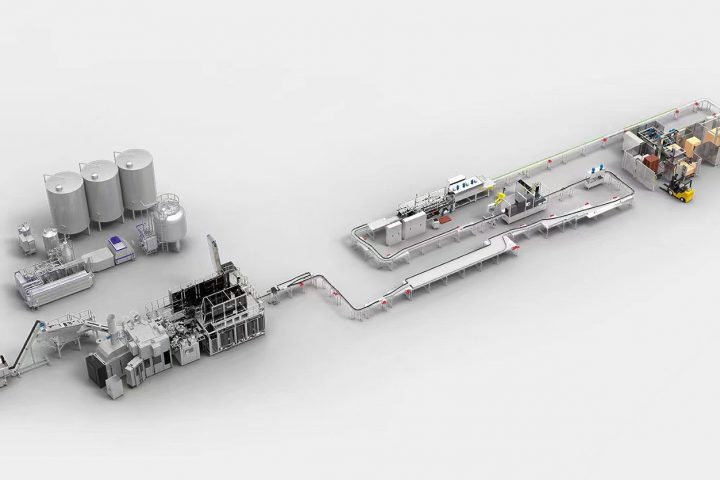 Complete production line
CSD Filling Production Line
Explore solution →
Complete production line
CSD Filling Production Line
Explore solution →
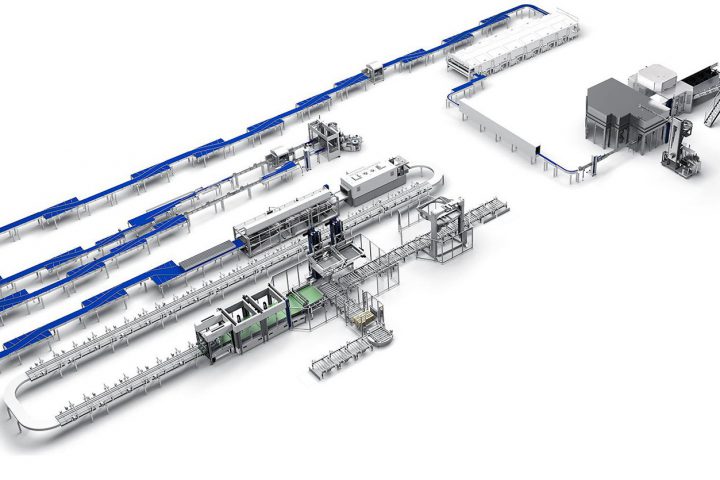 Complete production line
Juice Filling Production Line
Explore solution →
Complete production line
Juice Filling Production Line
Explore solution →
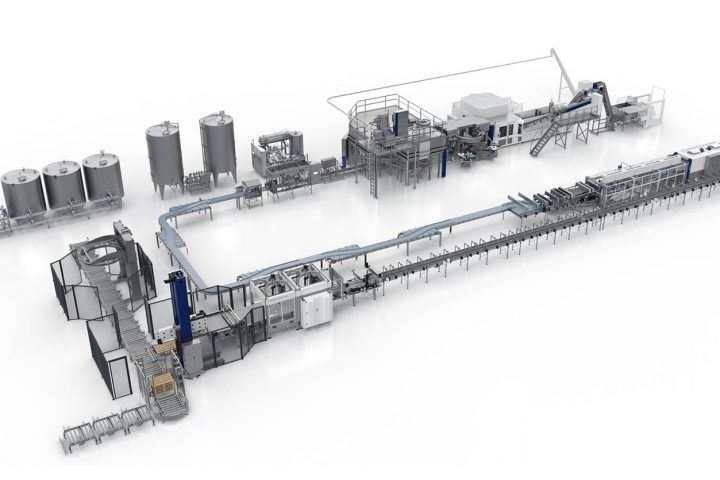 Complete production line
Water Filling Production Line
Explore solution →
Complete production line
Water Filling Production Line
Explore solution →
Build your production line
Tell us your beverage, container, capacity and target market. Our engineering team will prepare a practical line proposal.