
Insights & Updates
Reverse Osmosis Water Treatment for Beverage Production: Design and Maintenance
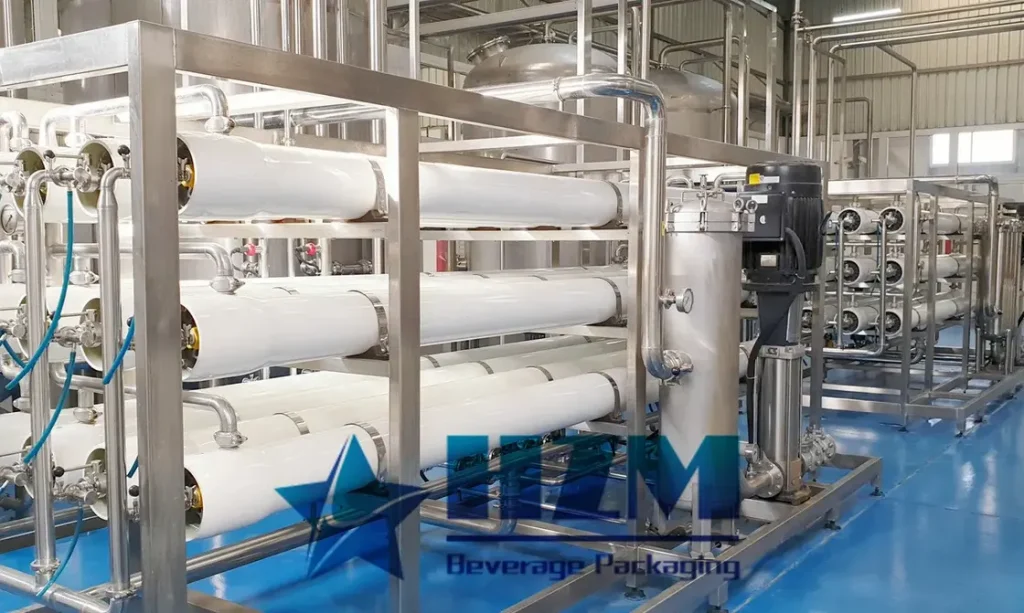
Reverse osmosis can be an important purification stage for bottled water and beverage process water, but an RO unit is not a complete design by itself. Stable operation depends on the raw-water analysis, pretreatment, membrane operating conditions, hygienic storage, disinfection, monitoring and maintenance. The treatment train must be selected for the water source and the finished-product requirement.
HZM configures each water treatment system from raw-water quality, required treated-water quality and sustained hourly demand. A representative analysis is the first engineering input, not an optional document after equipment selection.
What reverse osmosis does
An RO system applies pressure to feed water and uses a semi-permeable membrane to separate a purified permeate stream from a concentrate stream. It can reduce many dissolved substances, but actual rejection and recovery depend on membrane selection, feed composition, temperature, pressure, system design and operating condition.
RO should not be described as removing every possible contaminant under all conditions. The target water specification, applicable drinking-water or food rules and the factory’s hazard analysis determine which treatment and verification steps are required.
Start with a representative raw-water analysis
Sample the intended source under conditions that reflect expected seasonal and operating variation. The required test list should be agreed with qualified water-treatment and local regulatory specialists. Useful design information commonly includes turbidity and suspended solids, hardness, alkalinity, pH, conductivity or dissolved solids, iron, manganese, silica, oxidants, organic indicators and microbiological results.
Also record source flow, temperature range, pressure and any existing chemical treatment. Municipal water, borehole water and surface water can require very different pretreatment even when the planned product output is the same.
Pretreatment protects the membrane system
Pretreatment reduces fouling, scaling and chemical damage. The selected stages may include raw-water storage, oxidation or dosing, multimedia filtration, activated carbon, softening or antiscalant, and cartridge filtration. Selection must follow the analysis and membrane supplier limits.
For example, activated carbon can be used where removal of residual oxidant or organics is part of the process, while softening or antiscalant strategy may be considered where scaling risk exists. These are engineering choices, not a fixed sequence for every plant. HZM’s water pretreatment system is one available part of the overall treatment scope.
Size the system from demand, recovery and operating time
Begin with the sustained treated-water demand of beverage preparation, bottle rinsing, filling and other approved users. Add the plant’s storage strategy and production schedule. The RO permeate rate must be evaluated at the design feed-water temperature and expected membrane condition, not only at an ideal reference condition.
Recovery is the share of feed water converted to permeate. Higher recovery reduces concentrate volume but increases the concentration of retained substances and may raise scaling risk. The suitable value should come from feed-water chemistry, membrane design and any concentrate-management constraints.
Ask the proposal to show feed flow, permeate flow, concentrate flow, design temperature, number of trains, operating hours and the basis for membrane projections. If production cannot stop during cleaning or maintenance, discuss storage or redundant capacity.
Define the target water for the actual product
Purified water, mineral water and beverage ingredient water are not interchangeable labels. Some products require a controlled mineral profile, while others use purified water as a recipe ingredient. The process should meet the approved product specification without unnecessary treatment.
For a complete bottled-water project, coordinate RO and storage with the bottled purified water production line. The filler, treatment plant and storage tanks should use one agreed water-demand and hygiene basis.
Post-treatment and hygienic storage
RO permeate can be vulnerable to recontamination after treatment. The design may include pH or mineral adjustment, disinfection, final filtration and a hygienic treated-water tank according to the product and regulatory plan. Tank vents, distribution loops, valves and sampling points must support clean operation.
A purified-water tank should not become a dead end. Consider turnover, circulation, drainability, cleaning access and how the water reaches the point of use. Define the sanitation method and release checks for the tank and distribution system.
Instrumentation and operating data
Operators need measurements that show performance and identify change over time. Depending on the system, monitoring may include pressures before and after filters, RO feed and stage pressures, flow for feed/permeate/concentrate, conductivity, temperature, tank level and relevant chemical-dosing or disinfection parameters.
Normalized performance trends are more useful than a single reading because temperature and operating conditions affect output. Establish baseline data during commissioning and define alarm limits, sampling frequency and actions in the operating procedure.
Membrane cleaning and maintenance
RO membranes should be cleaned based on validated performance triggers and the likely foulant, following membrane and chemical supplier guidance. Cleaning too late can make recovery difficult, while unnecessary cleaning adds chemical exposure and downtime. The system needs suitable isolation, circulation, temperature and drainage for the approved cleaning method.
Routine maintenance also includes pretreatment checks, cartridge-filter replacement, instrument calibration, chemical-dosing inspection, leak checks and review of operating records. Keep critical spares and current membrane, seal and instrument specifications.
Common design mistakes
- Selecting capacity without a current raw-water analysis.
- Using a fixed pretreatment sequence for every water source.
- Ignoring low feed-water temperature in the permeate calculation.
- Choosing an aggressive recovery without checking scaling risk.
- Sizing only for filler consumption and forgetting preparation, rinsing or cleaning demand.
- Providing no plan for concentrate discharge or reuse review.
- Allowing stagnant treated-water storage and distribution.
- Collecting data without baseline values or action limits.
Information required for an RO proposal
- Representative raw-water analysis and source description.
- Target treated-water specification and product use.
- Sustained and peak demand, operating hours and storage volume.
- Feed-water temperature range and available pressure.
- Existing treatment equipment and chemicals.
- Available electricity, water, drainage and floor space.
- Concentrate discharge constraints.
- Required automation, monitoring, records and redundancy.
- Local regulatory, documentation and acceptance requirements.
Frequently asked questions
Does every beverage plant need reverse osmosis?
No. The necessary process depends on the source water and finished-water specification. Some plants need RO; others may use a different combination of pretreatment, filtration, disinfection or mineral adjustment.
How often should RO membranes be replaced?
There is no universal interval. Membrane life depends on feed water, pretreatment, operating conditions, cleaning, shutdown care and whether performance remains within the approved requirements. Trend operating data and investigate the cause before replacing membranes.
Can RO concentrate be reused?
Potential reuse depends on its composition, local rules and the receiving process. It requires a separate technical and compliance review; concentrate should not be routed to another use simply because it looks clear.
What should be confirmed during commissioning?
Verify flows, pressures, recovery, permeate quality, pretreatment performance, alarms, dosing, cleaning functions, tank and distribution hygiene, sampling methods and operator records under the agreed design conditions.
Talk to our engineering team
Need help planning your packaging line?
Share your product, bottle and capacity requirements for a practical equipment recommendation.
Equipment
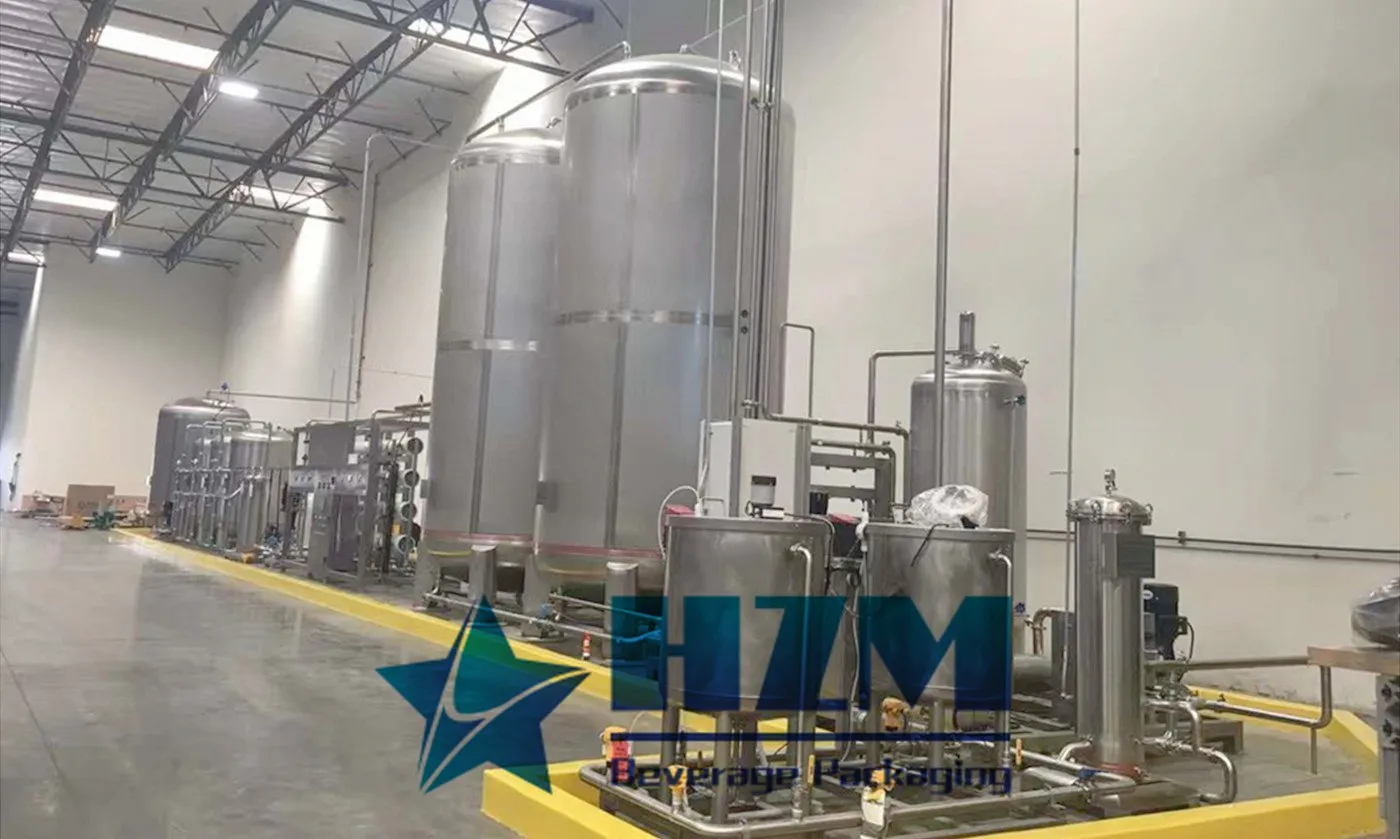
RO Water Treatment System Drinking Water Purifier
This RO water treatment system combines pretreatment, reverse-osmosis membrane separation and final treatment for purified-water production.
Learn more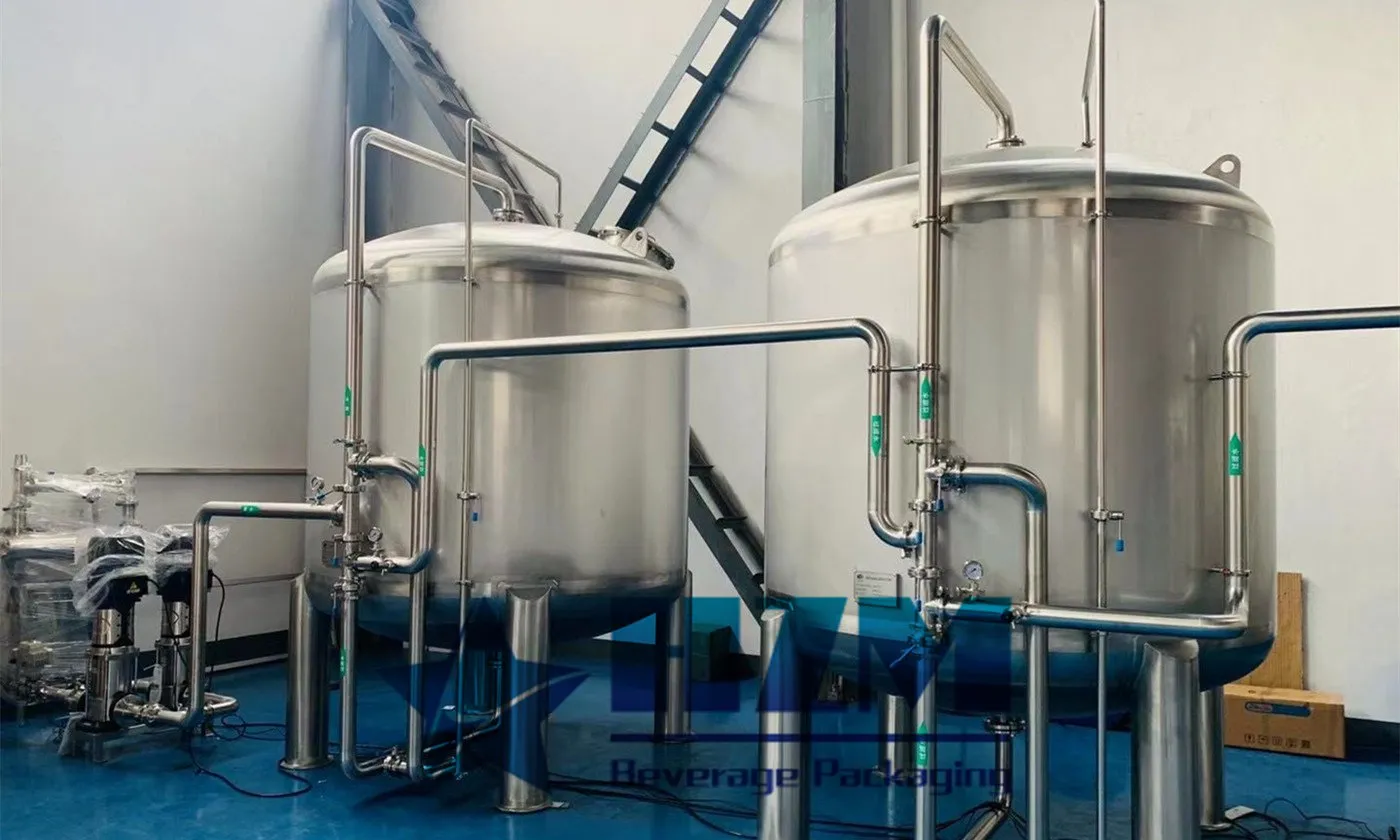
Equipment
RO System Water Treatment Plant
The RO water treatment plant produces purified water through feed-water pretreatment and reverse-osmosis membrane separation.
Learn more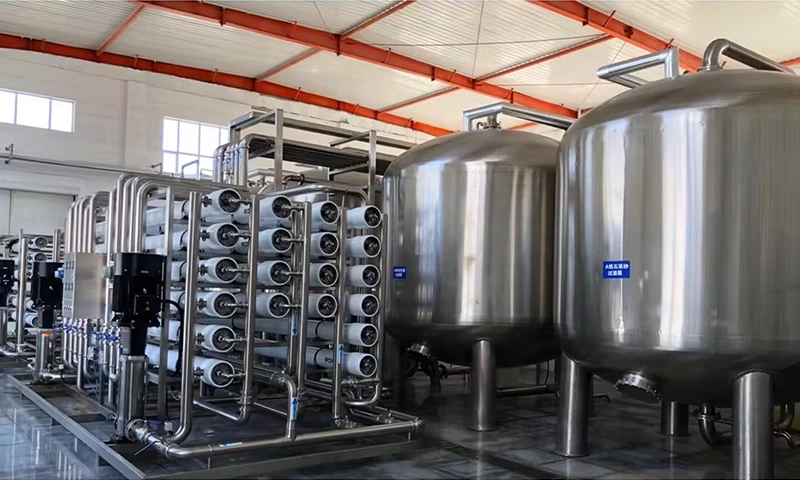
Equipment
RO Water Treatment Machine for Bottled Water Production
10 T/H reverse osmosis water treatment for purified-water bottling, with pretreatment, storage and filler-supply connections.
Learn moreEquipment
reverse osmosis water treatment
The reverse osmosis system treats water for bottled-water and beverage production.
Learn moreEquipment
Water Treatment for the Food & Beverage Industry – RO Water Treatment Equipment
10 T/H RO water treatment for ingredient, process and rinse water in food and beverage plants.
Learn more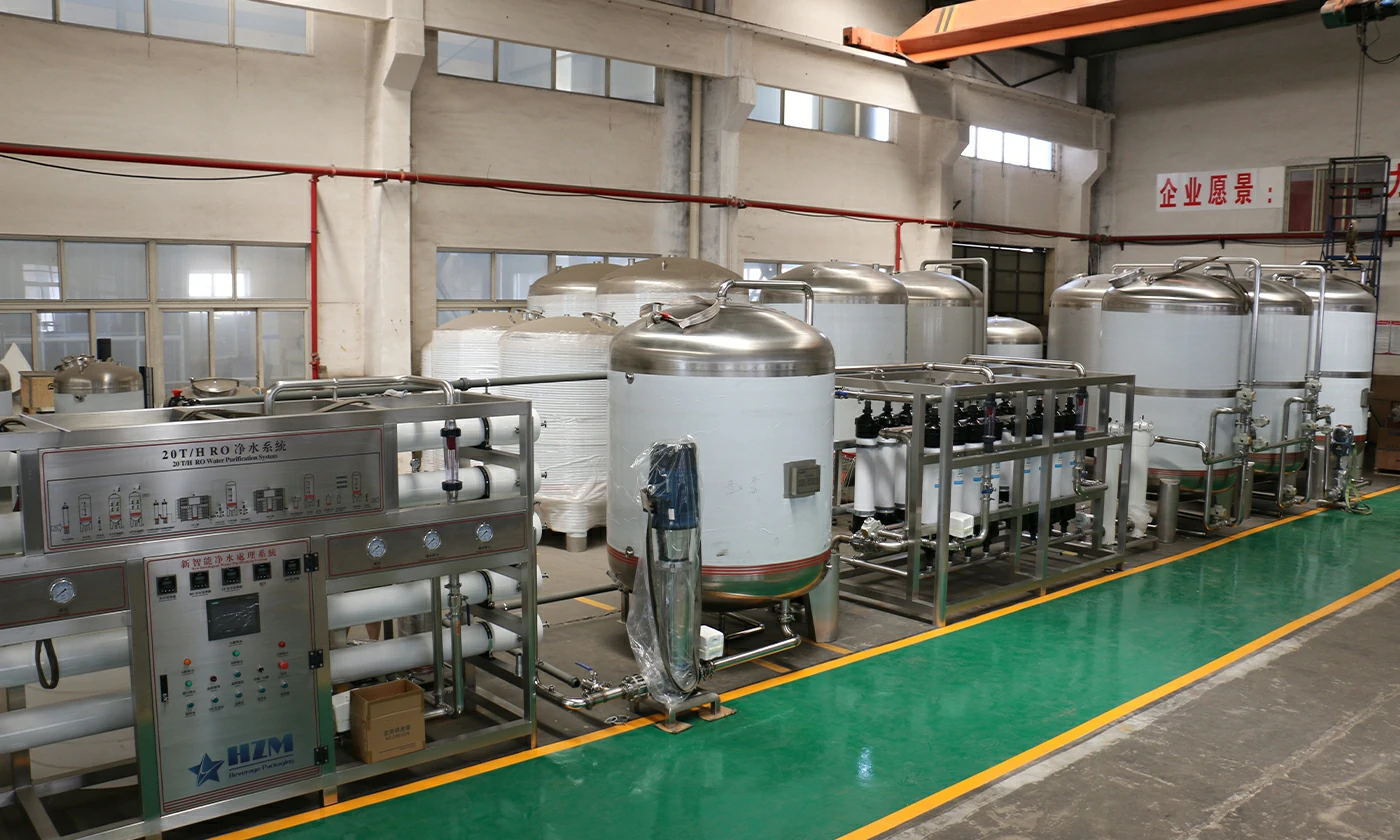
Equipment
Industrial RO Drinking Water Treatment Plant – Reverse Osmosis Equipment for Beverage & Bottled Water
1,000 litres/hour reverse osmosis water treatment for bottled-water, beverage and food production.
Learn moreEquipment
Industrial food water treatment equipment – 10T/H RO Water Treatment System
10 T/H reverse osmosis water treatment for food and beverage production, with pretreatment and stainless-steel equipment options.
Learn more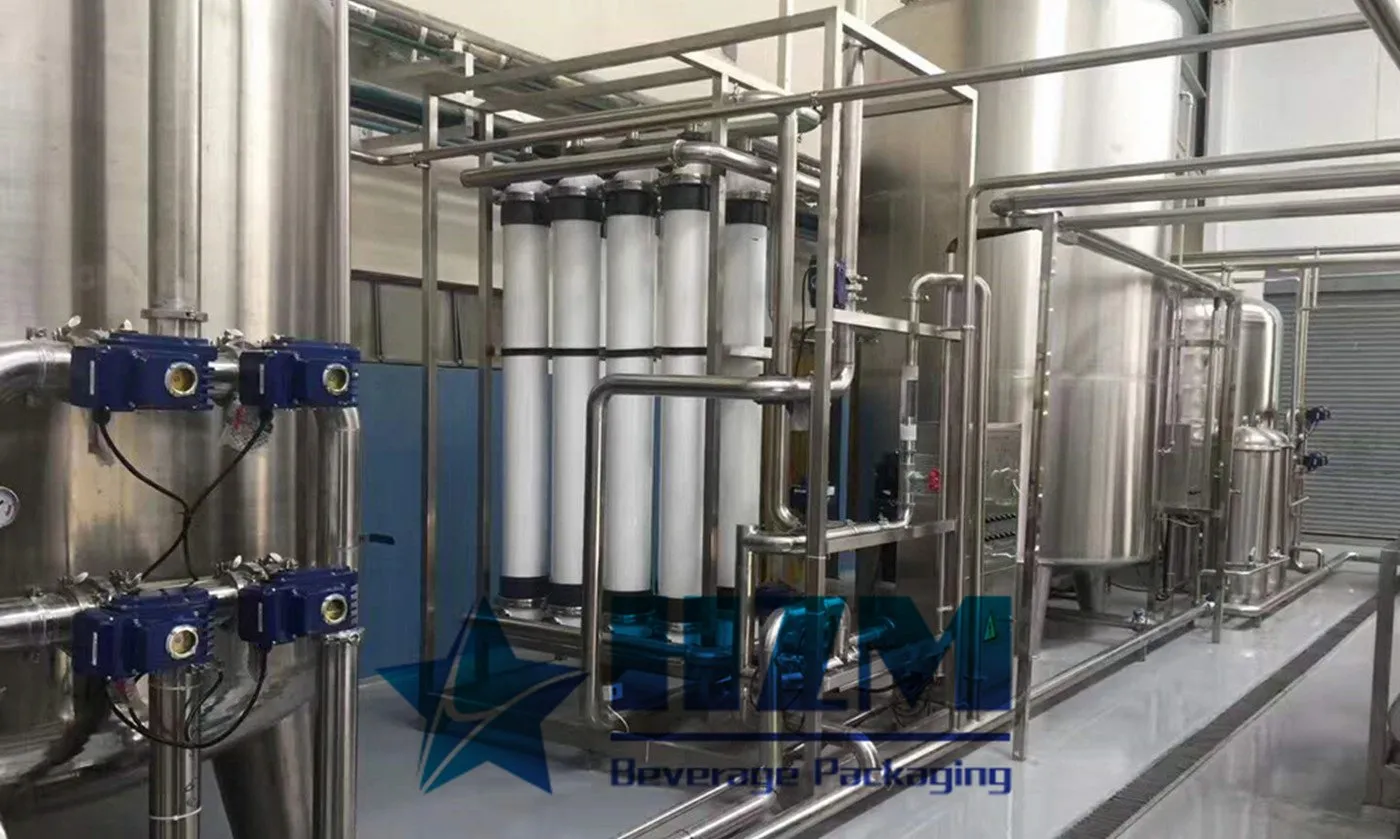
Equipment
Industrial Drinking Water Treatment System
This industrial drinking-water treatment system supplies treated water to bottling and beverage plants.
Learn more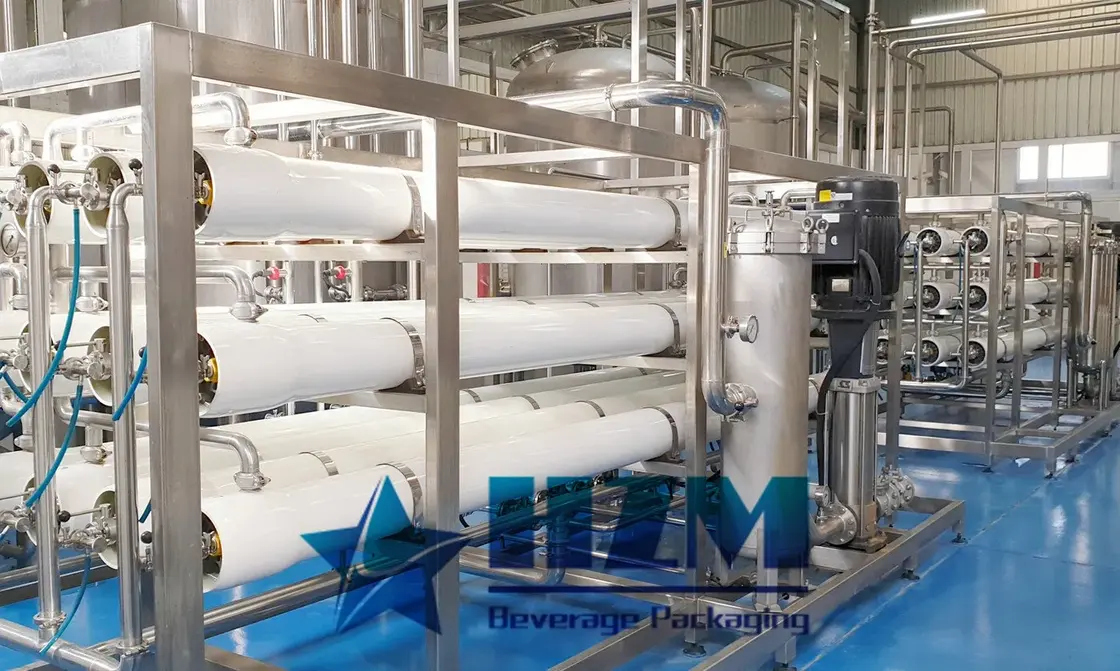
Equipment
Water Treatment System
HZM water treatment systems prepare process water for bottled water, beverages and brewing.
Learn more2023-06-09
8t Normal Pressure Ss304 Ro Water Treatment System
High quality 8t Normal Pressure Ss304 Ro Water Treatment System from China, China's leading ss304 ro water treatment system product, with strict quality control 8t ro water treatment system factories, producing high quality normal pressure ro water treatment equipment products.
Learn more2023-06-09
Normal Pressure SS304 SS316 RO Water Treatment System
High quality Normal Pressure SS304 SS316 RO Water Treatment System from China, China's leading SS316 RO Water Treatment System product, with strict quality control SS304 RO Water Treatment System factories, producing high quality SS316 water reverse osmosis system products.
Learn more
2025-05-29
HZM Food and Beverage Water Treatment Solutions
Reliable, Efficient, and Customized Water Solutions for the Food & Beverage Industry
Learn more2025-07-13
Water Treatment in the Industrial Food and Beverage Industry
In the food and beverage industry, water is not just an ingredient—it's essential to the smooth operation of the entire production process.
Learn more2023-06-09
RO Water Treatment Plant Guide: Raw Water Analysis and Process Selection
Practical HZM guidance on ro water treatment plant, focused on raw water analysis and process selection, line integration, RFQ data and measurable acceptance checks.
Learn more2026-07-24
Drinking Water Treatment System Design: Process, Equipment and Selection
A buyer's guide to drinking water treatment systems, from raw-water analysis and pretreatment to RO, disinfection, storage, sanitation, sizing and operating cost.
Learn more