
Insights & Updates
Drinking Water Treatment System Design: Process, Equipment and Selection
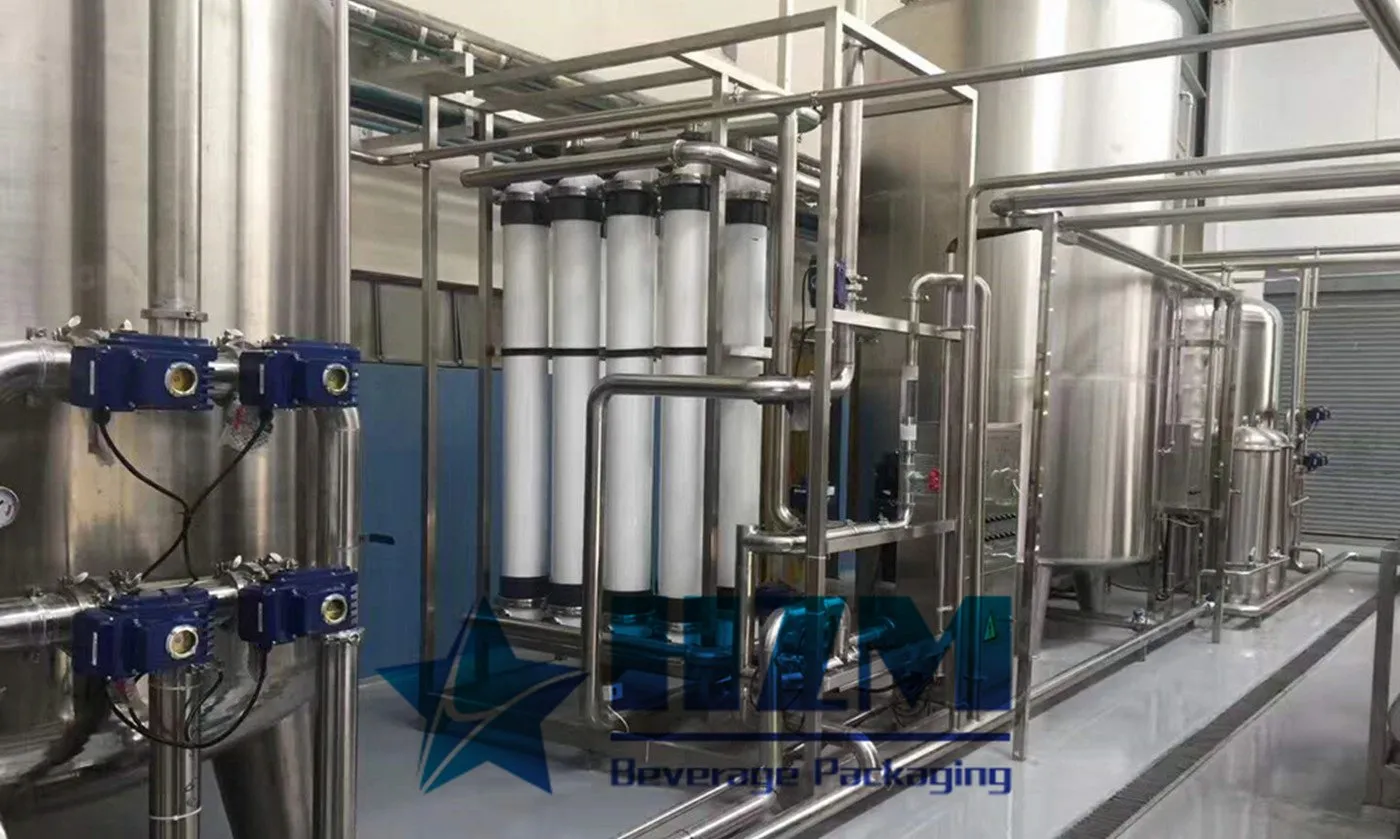
A drinking water treatment system should be designed from the raw water report and the required finished-water specification. Starting with a standard equipment list is risky: two water sources can look clear yet differ greatly in hardness, salinity, iron, organic load and microbiological condition. Those differences determine membrane performance, cleaning frequency, recovery and operating cost.
Water-treatment equipment selection starts with source-water analysis, the finished-water specification and the bottling plant’s hourly demand.
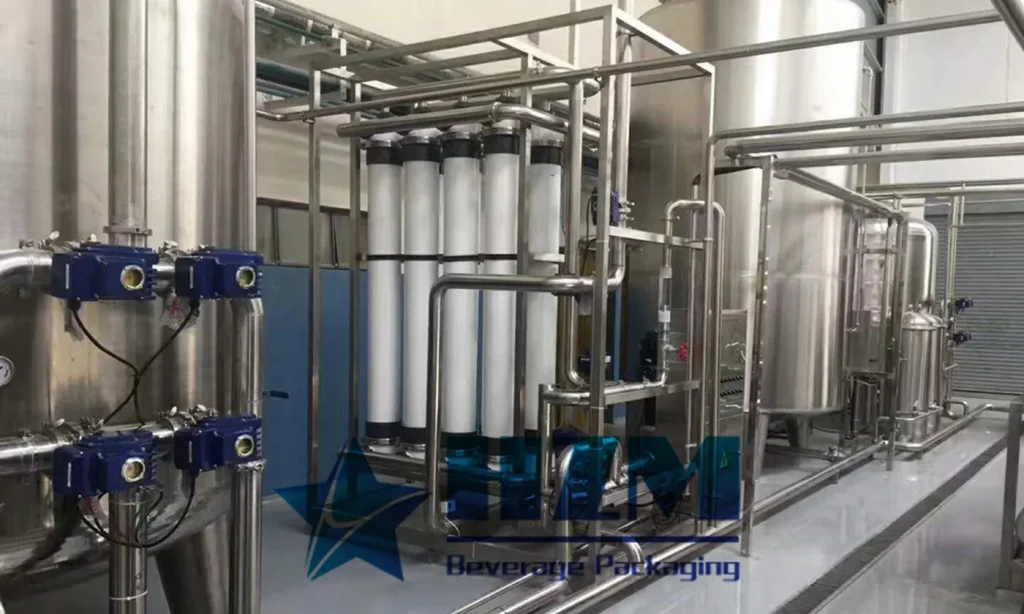
Begin with a representative raw-water analysis
Test the intended source under conditions that represent seasonal variation where possible. The exact panel depends on location and intended use, but a project commonly evaluates turbidity, pH, conductivity or total dissolved solids, hardness, alkalinity, iron, manganese, silica, chloride, sulfate, organic indicators and microbiological quality.
Also document source flow, temperature range and any existing treatment. Municipal water, well water and surface water create different design challenges. A single sample cannot always represent a source that changes after rain, drought or seasonal turnover.
Define the finished-water target
The required quality should reflect applicable drinking-water regulations, the product recipe and the company’s own sensory targets. Purified water, mineral-adjusted bottled water and process water for juice or carbonated drinks may need different treatment endpoints.
Do not specify “zero minerals” unless the product actually requires very low dissolved solids. Excessive treatment can waste water and energy, while uncontrolled mineral content can affect taste, scaling and beverage consistency.
Typical drinking water treatment stages
1. Raw-water storage and feed
A correctly sized tank and pump stabilize supply to downstream treatment. The tank should be protected against contamination and designed for cleaning and drainage. Level control prevents pumps from running dry or overflowing the system.
2. Coarse filtration or clarification
Water with suspended solids may require screening, multimedia filtration or a more substantial clarification step. The objective is to reduce the load reaching fine filters and membranes. Surface water usually needs a more robust strategy than already treated municipal water.
3. Activated-carbon treatment
Activated carbon can reduce chlorine, odor and some organic compounds. It also creates a large surface area where microorganisms may grow if operation and sanitation are neglected. Monitor performance and define backwash, replacement and microbial-control procedures.
4. Softening or antiscalant control
Hardness minerals can scale reverse-osmosis membranes. Depending on the analysis and recovery target, a design may use ion-exchange softening, antiscalant dosing or another pretreatment approach. Chemical selection and dose should be based on water chemistry and membrane guidance.
5. Cartridge filtration
Cartridge filters protect downstream equipment from remaining particles. Differential pressure is more useful than changing filters on guesswork alone. A rapid pressure increase often indicates a pretreatment problem that should be corrected upstream.
6. Ultrafiltration
Ultrafiltration can provide a strong barrier to suspended material and help manage variable feed water. It does not remove dissolved salts in the way reverse osmosis does. Whether it is needed depends on the raw water, treatment objective and overall risk assessment.
7. Reverse osmosis
RO uses pressure and a semipermeable membrane to separate a large portion of dissolved salts and other contaminants from water. The system produces permeate and a concentrate stream. Recovery should be selected from water chemistry, temperature, membrane flux and scaling risk—not maximized without analysis.
A well-designed industrial RO water treatment plant monitors pressures, flow and water quality so membrane fouling or damage can be detected early.
8. Final disinfection and polishing
UV, ozone or another validated control may be used depending on the product and system. UV performance depends on dose and water transmittance; it leaves no residual protection downstream. Ozone can support storage and distribution control but requires correct generation, contact, off-gas handling and occupational safeguards.
9. Product-water storage and distribution
Treated water can be recontaminated in a poorly designed tank or distribution loop. Use compatible materials, protected vents, cleanable surfaces and a circulation or sanitation strategy suited to the plant. Minimize dead legs and uncontrolled hoses between treatment and the beverage process.
How to size the system correctly
The filler rate alone is not enough. Calculate treated-water demand for product, bottle rinsing, syrup preparation, CIP, filter backwash and other simultaneous users. Include RO recovery, operating hours and planned downtime.
For example, a line with high peak demand may use a correctly sized hygienic product-water tank rather than oversizing every treatment stage for a short peak. Conversely, a small tank cannot compensate for inadequate daily production capacity. Model the hourly and daily balance.
Operating cost factors buyers often miss
- Feed-water and concentrate disposal cost.
- Pump energy at the actual operating pressure.
- Filter media, cartridges, chemicals and membrane replacement.
- Water used for backwash, flushing and sanitation.
- Labor and lost production during cleaning or maintenance.
- Instrumentation calibration and laboratory verification.
Compare proposals using expected annual treated-water volume and water quality, not purchase price alone.
Monitoring and preventive maintenance
Record feed and product conductivity, key pressures, differential pressure, permeate flow, concentrate flow and temperature at a consistent operating condition. Trends reveal changes earlier than a single alarm. Normalize or interpret readings with operating conditions because cold water, for example, changes membrane output.
Clean or replace components based on validated limits and supplier instructions. Repeated membrane cleaning is a symptom; investigate pretreatment, recovery, dosing and microbiological control before accepting it as normal.
Information to send with a request for quotation
- Full raw-water laboratory report and source description.
- Required finished-water specification and intended product.
- Hourly peak, daily volume and operating schedule.
- Available electrical supply, floor space, drainage and environmental conditions.
- Planned filler, bottle-rinse, CIP and processing demand.
- Local discharge limits and preferred level of automation.
HZM can configure pretreatment, membrane separation, disinfection and storage as an integrated water treatment system. The most reliable proposal begins with measurable water data and a clear production plan. That approach protects finished-water quality while preventing unnecessary equipment, water waste and maintenance cost.
Talk to our engineering team
Need help planning your packaging line?
Share your product, bottle and capacity requirements for a practical equipment recommendation.
Equipment
Industrial Drinking Water Treatment System
This industrial drinking-water treatment system supplies treated water to bottling and beverage plants.
Learn more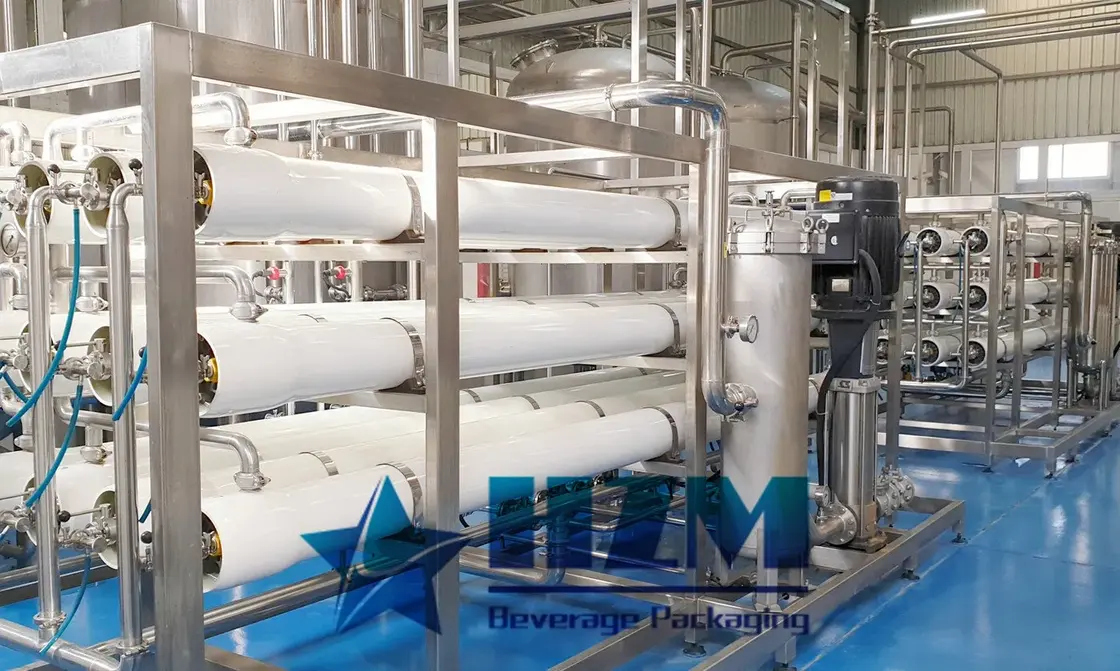
Equipment
Water Treatment System
HZM water treatment systems prepare process water for bottled water, beverages and brewing.
Learn more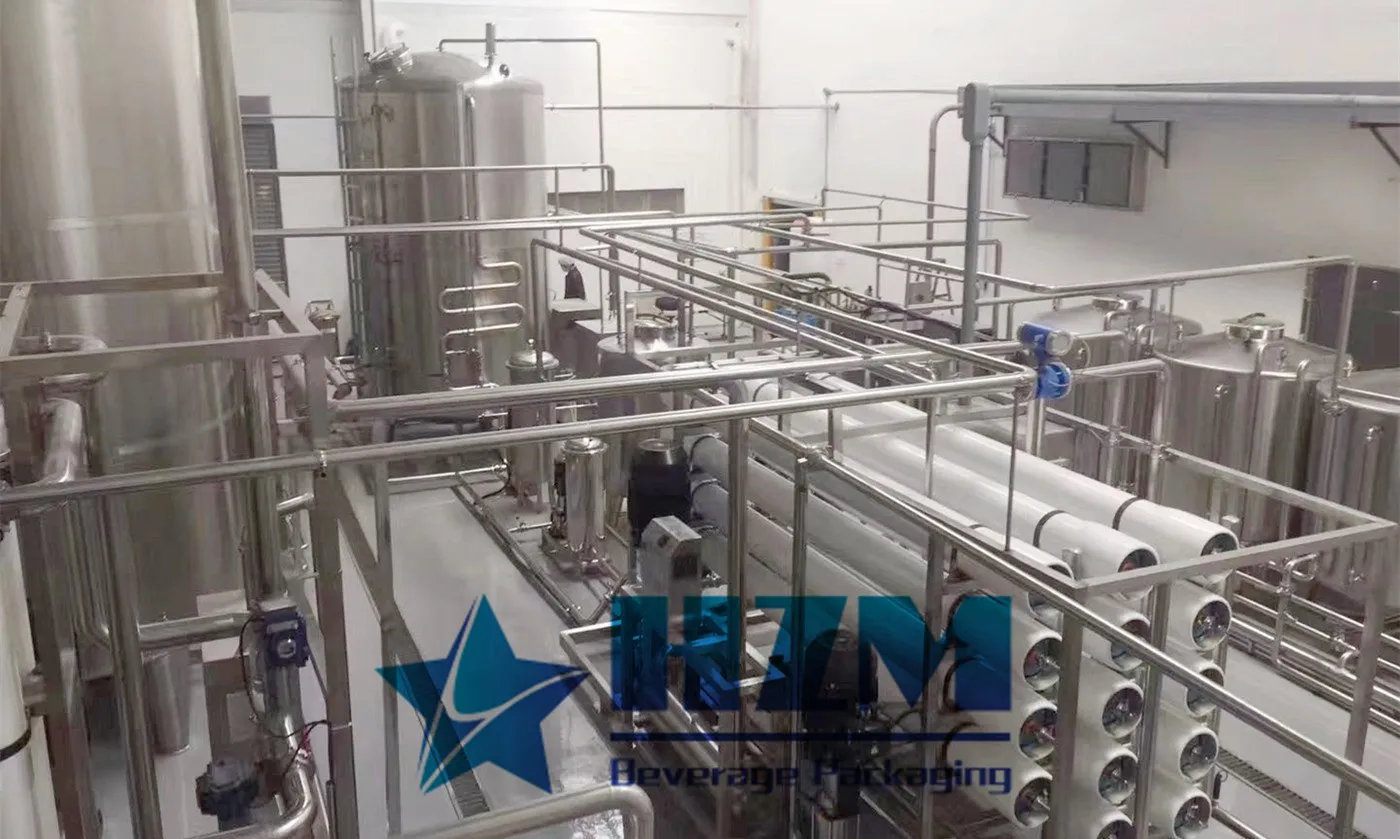
Equipment
Water Treatment Machine Purification System
HZM water purification equipment combines filtration, membrane treatment and final treatment in one process.
Learn more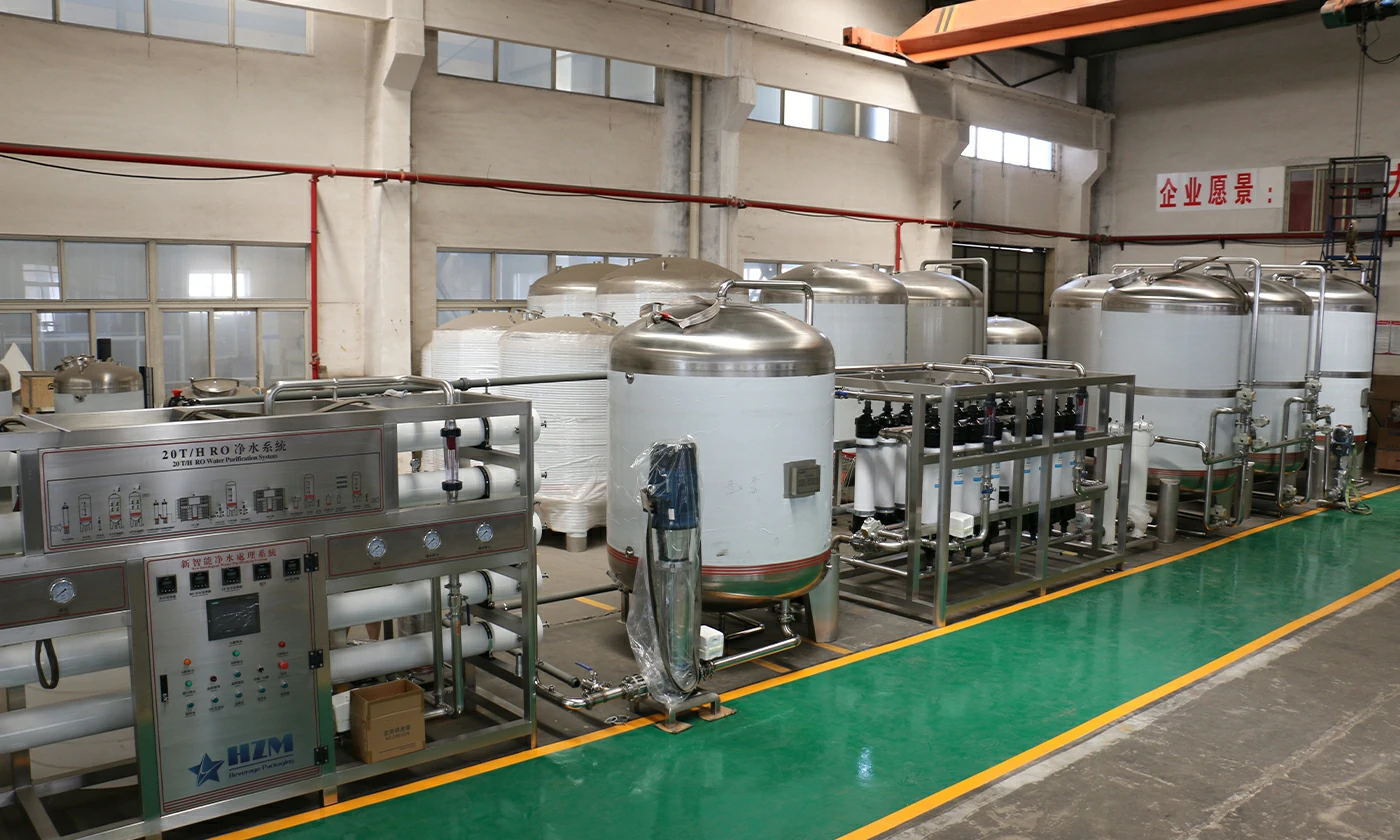
Equipment
Industrial RO Drinking Water Treatment Plant – Reverse Osmosis Equipment for Beverage & Bottled Water
1,000 litres/hour reverse osmosis water treatment for bottled-water, beverage and food production.
Learn more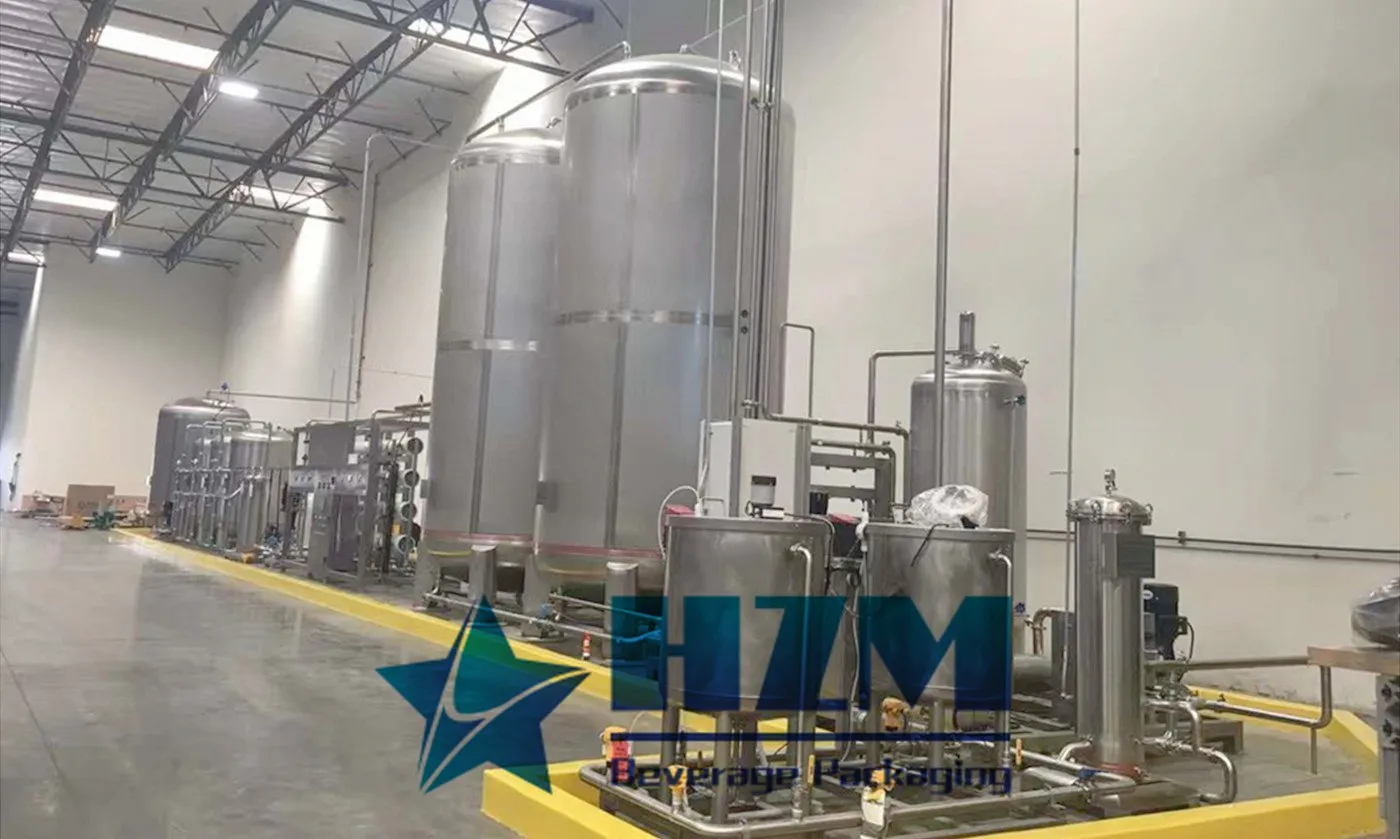
Equipment
RO Water Treatment System Drinking Water Purifier
This RO water treatment system combines pretreatment, reverse-osmosis membrane separation and final treatment for purified-water production.
Learn more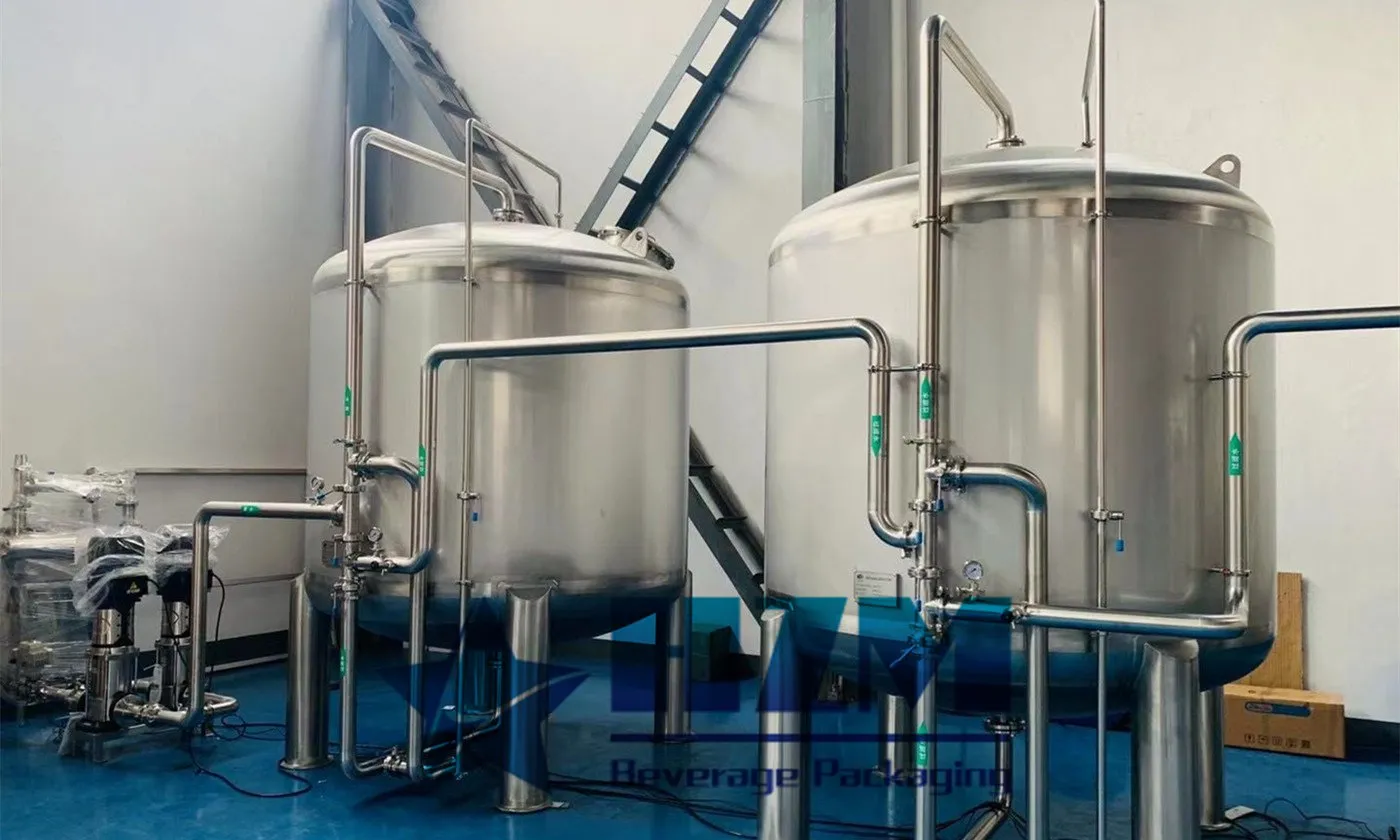
Equipment
RO System Water Treatment Plant
The RO water treatment plant produces purified water through feed-water pretreatment and reverse-osmosis membrane separation.
Learn more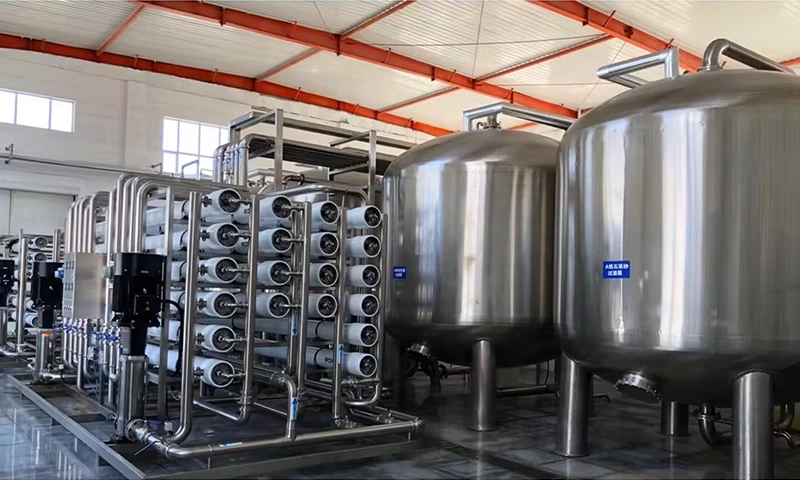
Equipment
reverse osmosis water treatment
The reverse osmosis system treats water for bottled-water and beverage production.
Learn moreEquipment
Industrial food water treatment equipment – 10T/H RO Water Treatment System
10 T/H reverse osmosis water treatment for food and beverage production, with pretreatment and stainless-steel equipment options.
Learn moreEquipment
RO Water Treatment Machine for Bottled Water Production
10 T/H reverse osmosis water treatment for purified-water bottling, with pretreatment, storage and filler-supply connections.
Learn more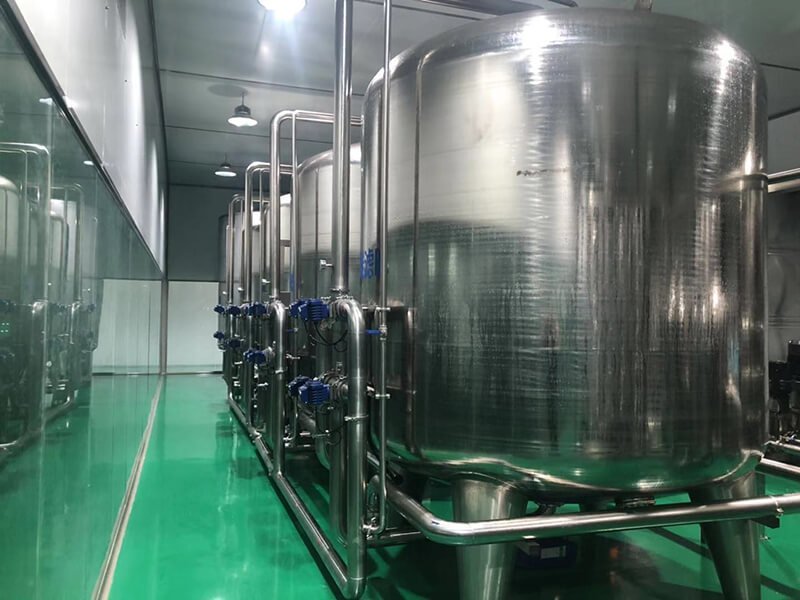
2023-03-24
Main Process of Drinking Water Treatment System
There are certain characteristics that beverages require, such as sufficient mineral content, flavor, pH balance to create high-quality drinking products with an acceptable taste. The water treatment systems are designed to generate these characteristics that are required for these drinks. Ultimately, the main component of all beverages is water, and the quality of the water […]
Learn more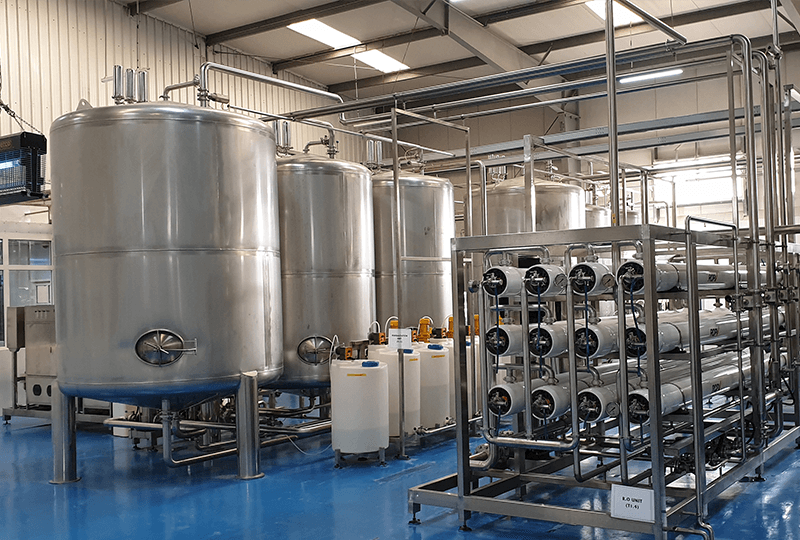
2023-03-24
Why is Water Treatment System Important?
Water is important for our existence. Seventy percent of our body depends on water. We have to take at least 13 glasses of water in a day. In this way, we will stay healthy and active. Drinking water is important, yet we only have to drink purified water. The water coming from the taps of […]
Learn more
2025-05-29
HZM Food and Beverage Water Treatment Solutions
Reliable, Efficient, and Customized Water Solutions for the Food & Beverage Industry
Learn more2025-07-13
Water Treatment in the Industrial Food and Beverage Industry
In the food and beverage industry, water is not just an ingredient—it's essential to the smooth operation of the entire production process.
Learn more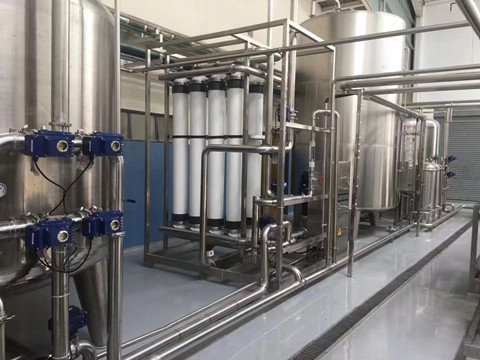
2023-03-24
The Overview of Water Treatment Systems in Filling Systems
We have been drinking pure water for many years, so it is conceivable that this bucket of pure water is used to install equipment for purifying pure water. It takes some systematic processes to get our drinking water standards. The raw water can be obtained through several parts of the pretreatment system, reverse osmosis system, […]
Learn more2025-03-11
Bottled water treatment system
A technical selection guide to bottled water treatment, covering source chemistry, flow calculations, storage, fault investigation and acceptance testing.
Learn more