
Insights & Updates
What Are The Steps Of A Water Treatment
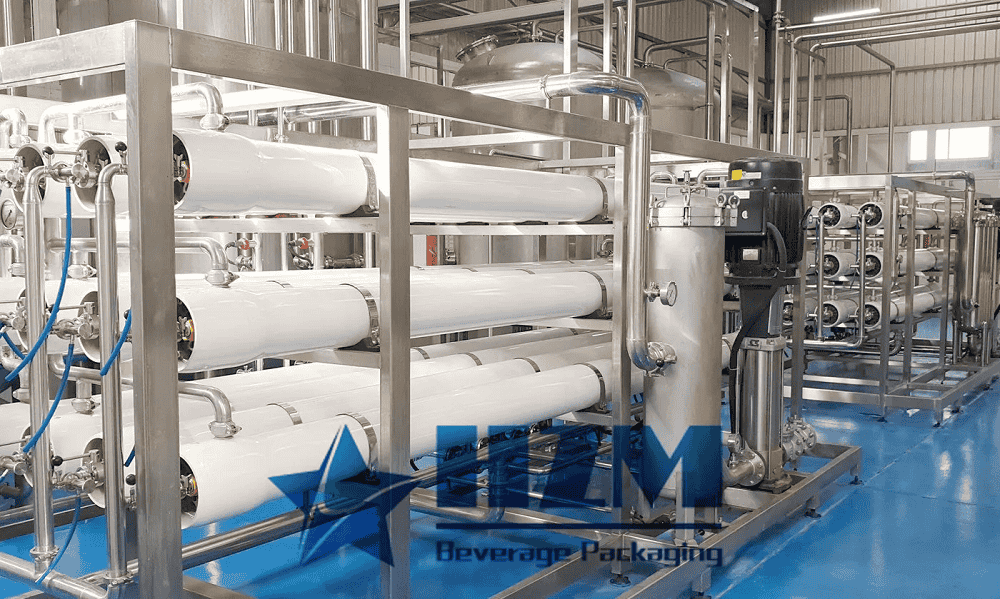
Water treatment plants are critical for a municipality so that clean water can be supplied to the local community. The process of water purification in water plants requires specialists to ensure safe and effective operation.
The whole procedure occurs in stages and involves a combination of technical processes.
Screening
The first water treatment step is screening, which is when water from lakes, rivers or the ground passes through a screen to filter out waste as it enters a treatment facility.
Water often passes through multiple screens before proceeding through the rest of the filtration system at the water treatment plant. First, it may flow through a coarse screen, which filters out large debris like plants, trash and other solid items. After that, water may pass through a fine screen, which removes smaller solid objects in the water, like chunks of sediment.
Chemical addition
At this point, chemicals are now added to encourage smaller particles of suspended matter to clump together and form “floc”. The chemicals used to achieve this purpose are called coagulants and there are many different products available.

Coagulation
Adding these coagulating agents during these water treatment plant steps requires careful administration by qualified engineers, as measurements of the chemicals need to be precise. Quality standards also need to be met as part of the regulatory processes within water treatment plants. This includes regular maintenance of the system by qualified engineers.
Sedimentation
During the third stage of water treatment, floc gets big and heavy enough that it sinks to the bottom of the water tank, according to the CDC.
This is an important step in the treatment of water for a town’s supply because it helps further clear out any unwelcome debris.
Filtration
With the larger particles taken out of the water, it must now be filtered through a variety of media such as sand, gravel or granular activated carbon to remove the smaller unwanted particles which still persist.
Disinfection
Once clarified water leaves the sedimentation basins in the treatment plant, chlorine is added during the disinfection water treatment stage. After the chlorine wastewater treatment occurs, ammonia follows which forms chloramine. This chloramine disinfected water passes through a further set of basins to complete the disinfection process.
Storage
The water is now essentially ready for public consumption, but must be stored until demand for it surfaces. It is most commonly stored in underground or overground tanks. As well as drinking water, there must also be a stored supply of water for emergencies such as fires.
Distribution
The water is finally sent to homes and businesses around the country via a sophisticated system of pumps, tanks, pipelines, hydrants, valves and meters.
Purchase high-quality water treatment system from us
HZM is a professional supplier of water treatment system. We are dedicated ourselves to this industry for many years. If you are in need of any water treatment system for your plant, kindly feel free to contact us today!
Talk to our engineering team
Need help planning your packaging line?
Share your product, bottle and capacity requirements for a practical equipment recommendation.
Equipment
Water Treatment System
HZM water treatment systems prepare process water for bottled water, beverages and brewing.
Learn more
Equipment
Industrial Drinking Water Treatment System
This industrial drinking-water treatment system supplies treated water to bottling and beverage plants.
Learn more
Equipment
reverse osmosis water treatment
The reverse osmosis system treats water for bottled-water and beverage production.
Learn more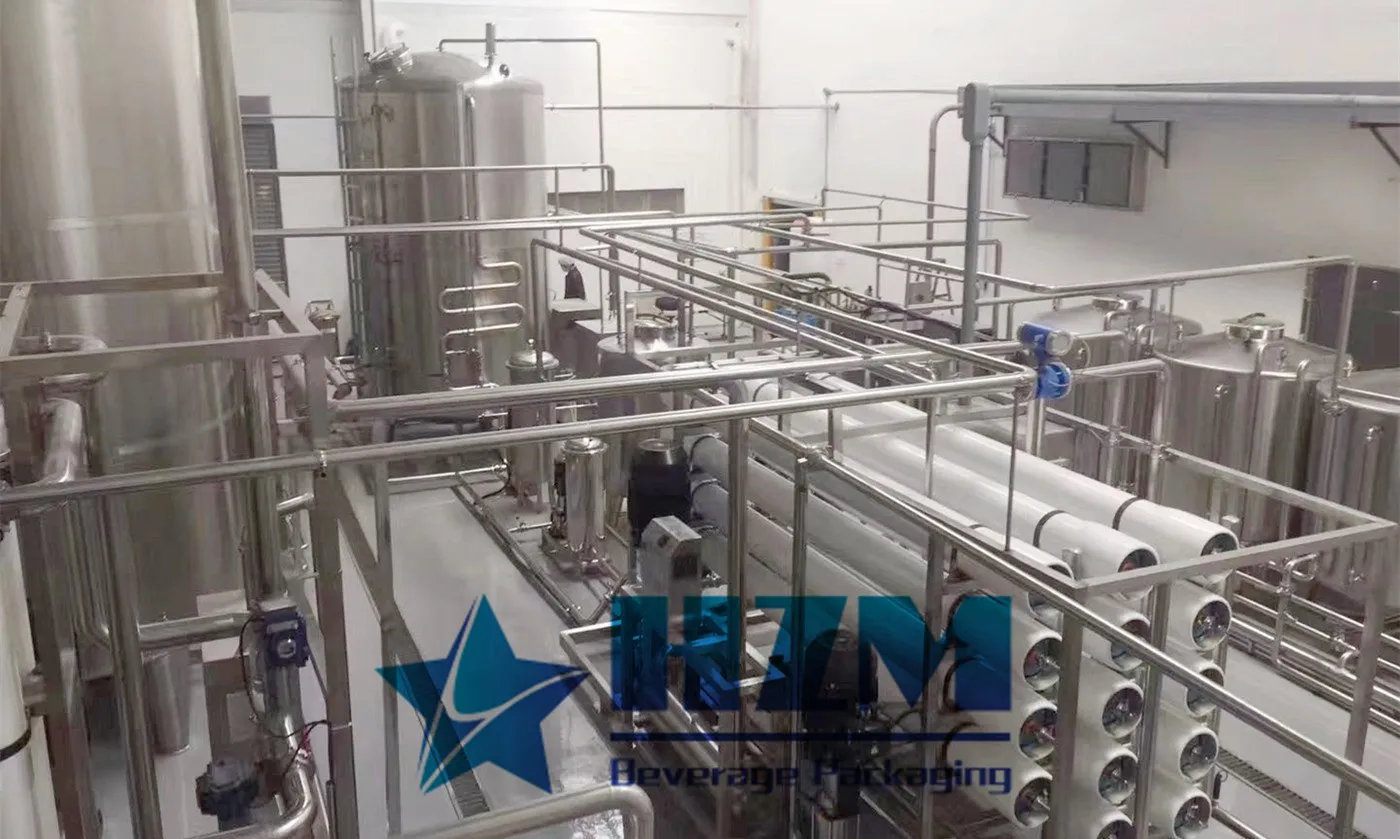
Equipment
Water Treatment Machine Purification System
HZM water purification equipment combines filtration, membrane treatment and final treatment in one process.
Learn more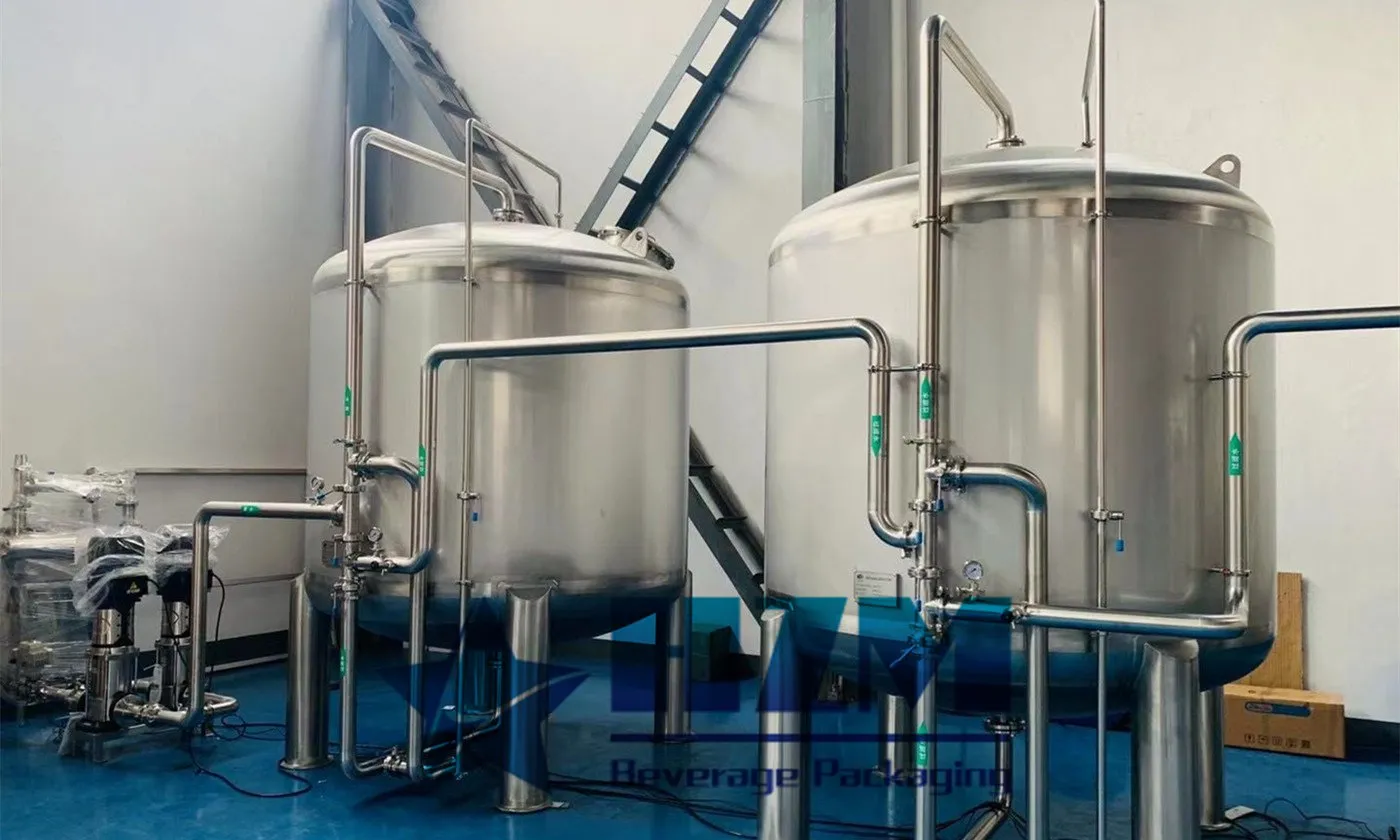
Equipment
RO System Water Treatment Plant
The RO water treatment plant produces purified water through feed-water pretreatment and reverse-osmosis membrane separation.
Learn moreEquipment
RO Water Treatment Machine for Bottled Water Production
10 T/H reverse osmosis water treatment for purified-water bottling, with pretreatment, storage and filler-supply connections.
Learn moreEquipment
Water Treatment for the Food & Beverage Industry – RO Water Treatment Equipment
10 T/H RO water treatment for ingredient, process and rinse water in food and beverage plants.
Learn moreEquipment
Industrial food water treatment equipment – 10T/H RO Water Treatment System
10 T/H reverse osmosis water treatment for food and beverage production, with pretreatment and stainless-steel equipment options.
Learn more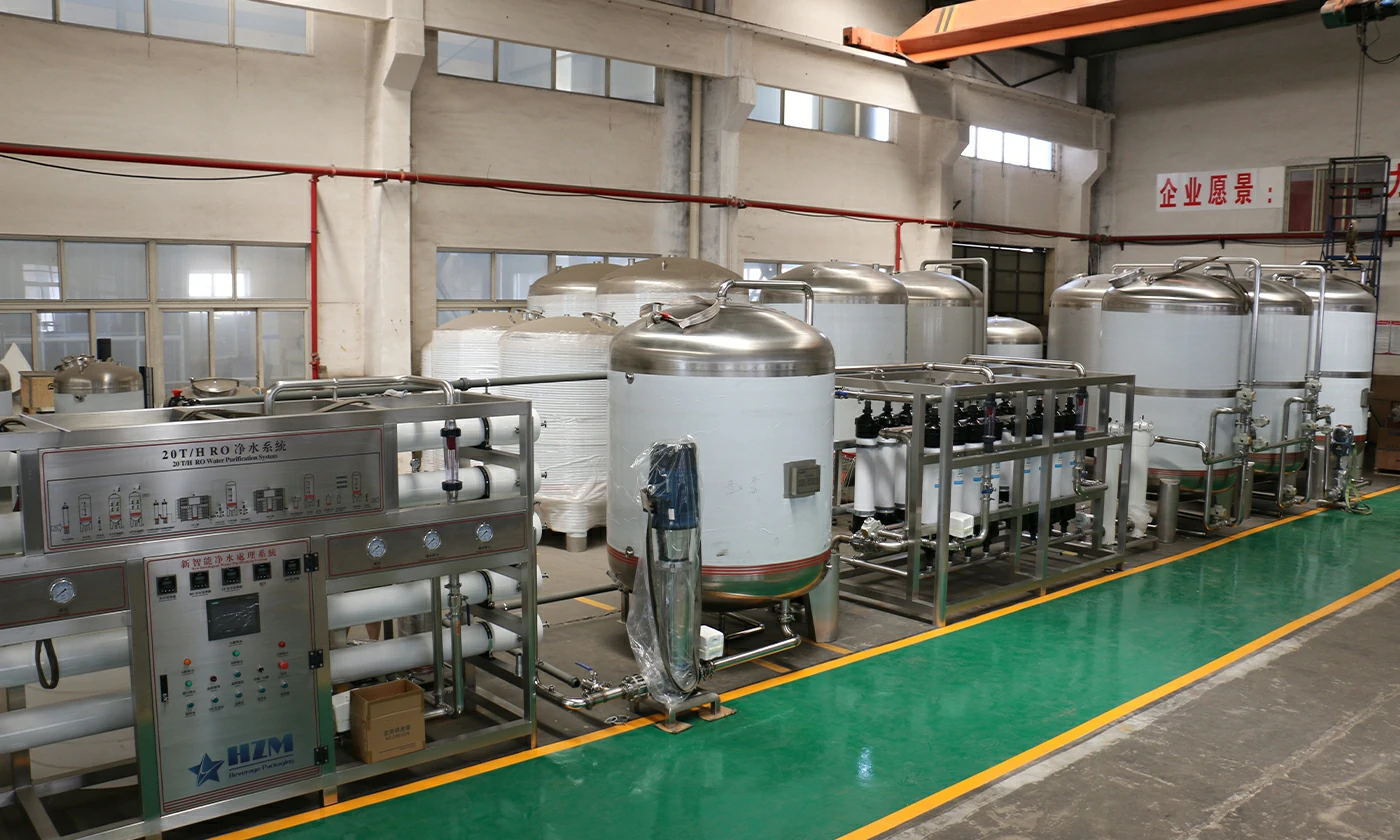
Equipment
Industrial RO Drinking Water Treatment Plant – Reverse Osmosis Equipment for Beverage & Bottled Water
1,000 litres/hour reverse osmosis water treatment for bottled-water, beverage and food production.
Learn more
2023-03-24
What is the Working Principle of Water Treatment Equipment?
Today, Water purifiers have become a need for almost every home. It is a form of water treatment machine that helps to get water clean and safe for drinking. This way, it ensures that you are protected from several forms of water-borne diseases. Water treatment processes are of different types and include Ultra Filtration (UF), […]
Learn more2023-03-24
Why Do We Need Water Treatment?
Water treatment is the process for enhancing the quality of water so that it meets the water quality criteria for its fitness for the intended use after having been chemically or biological polluted. Treated water has great importance in industrial applications as well as safe drinking. Water treatment protects humans and ecosystem Water contains elements toxic […]
Learn more
2023-03-24
Why is Water Treatment System Important?
Water is important for our existence. Seventy percent of our body depends on water. We have to take at least 13 glasses of water in a day. In this way, we will stay healthy and active. Drinking water is important, yet we only have to drink purified water. The water coming from the taps of […]
Learn more
2023-03-24
The Overview of Water Treatment Systems in Filling Systems
We have been drinking pure water for many years, so it is conceivable that this bucket of pure water is used to install equipment for purifying pure water. It takes some systematic processes to get our drinking water standards. The raw water can be obtained through several parts of the pretreatment system, reverse osmosis system, […]
Learn more2025-03-11
Bottled water treatment system
A technical selection guide to bottled water treatment, covering source chemistry, flow calculations, storage, fault investigation and acceptance testing.
Learn more
2023-03-24
Main Process of Drinking Water Treatment System
There are certain characteristics that beverages require, such as sufficient mineral content, flavor, pH balance to create high-quality drinking products with an acceptable taste. The water treatment systems are designed to generate these characteristics that are required for these drinks. Ultimately, the main component of all beverages is water, and the quality of the water […]
Learn more