
Insights & Updates
Servo Piston Filling for Sauces: Nozzle, Particle Size and Accuracy Checklist

Ketchup, mayonnaise, chili sauce, soy sauce and dressings cannot be grouped under one word—“viscous”—and expected to run identically. Some products shear-thin, some contain fibers or particles, some foam, and some change dramatically with temperature. A filler selected from a water-like sample can block, smear or miss accuracy when the commercial recipe arrives.
Servo piston technology offers controlled stroke and flexible recipes, but piston size, valve path, nozzle, hopper, agitation and cleaning must match the product. The following checklist helps buyers provide the data needed for a credible trial and quotation.
Quick answer: Provide viscosity across the real temperature and shear range, maximum particle size and concentration, fill volumes, container neck, target accuracy and cleaning method. Select product passages and nozzles large enough for particles, use controlled dive and cutoff for stringing products, and prove the solution with the commercial recipe at minimum and maximum conditions.
Describe Product Rheology, Not Just Viscosity
A single viscosity value without test temperature and method can be misleading. Ketchup may flow differently under shear than at rest, while mayonnaise can be damaged by excessive pumping. Provide the measurement method, temperature range and whether the product contains air after mixing.
If several recipes will share the line, identify the thinnest, thickest and most difficult. The machine must have a stable operating range rather than an isolated demonstration point.
Define Particle and Fiber Characteristics
State maximum particle dimensions, typical distribution, concentration and whether particles are soft, hard, sticky or fibrous. Product passages, rotary valves and nozzles must allow them through without crushing or bridging. Settling products may need gentle agitation or recirculation that does not damage texture.
Use an actual batch for testing. A smooth substitute does not prove that an automatic servo piston filling line will handle the final particulate recipe.
Match Piston Range to Fill Volumes
A piston is generally most accurate and efficient within a defined working range. If the line must fill both small sachet-like bottles and large jars, one cylinder size may not be ideal. List every net-content target and the required speed for each.
Servo control can store stroke and speed profiles, including slower suck and discharge stages. However, mechanical sizing and product supply still set the achievable cycle.
Choose Nozzle Diameter and Motion
The nozzle must pass product and particles without excessive pressure while fitting the container opening. Diving or bottom-up filling can reduce smearing and trapped air. A positive shutoff helps control strings and tails from thick products. Nozzle spacing and container centering should prevent contact with the finish.
For wide-neck jars, product can be deposited with less shear, but splashing and surface appearance still need control. For narrow bottles, the neck may limit capacity.
Control Hopper and Product Supply
Maintain a consistent product head and temperature. Hopper agitation should prevent settling without whipping air into the sauce. Jacketed tanks or piping may be useful when temperature strongly changes flow, but heating must respect food quality.
Avoid dead zones and long hold-up paths that complicate changeover or allergen control. The connection from processing to filler should be included in hygienic and capacity review.
Verify Accuracy, Drip and Product Damage
| Acceptance check | Evidence |
|---|---|
| Net content | Calibrated weights across all nozzles |
| Particle integrity | Before/after product comparison |
| Cutoff quality | No strings on neck or conveyor |
| Entrained air | Stable weight and product appearance after settling |
| Speed | Sustained run with commercial product and containers |
Inspect the product after filling and after shelf conditioning. Mechanical damage or separation may not be visible immediately.
Design Cleaning and Changeover
Thick products remain in elbows, valve cavities and nozzle tips. Ask how parts are drained, flushed, removed and inspected. Tool-less disassembly can reduce downtime, but hygienic reassembly and seal condition must be controlled. Define allergen-change requirements and cleaning verification with the plant’s food-safety team.
If the line also fills thinner liquids, confirm recipe changeover, residual-product recovery and cross-contamination control. A flexible machine should be proven with the real extremes.
Frequently Asked Questions
Can one piston filler handle soy sauce and mayonnaise?
It may be configured for both, but speed, nozzle, piston range, cleaning and product supply differ. Validate the complete operating range using actual products.
What is the most important particle specification?
Maximum particle dimensions and concentration are essential, but hardness, shape, fibers and sensitivity to damage also affect valve and nozzle design.
Why does thick sauce form a tail after filling?
Stringing can come from product rheology, nozzle geometry, cutoff speed, temperature or insufficient positive shutoff. Adjust the system as a combination rather than only increasing suck-back.
Plan the Next Step with HZM Machinery
Send HZM product samples or rheology data, particle information, fill volumes, containers and cleaning requirements. The team can configure and test a servo piston sauce filling line for the real recipe range.
Talk to our engineering team
Need help planning your packaging line?
Share your product, bottle and capacity requirements for a practical equipment recommendation.
Equipment
Automatic Servo Piston Filling Line for Viscous Sauces – Ketchup, Soy Sauce, Mayonnaise
The automatic servo piston filling line fills sauces and condiments such as ketchup, soy sauce and mayonnaise into bottles and other rigid containers.
Learn more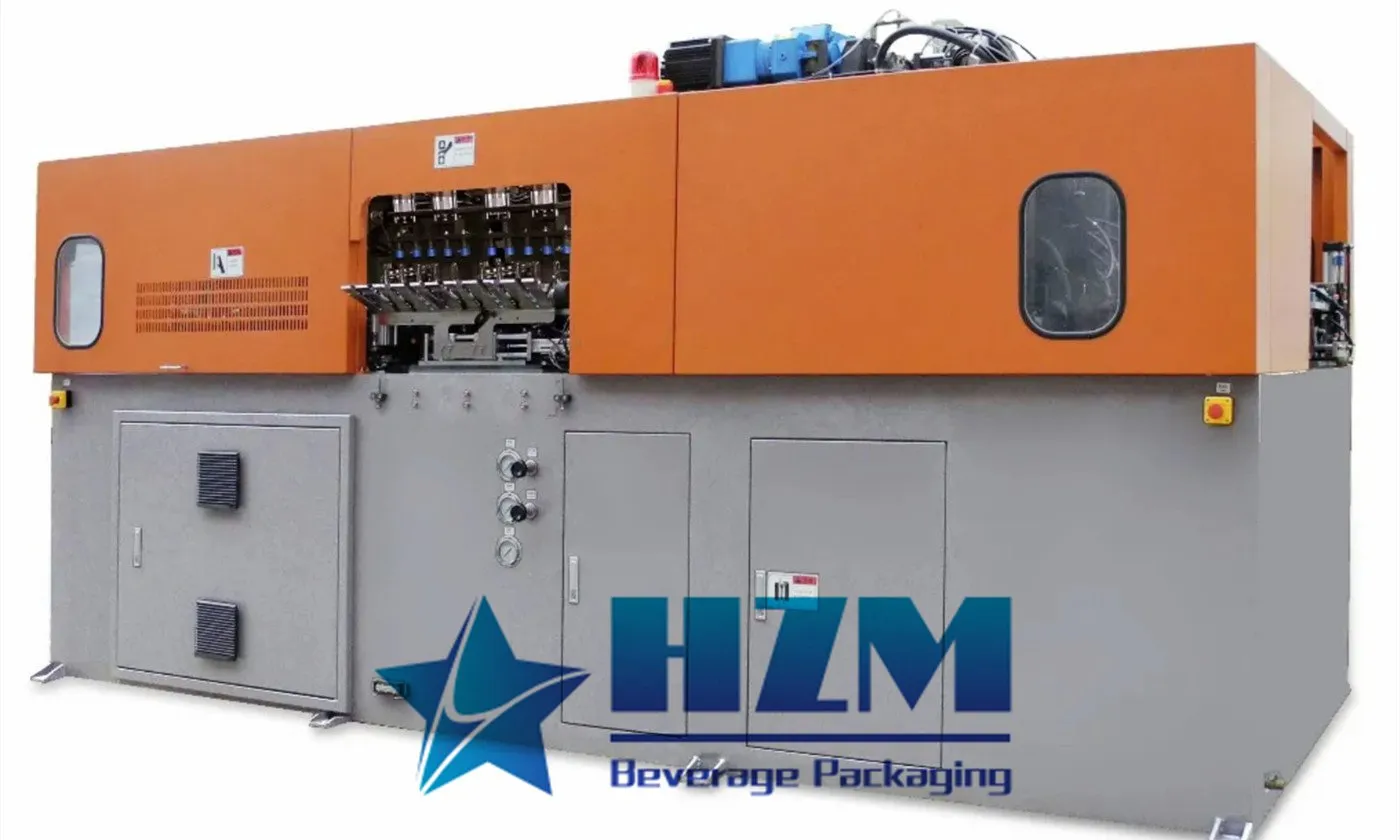
Equipment
Full Electric Servo Type Blow Molding Machine
Full-electric servo PET blow moulding with 4, 6, 9 or 10 cavities and capacities of 5,400–13,000 bottles/hour at 500 ml.
Learn more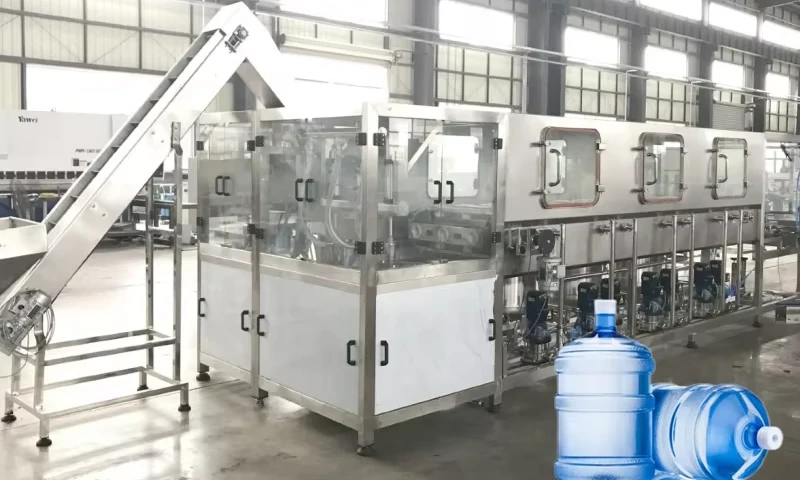
2026-08-01
5-Gallon Returnable Water Bottles: Washing and Inspection Checklist
A practical receiving, inspection, washing, rinsing and verification checklist for returnable 3–5 gallon bottled-water production.
Learn more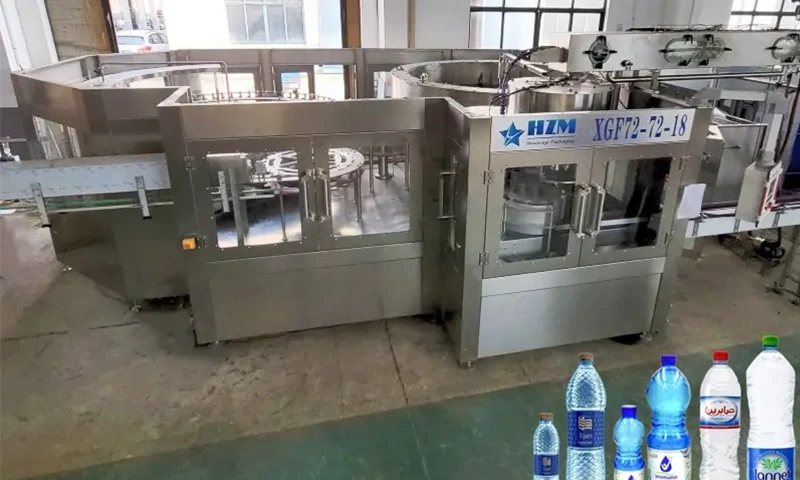
2026-07-27
How to Reduce Bottle Changeover Time on a Beverage Filling Line
Use SMED principles, prepared change parts and verified center settings to reduce bottle-format changeover time without sacrificing filling or packaging quality.
Learn more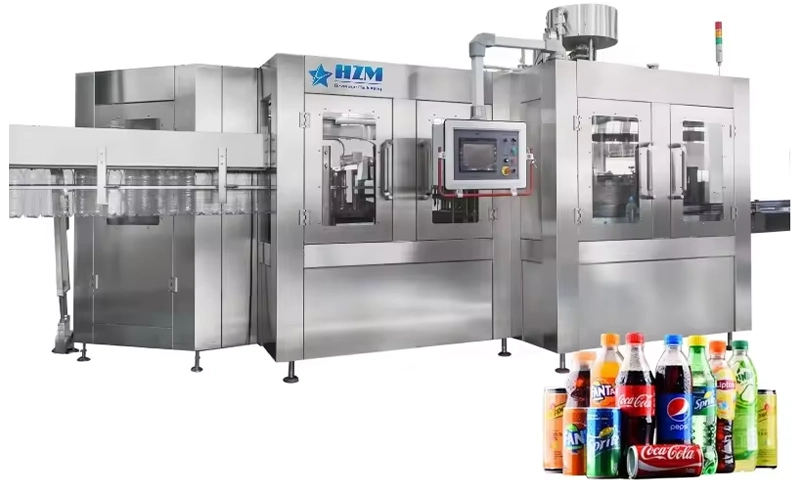
2026-07-29
Carbonated Drink Filling Problems: How to Reduce Foaming and CO₂ Loss
Troubleshoot foaming, low fill and carbonation loss by controlling beverage temperature, pressure balance, CO₂ mixing, filling valves and container handling.
Learn more
2026-08-07
Edible Oil Filling Problems: How to Control Drips, Foam and Viscosity
Improve edible-oil filling accuracy and cleanliness by controlling product temperature, viscosity, flow profile, nozzle cutoff, bottle handling and calibration.
Learn more
2026-08-11
Filling Machine Spare Parts: Build a Risk-Based Inventory and PM Plan
Classify critical filling-line spares by failure impact, lead time and wear rate, then connect inventory with preventive maintenance and usage records.
Learn more
2026-07-31
CIP Verification for Beverage Plants: Flow, Temperature, Time and Concentration
Go beyond running a cleaning recipe: verify CIP flow, turbulence, temperature, chemical concentration, time, return condition and hygienic coverage.
Learn more