
Insights & Updates
CIP Verification for Beverage Plants: Flow, Temperature, Time and Concentration
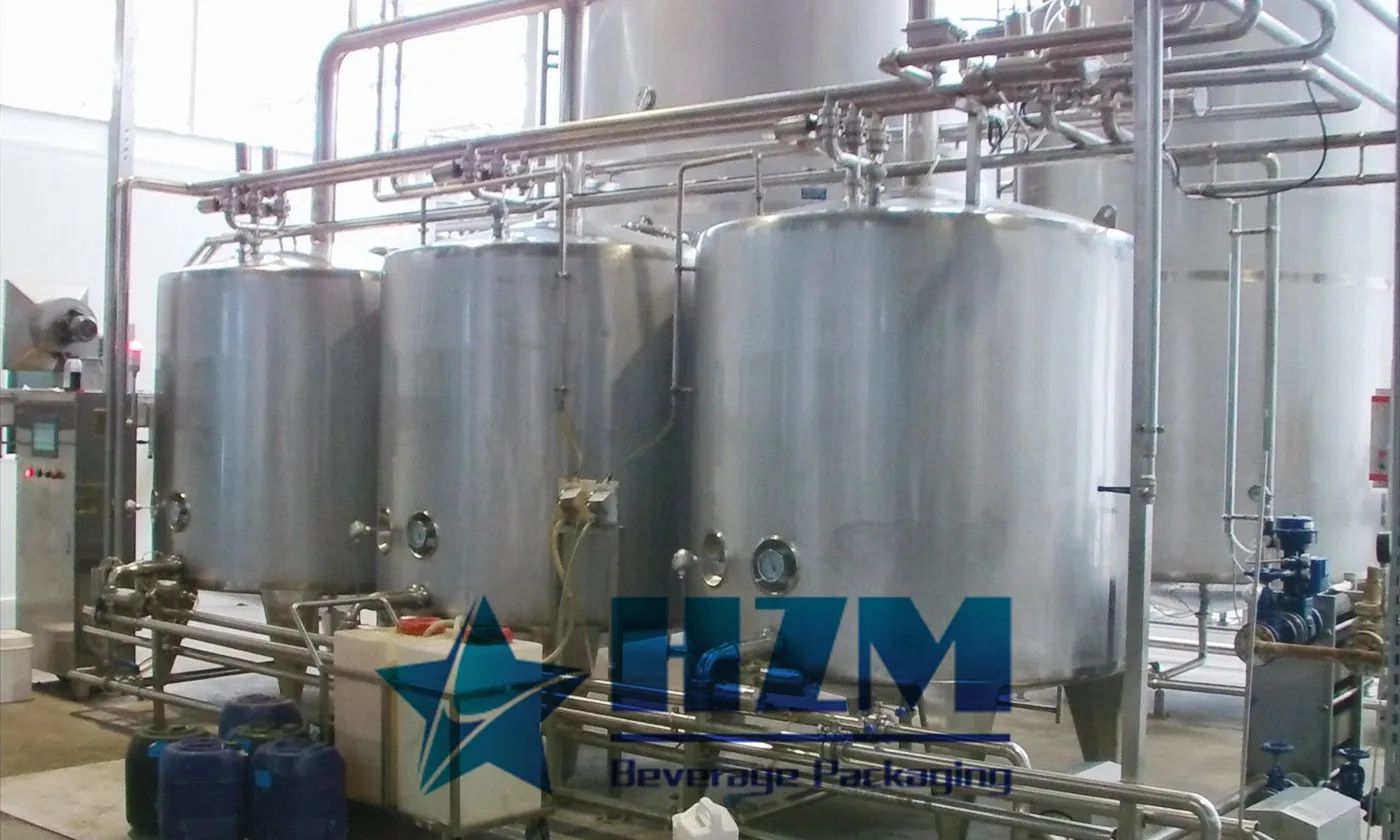
A completed CIP recipe does not automatically prove that equipment is clean. The pump may have run and the tank may have reached temperature while a distant return stayed cool, a spray device was blocked or chemical concentration fell below target. Verification shows that the required cleaning conditions reached every part of the circuit for the required time.
For beverage processors, the practical foundation is often summarized as flow or mechanical action, chemical concentration, temperature and time. These variables interact: reducing one may require increasing another, but only within a validated procedure compatible with equipment materials and product soil.
Quick answer: Define validated targets for return flow, temperature, chemical concentration and exposure time; measure them at representative supply and return points; confirm every circuit and spray device receives coverage; verify final rinse condition; and trend deviations. Use inspection, swabs or other suitable verification methods to confirm that the recipe removes the actual soil.
Map Every CIP Circuit
Create a current piping and instrumentation diagram that shows tanks, pumps, heaters, dosing, valves, supply and return paths, spray devices and drains. Divide the plant into circuits that can achieve the required flow without bypassing sensitive equipment. Identify dead legs, high points that trap air and branches with low velocity.
When new equipment is added, update the circuit assessment. A CIP system sized for the original plant may not deliver adequate flow after additional piping or tanks are connected.
Verify Mechanical Action and Flow
Cleaning solution must contact surfaces with enough velocity or spray action to remove soil. Pump discharge pressure alone does not prove flow at the return. Measure or infer flow using validated instruments and confirm that valves are in the correct position. Tank spray devices require their specified pressure and flow to create the intended pattern.
Look for air entrainment, cavitation, blocked strainers and partially closed valves. A sudden change in return flow or differential pressure can signal a restriction or an incorrect route.
Measure Temperature at the Critical Point
The CIP tank may reach its setpoint before the far end of the circuit. Time at temperature should begin only when the defined return or critical point enters the validated range. Insulation, ambient conditions, line length and soil load affect heat loss.
Calibrate temperature sensors and compare displayed values with an independent reference on a planned schedule. Investigate cycles that take progressively longer to heat because this may indicate heater fouling, steam issues or unexpected dilution.
Control Chemical Concentration
Automatic dosing improves repeatability, but concentration still requires verification. Conductivity can be a useful indirect measure when the relationship between chemical, temperature and water quality is established. Titration or another appropriate method may be used to confirm the actual concentration.
Water hardness, residual product and carryover from a previous step can change chemical demand. Never increase concentration without confirming compatibility with stainless steel, elastomers, seals and supplier instructions. Excess chemical raises cost and rinse demand and may damage components.
Define Exposure Time Correctly
The validated contact time applies after flow, temperature and concentration are simultaneously within limits. A controller that counts from pump start can overstate effective cleaning. Document allowable interruptions and the required response when a parameter leaves the range.
| Record | What it should demonstrate |
|---|---|
| Recipe step log | Correct sequence and valve route |
| Supply/return temperature | Validated thermal exposure |
| Flow or pressure evidence | Mechanical coverage |
| Conductivity/concentration | Chemical strength and rinse completion |
| Deviation record | Disposition and corrective action |
Verify Coverage and Final Rinse
New or modified circuits may require visual inspection, riboflavin coverage testing for spray devices, removable test pieces or other suitable studies. Routine verification can include inspection, ATP, allergen checks or microbiological sampling according to the product and risk program. The method should be meaningful for the soil being removed.
Final rinse endpoints may use conductivity, pH or another validated criterion. Avoid wasting water through an arbitrary fixed rinse that is much longer than necessary, but do not stop before chemical residue is adequately removed.
Prevent Cross-Connection and Operator Error
Valve-state control, line identification and interlocks help prevent cleaning chemical from entering product or the wrong tank. Manual hose connections should be clearly identified and included in pre-start checks. Locking or key-control arrangements may be appropriate for critical routes.
Integrating CIP with an automatic beverage processing system can improve sequence control, but operators still need training to recognize abnormal return, leaks and instrumentation faults.
Frequently Asked Questions
Is conductivity the same as chemical concentration?
Conductivity can correlate with concentration when the chemical, water and temperature relationship is established. It should be calibrated or confirmed using an appropriate reference method.
When should CIP validation be repeated?
Reassess after significant equipment, piping, chemical, recipe or product changes, and according to the plant’s risk-based validation program.
Can longer cleaning time compensate for low flow?
Not automatically. Some soils require adequate mechanical action and coverage. A low-flow dead zone may remain unclean regardless of extended circulation.
Plan the Next Step with HZM Machinery
For a new process line or CIP expansion, provide HZM with circuit volumes, piping, tanks, products and sanitation targets. The team can integrate cleaning with the broader beverage filling and processing line.
Talk to our engineering team
Need help planning your packaging line?
Share your product, bottle and capacity requirements for a practical equipment recommendation.
Equipment
CIP System
The CIP system cleans the internal surfaces of beverage tanks, pipelines and filling equipment without routine disassembly.
Learn more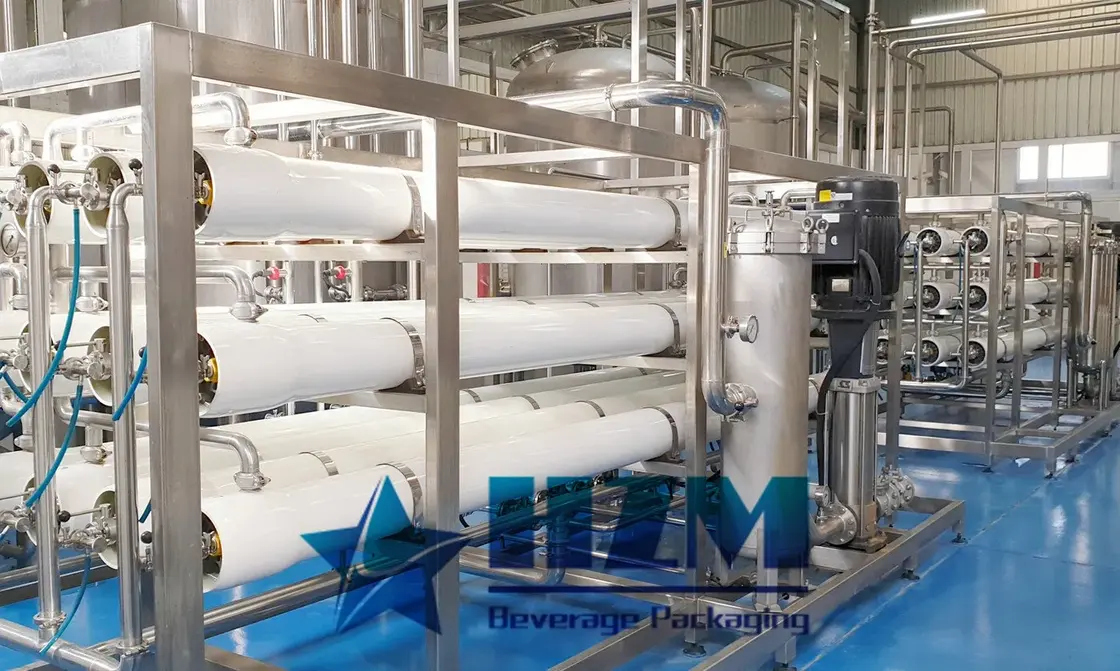
Equipment
Water Treatment System
HZM water treatment systems prepare process water for bottled water, beverages and brewing.
Learn more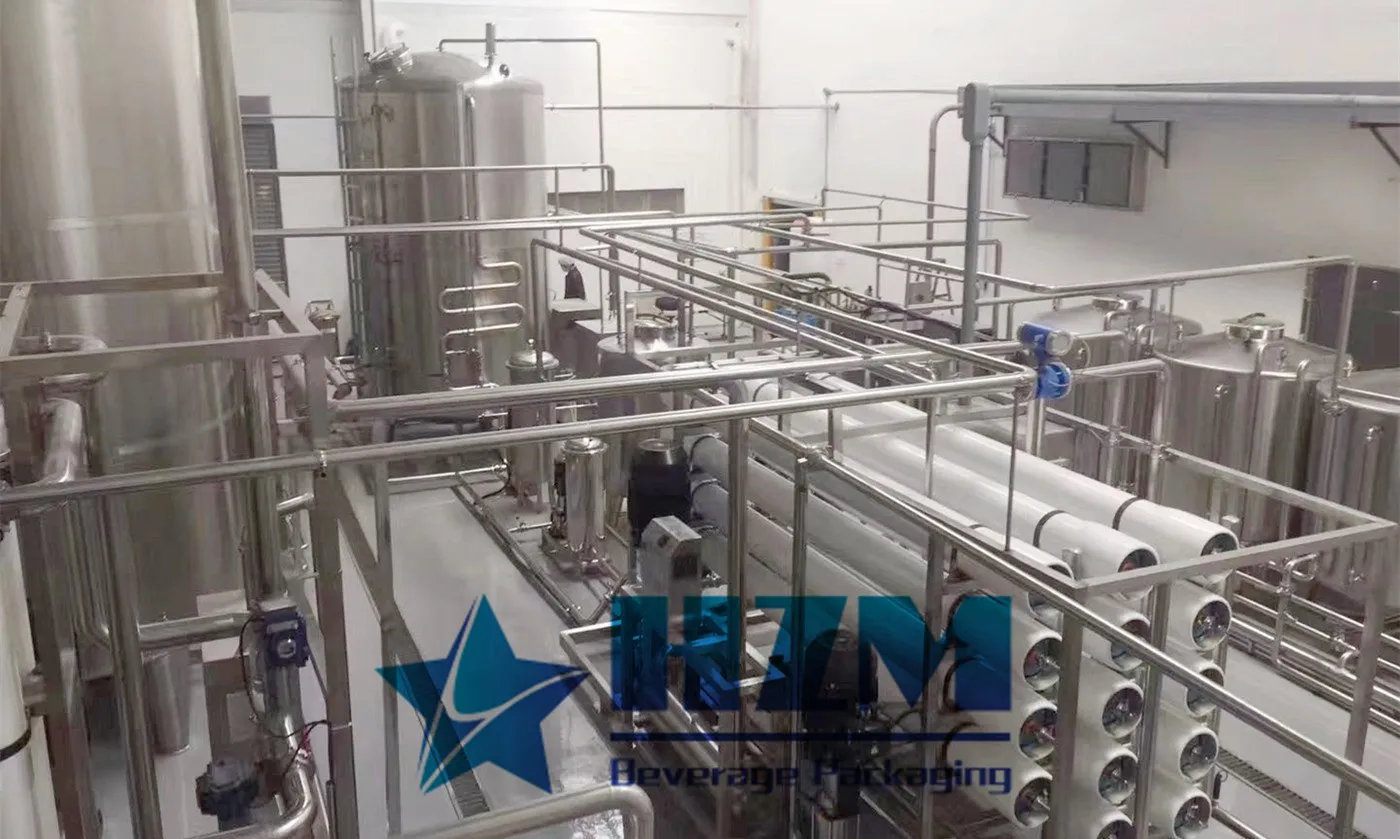
Equipment
Water Treatment Machine Purification System
HZM water purification equipment combines filtration, membrane treatment and final treatment in one process.
Learn more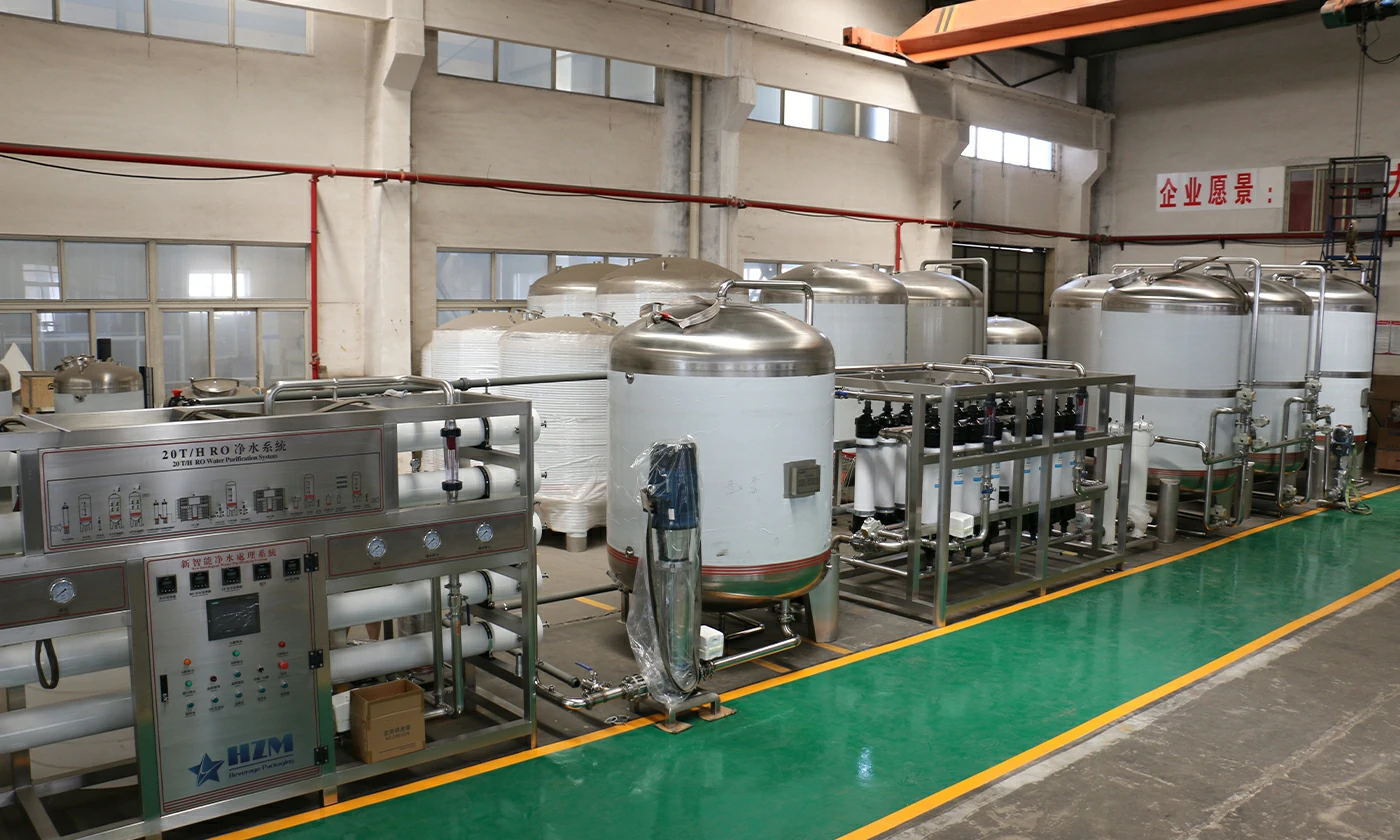
Equipment
Industrial RO Drinking Water Treatment Plant – Reverse Osmosis Equipment for Beverage & Bottled Water
1,000 litres/hour reverse osmosis water treatment for bottled-water, beverage and food production.
Learn more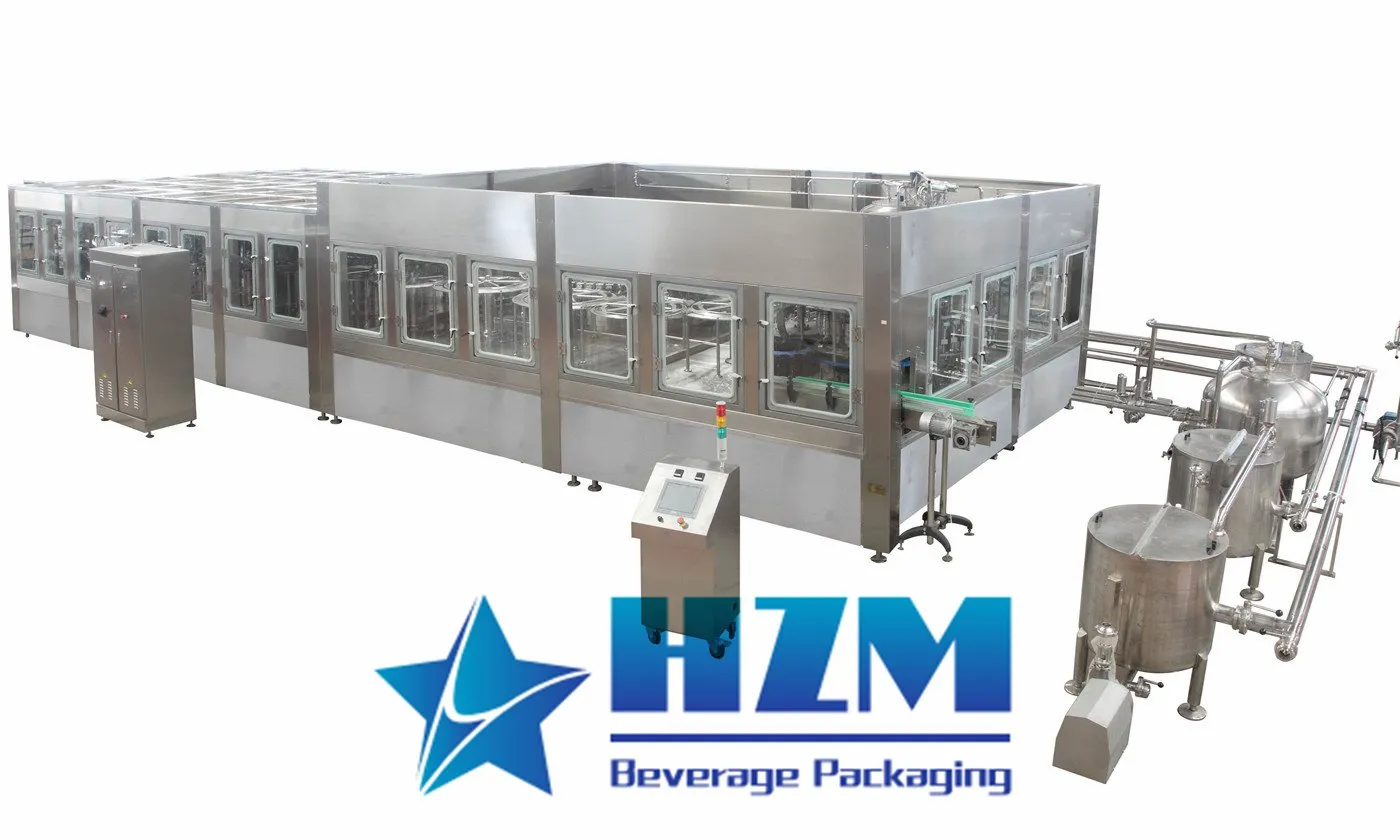
Equipment
Moderate Temperature Juice Filling Machine
Moderate-temperature juice filling with automatic bottle rinsing and capping, with XXGF models from 6,000 to 24,000 bottles/hour at 500 ml.
Learn more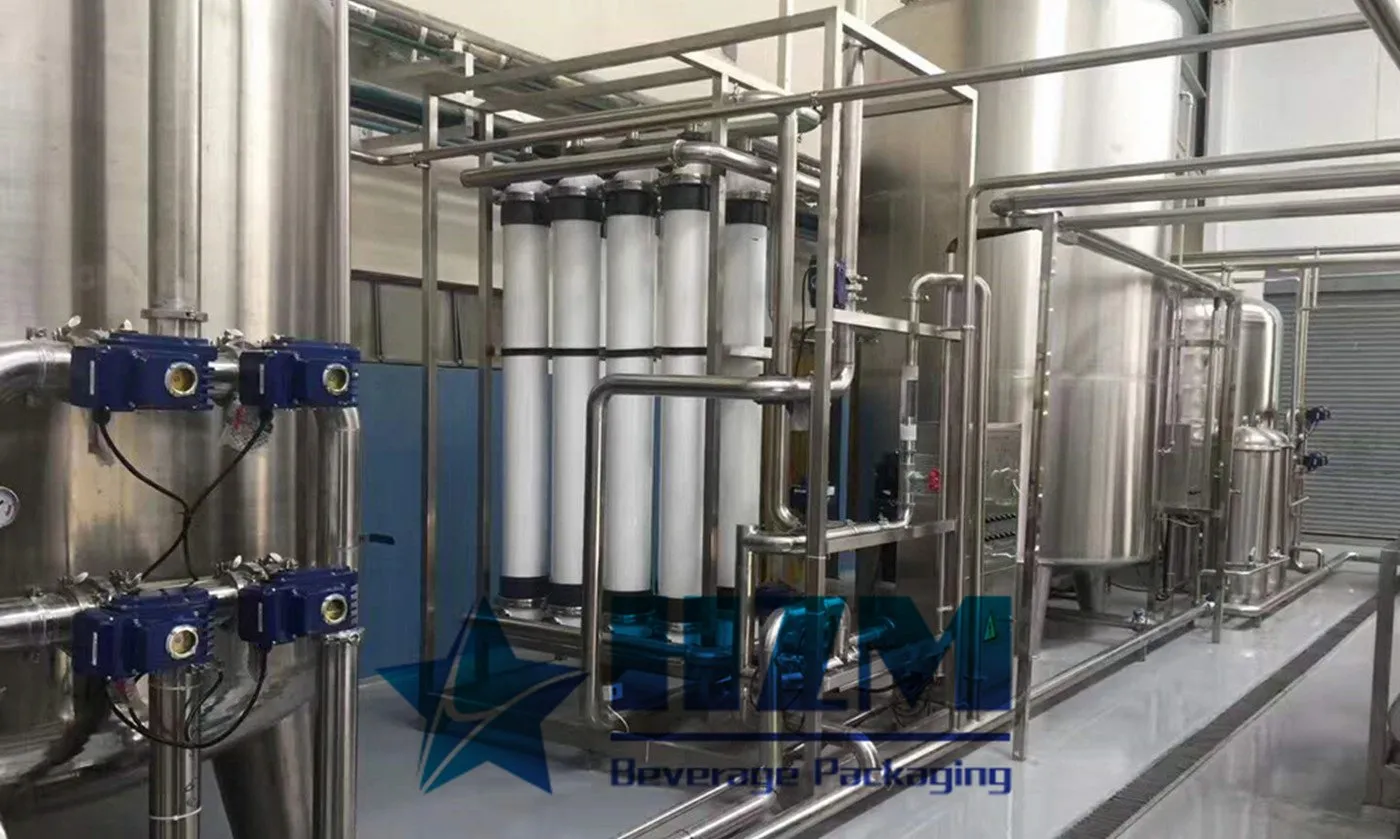
Equipment
Industrial Drinking Water Treatment System
This industrial drinking-water treatment system supplies treated water to bottling and beverage plants.
Learn more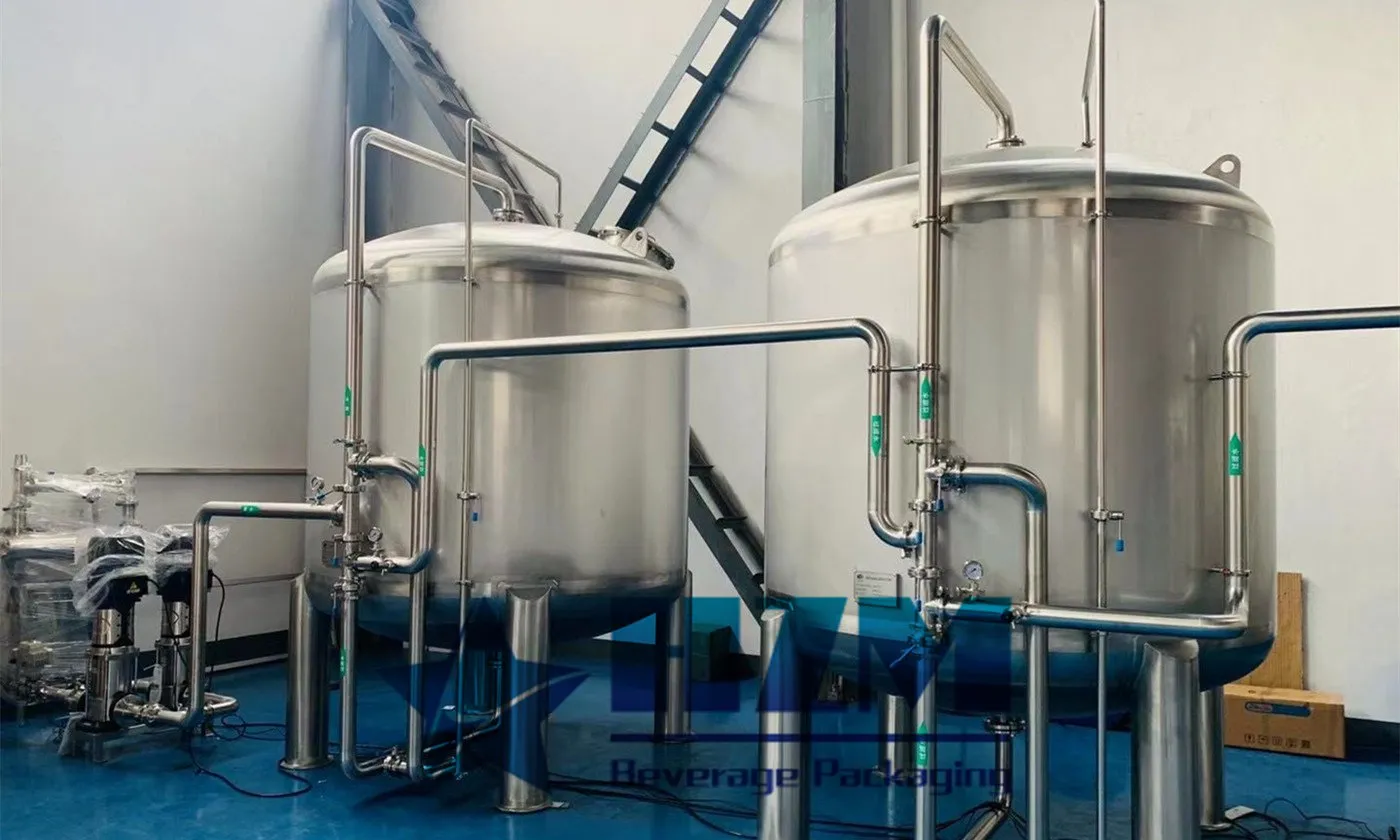
Equipment
RO System Water Treatment Plant
The RO water treatment plant produces purified water through feed-water pretreatment and reverse-osmosis membrane separation.
Learn more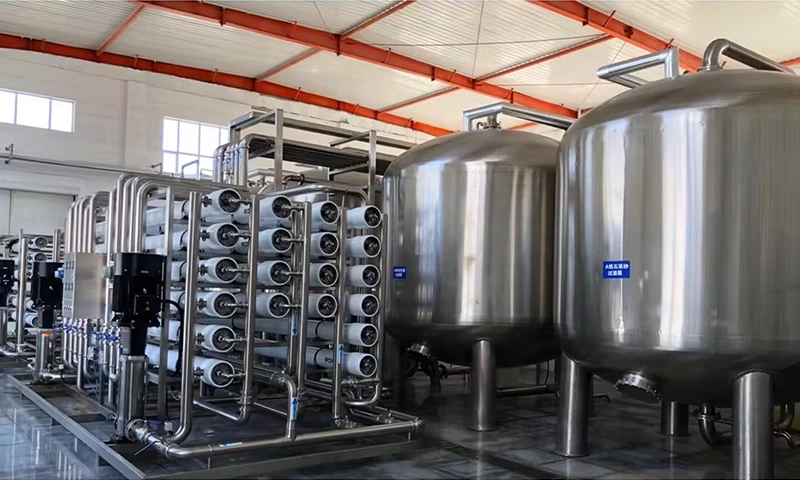
Equipment
Water Treatment for the Food & Beverage Industry – RO Water Treatment Equipment
10 T/H RO water treatment for ingredient, process and rinse water in food and beverage plants.
Learn more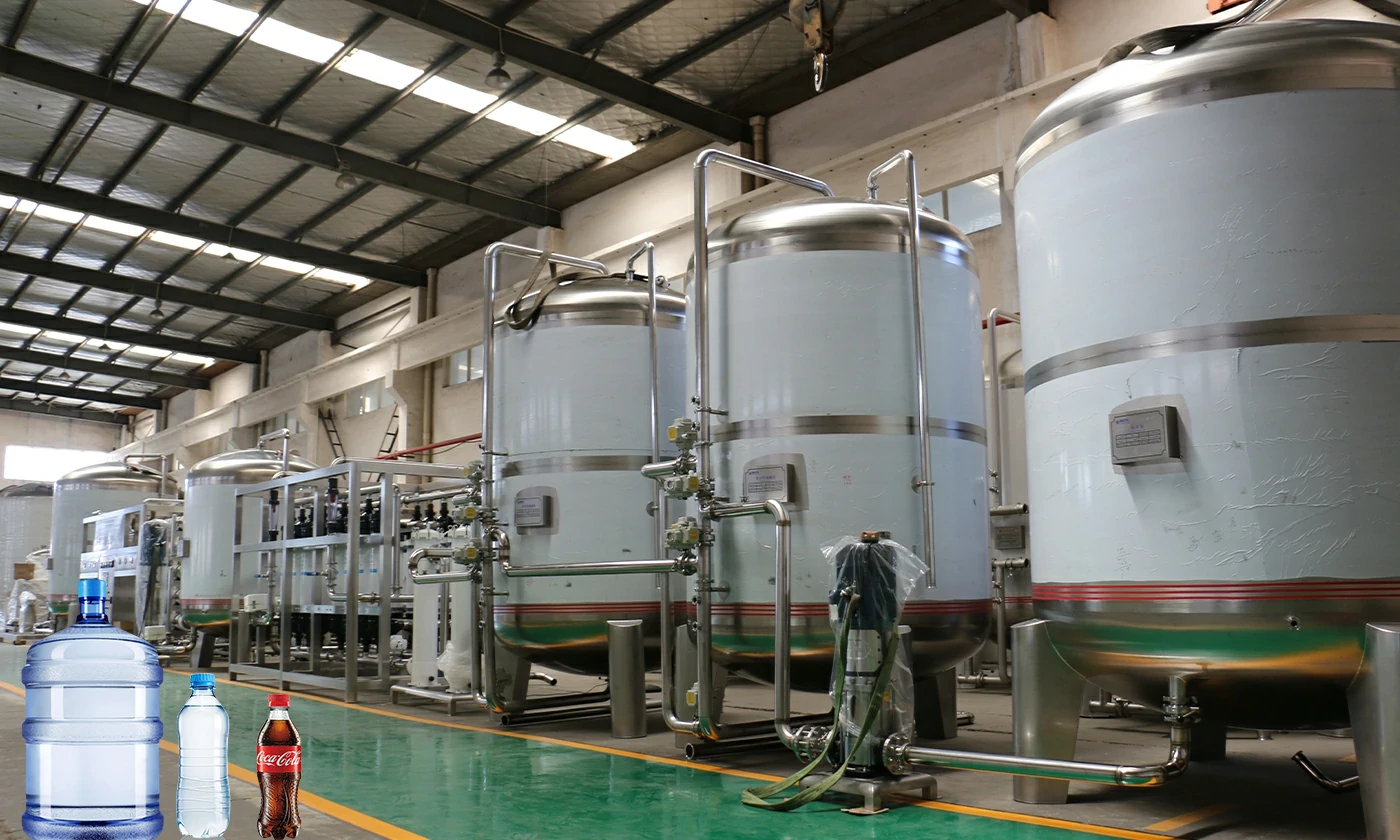
Equipment
bottled water treatment plant – water purification system for bottling line
10 T/H bottled-water treatment with pretreatment, reverse osmosis, storage and connections to the water filling line.
Learn more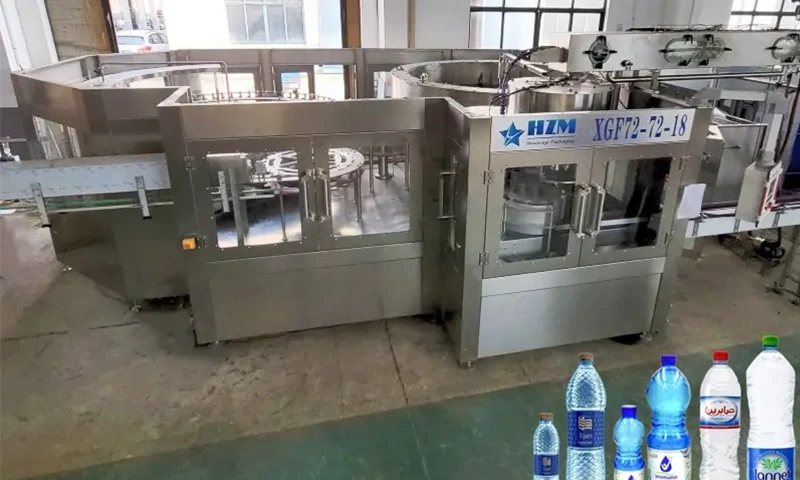
2026-07-27
How to Reduce Bottle Changeover Time on a Beverage Filling Line
Use SMED principles, prepared change parts and verified center settings to reduce bottle-format changeover time without sacrificing filling or packaging quality.
Learn more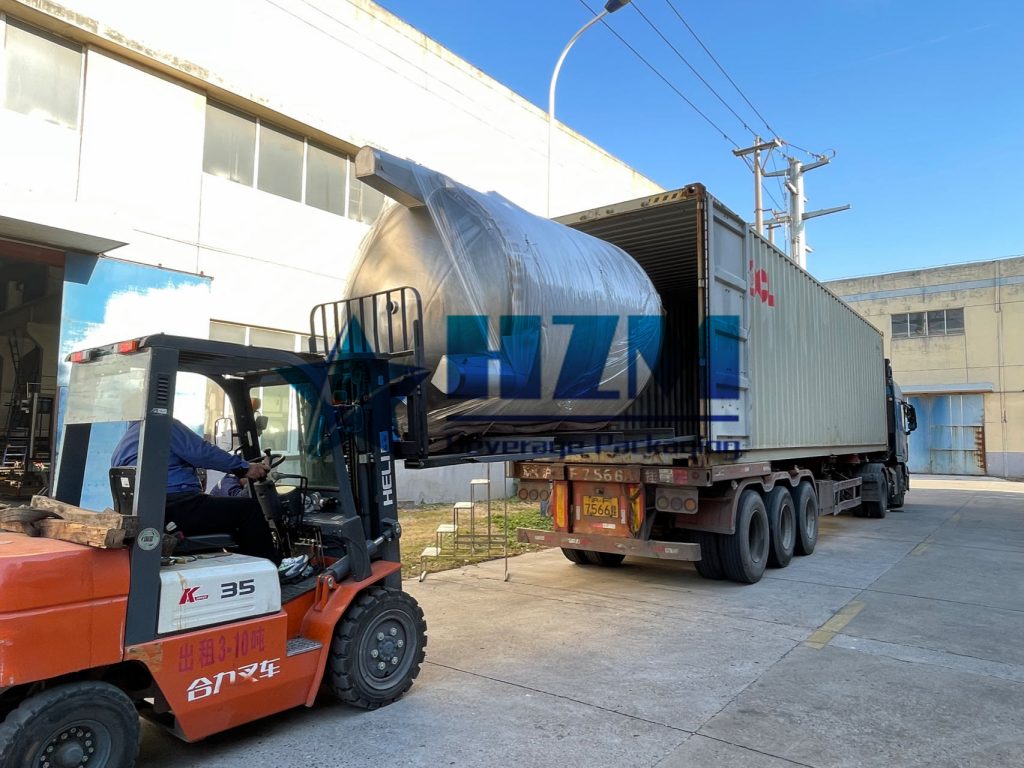
2023-06-09
RO Water Treatment Plant Guide: Pretreatment, CIP and Product-Water Verification
Practical HZM guidance on ro water treatment plant, focused on pretreatment, cip and product-water verification, line integration, RFQ data and measurable acceptance checks.
Learn more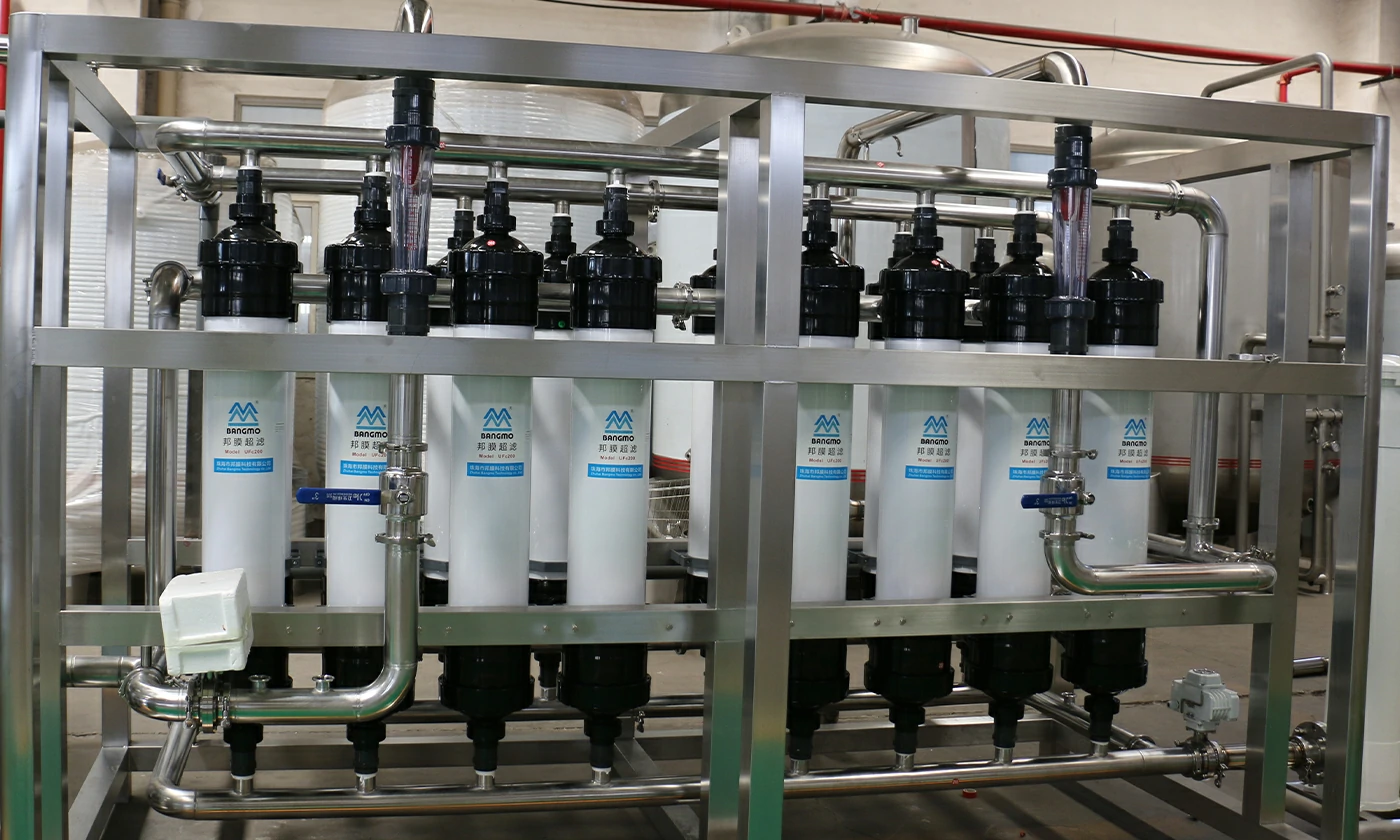
2026-01-22
Raw Water Treatment System for Beverage Plant
A reliable raw water treatment system is the foundation of any beverage production line. Whether producing bottled water, carbonated drinks, juice, or functional beverages, the quality of raw water directly affects product taste, safety, equipment lifespan, and regulatory compliance.
Learn more2023-06-09
CIP Cleaning for Juice Filling Machines: Process and System Selection
A practical guide to planning CIP cleaning for juice tanks, pipelines and filling machines, including circuit design, cycle control and verification.
Learn more2023-09-14
Carbonated Beverage manufacturing process flow
The manufacturing process for carbonated beverages involves several key steps to create the characteristic fizz and flavor while ensuring product safety and quality.
Learn more2024-07-04
Commercial industrial reverse osmosis machine
Industrial reverse osmosis equipment is primarily used for producing pure water for industrial production. Depending on customer requirements, different process flows are employed to produce pure water that meets the specified standards. The equipment is widely used in the food and beverage industry, laboratories, pharmaceuticals, chemicals, and other sectors. Our equipment is factory-direct, and it is exported to more than 50 countries, including South Africa, North Africa, Sudan, the United States, Europe, and Southeast Asia.
Learn more