
Insights & Updates
How to Calculate the Right Filling Machine Capacity for Your SKU Mix
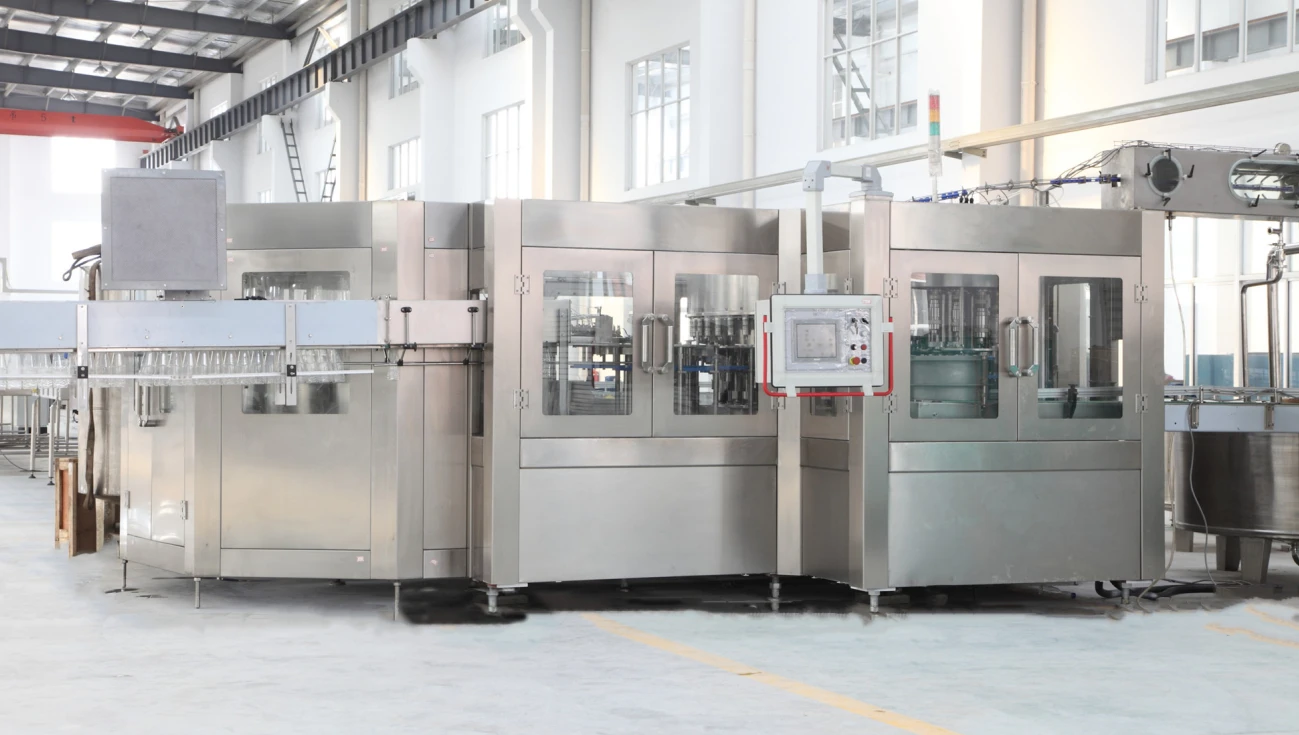
Buying a filling machine that is too small creates overtime, missed orders and no room for growth. Buying one that is unnecessarily large ties up capital, increases utility demand and can be inefficient when the plant runs many short batches. The right size comes from a production model that includes sales demand, bottle formats, available hours, changeovers, sanitation, efficiency and future expansion.
The calculation is not difficult, but it must distinguish average demand from peak demand and rated speed from saleable output. This guide gives project owners a practical capacity method and shows which information an equipment supplier needs before recommending a machine.
Quick answer: Calculate required good bottles for each SKU, divide by realistic available production hours, then adjust for line efficiency and peak-season demand. Use the slowest or most difficult bottle format as a separate case. Select a line that meets the peak requirement with a reasonable margin, while remaining stable at normal operating speed.
Build Demand by SKU, Not Only by Liters
A plant selling 10 million liters may fill 20 million 500 ml bottles or 5 million 2 L bottles. These scenarios require very different bottle, cap, label and pack handling. List forecast units for every important SKU, then identify seasonal peaks and promotional campaigns. If forecasts are uncertain, prepare low, base and high cases.
| Input | Example question |
|---|---|
| Annual good bottles | How many saleable units of each format? |
| Peak month or week | How much above average demand? |
| Batch size | How often will recipes and packages change? |
| Growth allowance | What volume is expected in years 2–5? |
Calculate Real Available Hours
Start with scheduled shift hours and subtract planned sanitation, product preparation, preventive maintenance, breaks and changeovers. Do not assume every calendar hour is a filling hour. For a multi-SKU plant, changeovers can consume a meaningful part of the week, especially when bottle guides, star wheels, cap chutes and label components must be replaced.
Then apply a realistic line-efficiency factor for unplanned stops and reduced speed. A mature, stable line may perform differently from a new plant training its first operators. Use evidence from similar operations when available and test the business case at more than one efficiency level.
Use the Capacity Formula Correctly
A practical formula is: required rated bottles per hour = required good bottles ÷ available run hours ÷ expected line efficiency. If the plant must produce 80,000 good bottles in an eight-hour shift, has 6.5 true run hours and expects 85% line efficiency, the required rate is approximately 14,480 bottles per hour. Additional headroom may be justified for growth or seasonal peaks.
Calculate each SKU separately when speed changes by bottle size or liquid behavior. Large unstable bottles, pulp juice and highly carbonated beverages may have lower practical rates than small water bottles on the same nominal platform.
Check the Entire Line Constraint
Filler capacity is only useful if water treatment, beverage processing, bottle blowing, labeling, packing, conveying and utilities can support it. A nominal 18,000 BPH filler paired with a 14,000 BPH labeler will not produce 18,000 labeled bottles. Ask for a line-speed table showing rated and recommended operating capacity for every major machine.
For a compact solution, a 3-in-1 PET bottle filling monoblock integrates rinsing, filling and capping. The project still needs compatible upstream bottle supply and downstream packaging.
Model Changeovers and Campaign Production
Small batches can make a high-speed line surprisingly inefficient. Group production into campaigns that reduce recipe and format changes while respecting shelf life and inventory limits. Model how many changeovers occur per week, the verified duration of each and whether sanitation is required between products.
If flexible production is essential, discuss quick-release guides, recipe storage, tool-less adjustments and dedicated change parts. The value of a faster changeover can exceed the value of a higher maximum speed when the product portfolio is broad.
Avoid Excessive Oversizing
A much larger machine may require higher initial investment, more compressed air, larger treatment and processing capacity, additional floor space and more working capital for packaging materials. It can also run poorly if the minimum stable speed is above normal demand. Request the stable operating range, not only the maximum.
A reasonable expansion strategy may reserve floor space, utilities and conveyor interfaces for a future module while installing the capacity needed now. A complete beverage filling line proposal should make those upgrade points visible.
Capacity Data to Include in Your RFQ
- Product type, temperature, viscosity and carbonation level
- Bottle material, drawings, volume range and neck finish
- Cap, label and secondary-pack specifications
- Required good bottles per hour for each SKU
- Shift pattern, sanitation frequency and changeover target
- Annual demand, seasonal peak and growth case
- Available electricity, water, steam and compressed air
These details allow suppliers to quote comparable scope. Without them, different proposals may appear similar while using different assumptions.
Frequently Asked Questions
How much spare capacity should a filling line have?
The margin depends on demand uncertainty, peak season, growth, maintenance support and capital constraints. Evaluate several scenarios rather than applying one universal percentage.
Is bottles per hour comparable across all bottle sizes?
No. Confirm the guaranteed or recommended rate for every major bottle and product combination. A line’s highest advertised BPH often applies to a specific reference format.
Should I size from annual average or peak demand?
The line must cover the required peak within available production hours, but the business case should also check how efficiently it will run during normal months.
Plan the Next Step with HZM Machinery
HZM can turn your SKU forecast and operating calendar into a balanced capacity proposal. Share bottle drawings, products, packs and target output, then compare options in the complete filling and packaging equipment range.
Talk to our engineering team
Need help planning your packaging line?
Share your product, bottle and capacity requirements for a practical equipment recommendation.
2026-08-05
Shrink Pack or Carton? How to Choose Secondary Packaging for Beverages
Compare shrink film, tray-and-film and cartons by product protection, material cost, retail needs, transport, automation and sustainability.
Learn more
2026-08-12
FAT and SAT Checklist for a Turnkey Beverage Filling Line
Define factory and site acceptance tests for speed, quality, changeover, utilities, documents, safety, training and final line performance.
Learn more
2026-08-10
Beverage Plant Utilities Checklist Before Equipment Installation
Prepare electricity, compressed air, water, steam, cooling, drains, floor loads, ventilation and access before a beverage line arrives.
Learn more
2026-08-06
Bottle Conveyor Accumulation and Line Balancing: A Practical Guide
Size and control bottle conveyors to absorb short stops, prevent excessive pressure and protect overall filling-line efficiency.
Learn more
2026-07-24
How to Improve Bottling Line OEE: Find the Hidden Speed Losses
A practical guide to measuring bottling line OEE, locating micro-stops and speed losses, and improving output without simply buying a faster filler.
Learn more
2026-08-03
PET Blow Molding Compressed Air Cost: A Practical Energy Audit
Find compressed-air waste in PET bottle production by measuring pressure, specific consumption, leakage, recovery and compressor loading by bottle SKU.
Learn more