
Insights & Updates
Carbonated Soft Drink Production Process PDF: Syrup, Carbonation & Filling
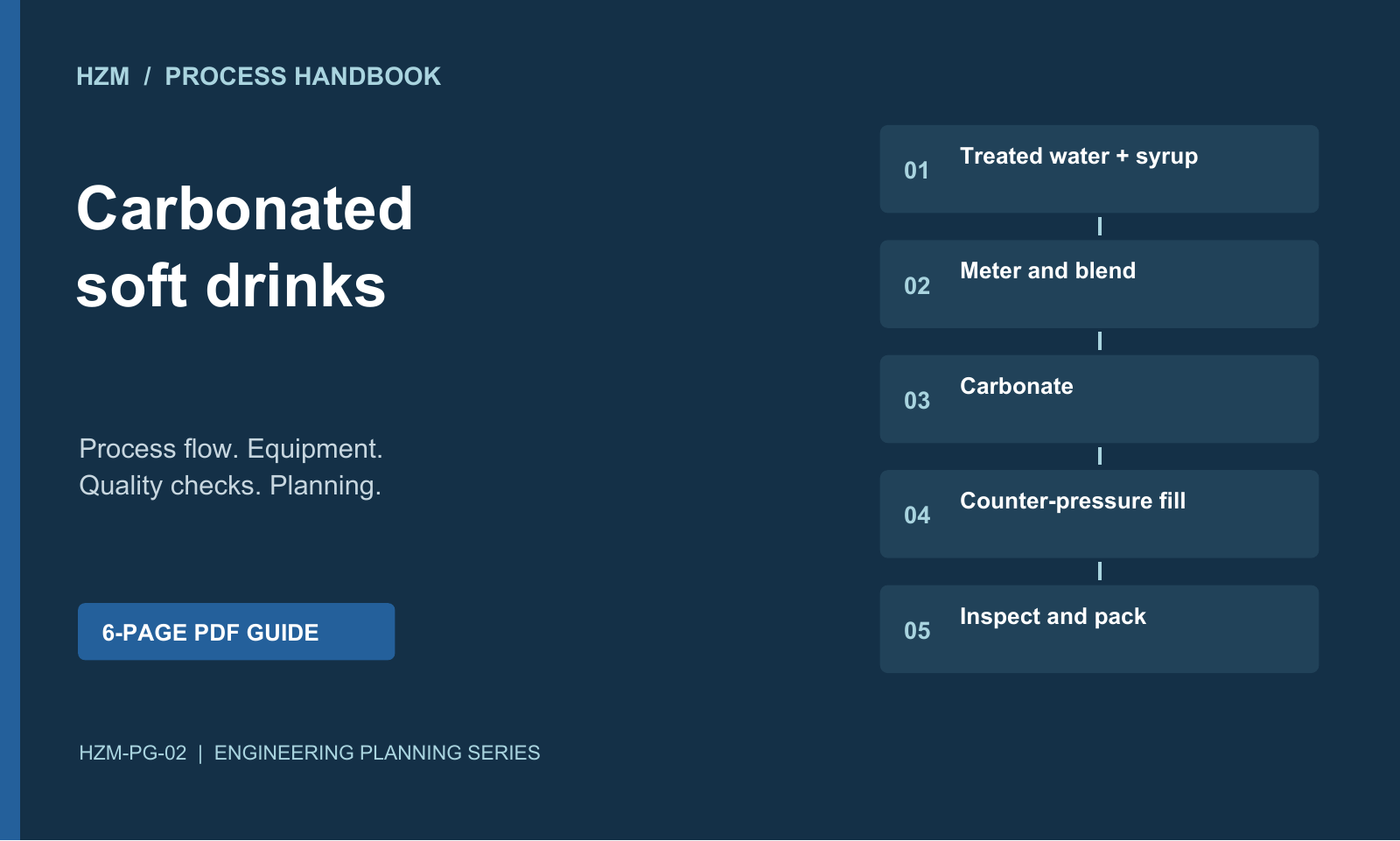
6-page technical guide · Original flow chart · Printable checklists
Scope: Formulated carbonated soft drinks in pressure-rated bottles or cans. Preservation must be established for the actual recipe.
Process map & product definition
The carbonated soft drink production process combines consistent formulation with controlled gas dissolution and pressure filling. A typical line prepares syrup, blends it with treated water, adds carbon dioxide under controlled conditions, fills a pressure-rated container and closes it promptly. This PDF guide follows those interfaces and provides an equipment checklist, commissioning questions and a simple capacity example.
Specify the drink and package together. Sugar content, sweetener system, acidity, foaming behavior, carbonation target and storage conditions influence the process. Bottle pressure resistance, closure performance and can seam design also affect the result. Carbonation is not a substitute for a validated preservation strategy; the microbiological design must match the product and intended shelf life.
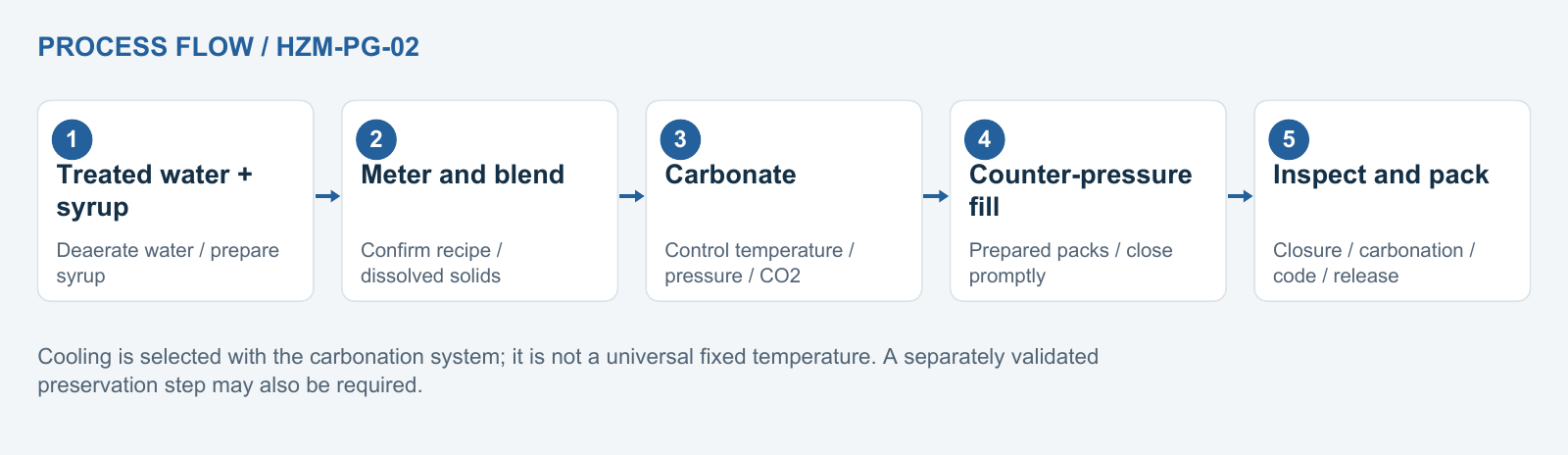
Read the process flow as text
- Treated water + syrup – Deaerate water / prepare syrup
- Meter and blend – Confirm recipe / dissolved solids
- Carbonate – Control temperature / pressure / CO2
- Counter-pressure fill – Prepared packs / close promptly
- Inspect and pack – Closure / carbonation / code / release
Cooling is selected with the carbonation system; it is not a universal fixed temperature. A separately validated preservation step may also be required.
Syrup preparation, blending & gas dissolution
01 / Receive water, ingredients and carbon dioxide
Set incoming specifications for the source water and all ingredients. Include approved food-grade CO2 supply and traceable delivery records. Keep concentrated flavors and minor ingredients identifiable: a small weighing error can affect a large finished batch. Treatment of water should be based on its measured quality and the finished-drink specification.
02 / Prepare simple syrup and finished syrup
Dissolve sugar when required, check the solution and combine ingredients in the documented order. Liquid sweetener feeds may use a different preparation route. Include suitable filtration or screening where the recipe permits it. Record actual additions and the final syrup release result instead of relying only on an operator-entered batch name.
03 / Deaerate and proportion
Removal of dissolved air can support controlled carbonation. Meter the water and syrup to the approved ratio, using calibrated flow or mass measurements. Brix is useful for many sugar-containing recipes but must be interpreted with temperature and formulation in mind; it is not a direct sugar reading for every multi-ingredient or sugar-free beverage.
04 / Carbonate at stable operating conditions
A carbonator dissolves CO2 in the beverage under controlled pressure and temperature. Keep the transfer path to the filler stable so that unnecessary pressure drops do not release gas. Product temperature, gas supply, mixing performance and flow all belong in the commissioning record. Do not copy a pressure setting from another machine or drink.
05 / Fill under pressure and close
Counter-pressure filling brings the container and filling system into the appropriate pressure relationship before liquid transfer. Controlled pressure release helps manage foaming before the closure is applied. Match valve operation and closure handling to the package and recipe. Include empty-container inspection and the hygiene treatment required by the validated process.
Equipment & packaging requirements
| Section | Typical equipment | Purchase specification |
|---|---|---|
| Syrup room | Dissolver, ingredient dosing, mixing tanks | Recipe range; usable batch volume; mixing time |
| Water / blending | Treatment, deaeration, proportioning | Water quality; dosing accuracy; turndown |
| Carbonation | Carbonator, gas controls, cooling as selected | Target CO2; flow range; temperature envelope |
| Filling / closing | Pressure filler, capper or seamer | Bottle or can drawings; foam behavior; closure tests |
| Dry end | Inspection, coding, labeler, packer | Condensation handling; label adhesion; pack strength |
PET bottles, glass bottles and cans require different handling and closure systems. A machine advertised for carbonated drinks should still be assessed with the intended package samples and recipe. For cans, request a seam inspection plan; for screw caps, agree torque and leakage checks. Include appropriate pressure-rated components and safe operating procedures in the supplied documentation.
End-of-line planning matters when cold packages enter a warm, humid room. Evaluate condensation and surface drying before labeling and coding. A warmer or other conditioning stage is a project choice, not a compulsory step in every line. Confirm actual plant temperature and humidity rather than selecting equipment from a generic process sketch.
Control points & troubleshooting
| Observation | Checks to prioritize | Avoid this shortcut |
|---|---|---|
| Excess foam at discharge | Product temperature, pressure stability, filling and vent sequence | Raising pressure without reviewing package limits |
| Low packaged CO2 | Sampling method, inlet CO2, leaks, transfer and closure losses | Assuming the carbonator display equals package CO2 |
| Variable flavor or solids | Syrup release, flow calibration, batch identity | Correcting by taste alone |
| Inconsistent fill | Foam, valve condition, container dimensions | Changing every valve setting at once |
| Wet labels or weak adhesion | Dew point, package conditioning, surface drying | Blaming label stock before checking condensation |
Take baseline samples under steady conditions and record the associated line settings. When investigating a problem, change one relevant variable at a time and preserve the before-and-after data. Use the approved measurement method for dissolved CO2; sample handling, temperature and loss of pressure can distort a result. Separate quality checks from the site-specific food-safety controls.
Cleaning and recipe changes
Identify syrup, flavor, sweetener and color residues that may carry into the next drink. Plan the production sequence and cleaning verification accordingly. Confirm complete cleaning of both the mixer and filler product circuits, then check first-off product before release. Rinsing until the liquid appears clear is not, by itself, evidence of a validated cleaning cycle.
Start-up and stops
Specify how the mixer, carbonator and filler respond to low flow, interrupted CO2, loss of cooling and an extended stop. Track startup product separately until recipe and carbonation results are acceptable. Define restart checks before normal packaging resumes.
Capacity, CO2 balance & acceptance tests
The example is arithmetic, not a recommended carbonation level or a utility guarantee. Use the actual recipe target and have the supplier state gas consumption at the specified package, temperature, speed and operating pattern. A useful test report distinguishes steady-running gas use from an entire shift with starts, stops and changeovers.
Check syrup supply against filler demand
For an illustrative volumetric water-to-syrup ratio of 5:1, a 6,000 L/h finished stream requires 1,000 L/h of syrup and 5,000 L/h of water, assuming additive volumes. Real recipe dosing may be defined by mass and requires density correction. Confirm the basis before setting flow ratios or sizing syrup tanks.
- Test the intended beverage at minimum and maximum guaranteed speed.
- Measure recipe conformity and packaged CO2 with agreed sampling methods.
- Assess foaming, fill accuracy, leakage and closure integrity after stable operation.
- Demonstrate recovery after a controlled stop and document startup rejects.
- Run a format change and verify the first acceptable packs afterward.
- Measure cooling, compressed-air and gas consumption on an agreed basis.
Define acceptance in saleable containers rather than gross machine counts. Agree how microstops, rejected packs and startup losses enter the calculation. For a multi-format line, list which recipe and container combinations are covered by the guarantee and which need further trials.
Questions to resolve before ordering
Does every carbonated drink need the same filling temperature?
No. The operating window depends on CO2 content, product behavior, package pressure limits and filler design. Request a guaranteed temperature-and-speed envelope for the actual drink rather than assuming one temperature works for all CSD lines.
Can an ordinary water filler handle carbonated drinks?
Do not assume so. Gas retention and foam control require an appropriate filling system, pressure-rated product path and compatible containers. Obtain written confirmation of the machine configuration and test conditions.
Should the syrup be pasteurized?
That decision belongs to the product preservation design. Ingredient quality, formulation, microbial hazards, storage and other control measures affect whether and where thermal treatment is needed. The simplified flow chart does not make that decision for a specific product.
How much CO2 should be budgeted?
Start with liquid flow multiplied by the target dissolved CO2, then add documented consumption for purging, venting and operating losses. Ask for actual-use measurements and the assumptions behind a vendor estimate.
What information makes a quotation comparable?
Provide recipe characteristics, target CO2, package samples, hourly output, source-water results, product temperature, storage conditions and the available utilities. Ask every bidder to use the same acceptance criteria and boundary of supply.
Continue planning your line
- Carbonated Drink Co2 Mixer Machine
- Carbonated Soft Drink Filling Machine
- Carbonated Beverage manufacturing process flow
- Carbonated Drink Filling Problems: How to Reduce Foaming and CO₂ Loss
More downloadable process guides
- Complete Beverage Production Line Process PDF: Flow Chart & Equipment Guide
- Juice Hot-Filling Production Process PDF: Flow Chart & Quality Checklist
- Ready-to-Drink Tea Production Process PDF: Extraction, Clarity & Filling
Talk to our engineering team
Need help planning your packaging line?
Share your product, bottle and capacity requirements for a practical equipment recommendation.
Equipment
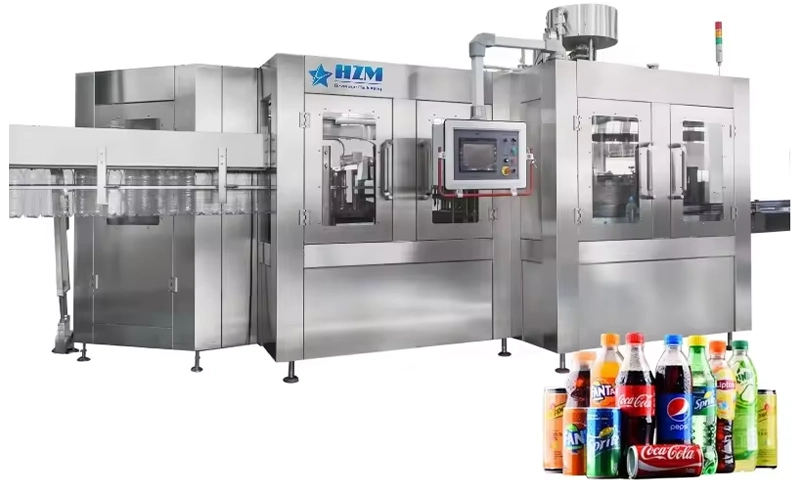
Carbonated Soft Drink Filling Machine
Carbonated soft drink rinsing, isobaric filling and capping, with DXGF models from 3,000 to 15,000 bottles/hour at 500 ml.
Learn more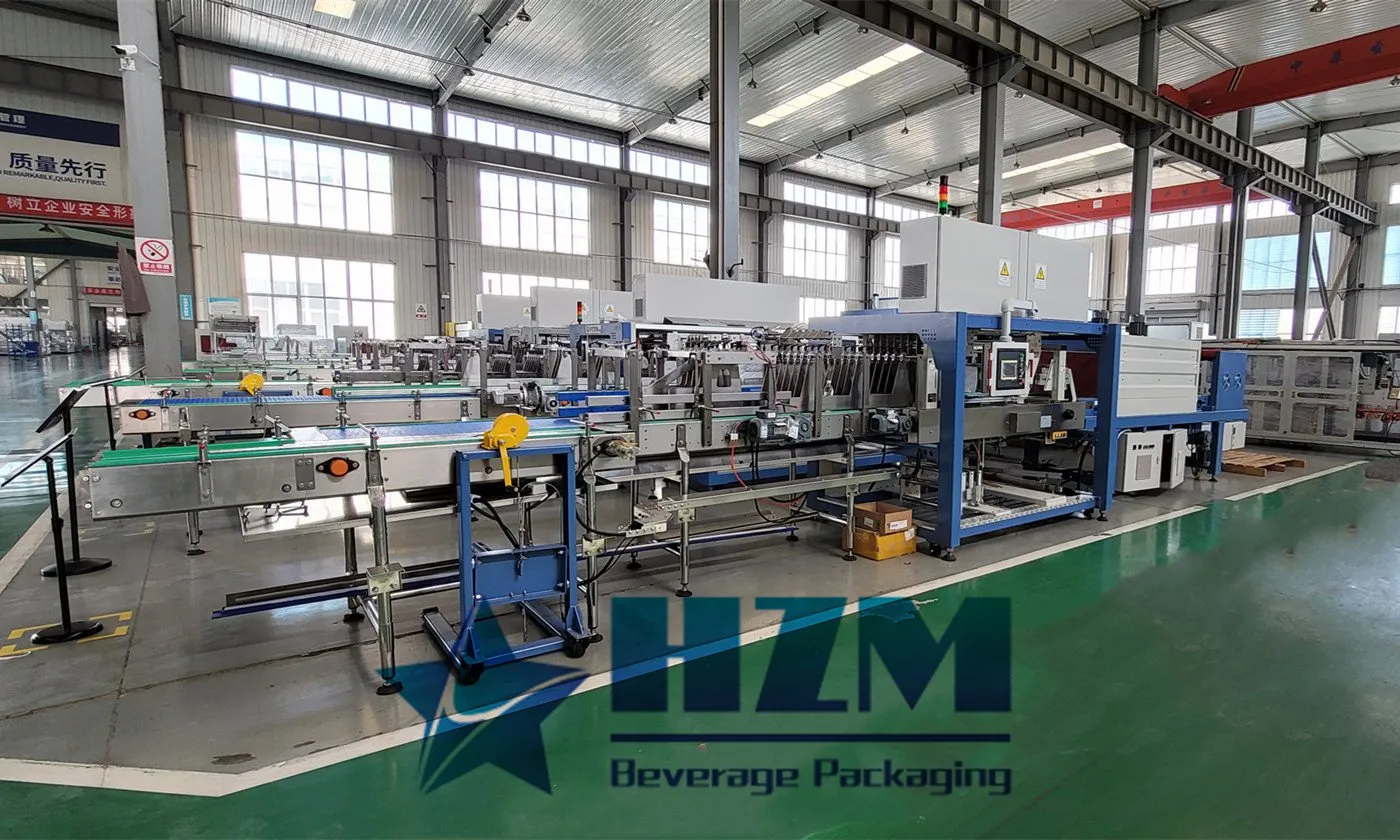
Equipment
Automatic Beverage Packaging Machines – Juice, Soda & Soft Drinks
HZM beverage packaging equipment connects juice, soda and soft drink filling with labelling, coding and secondary packaging.
Learn more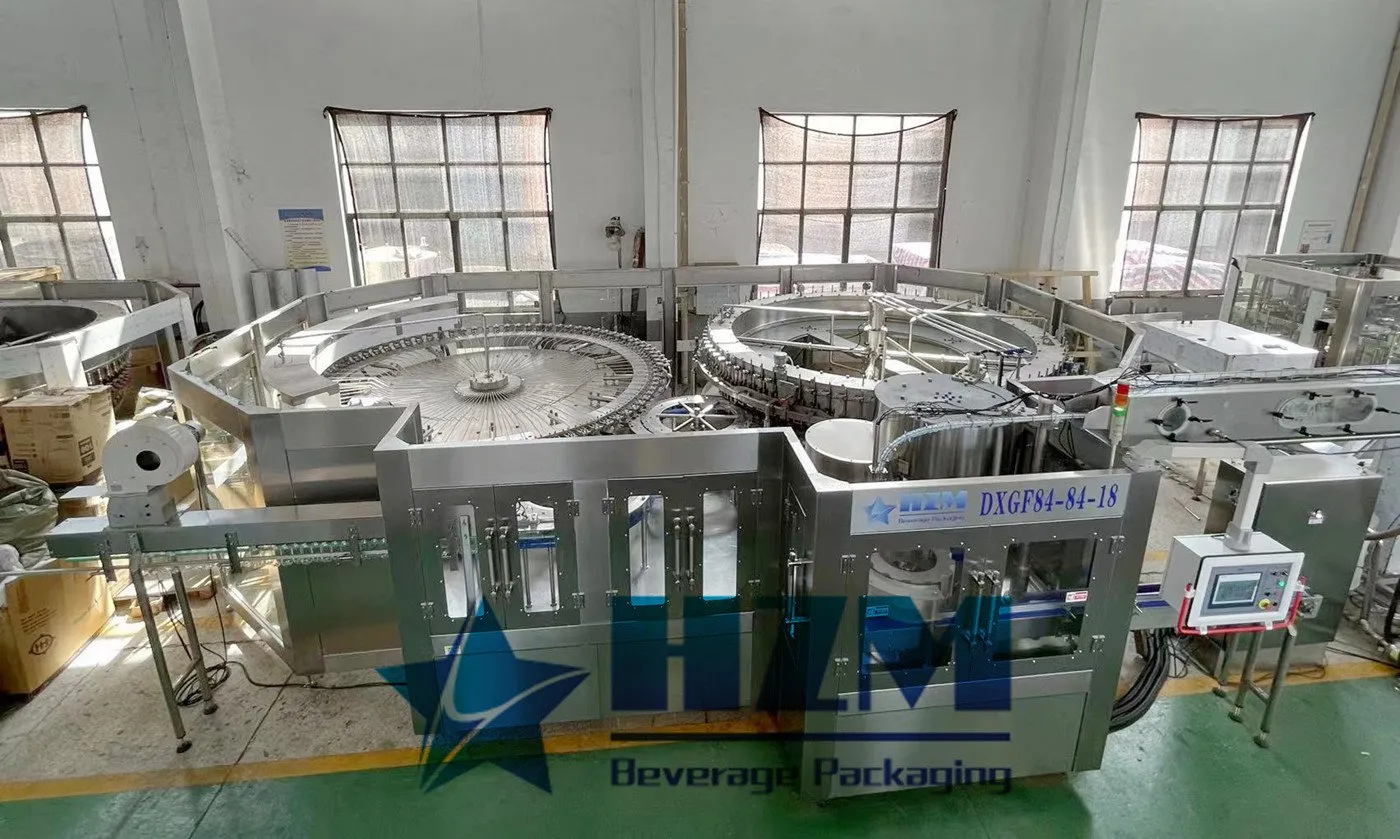
Equipment
Carbonated Drinks Filling Machine
Carbonated drink rinsing, isobaric filling and capping for PET bottles, with capacities of 4,000–36,000 bottles/hour at 500 ml.
Learn more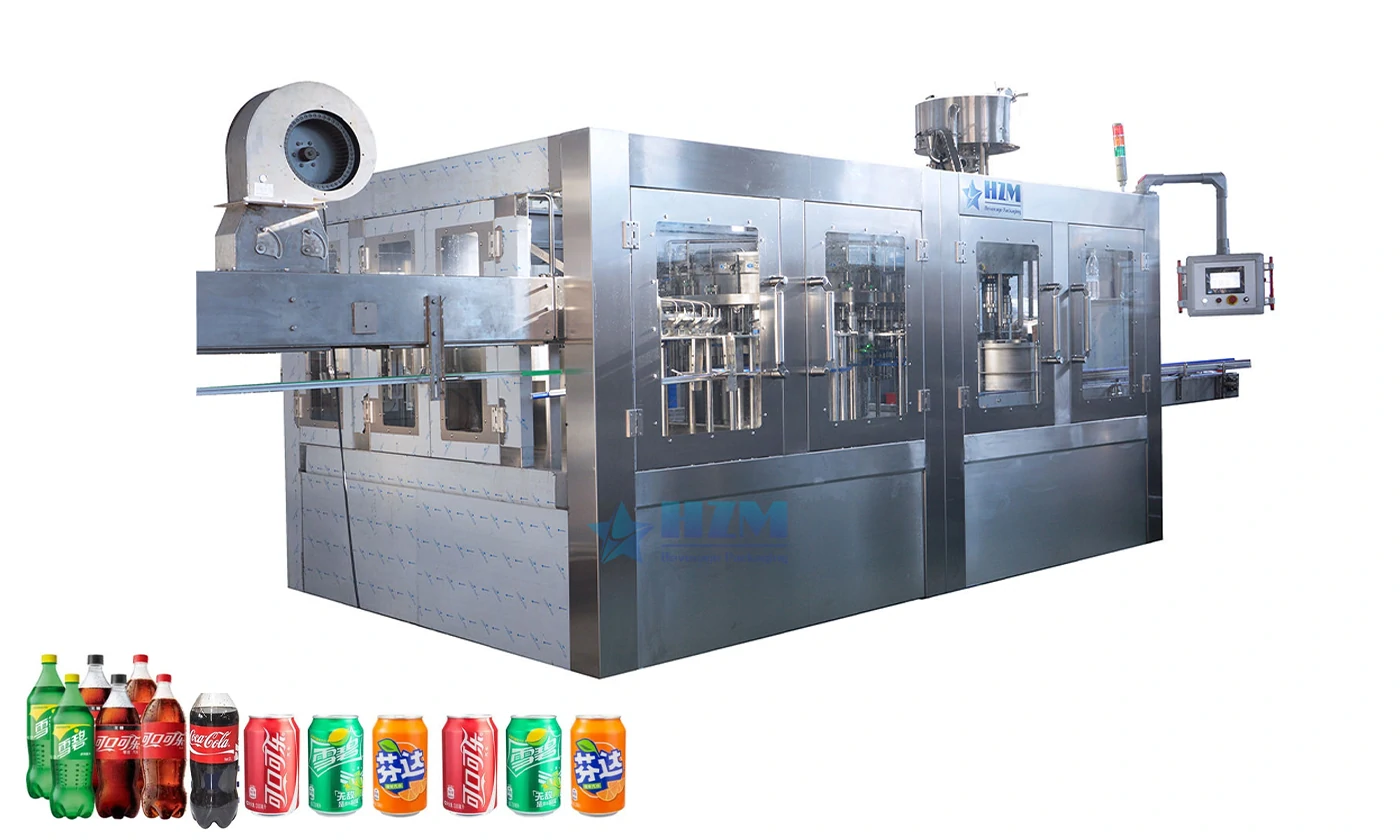
Equipment
Beverage Packaging Machine for Juice, Soft Drinks, Carbonated Drinks, and Energy Drink
HZM supplies beverage production and packaging equipment for juice, soft drinks, carbonated drinks and energy drinks.
Learn more
Equipment
PET Bottle CSD Beverage Filling Machine
Automatic PET bottle rinsing, isobaric filling and capping for cola, soda water and other carbonated soft drinks.
Learn more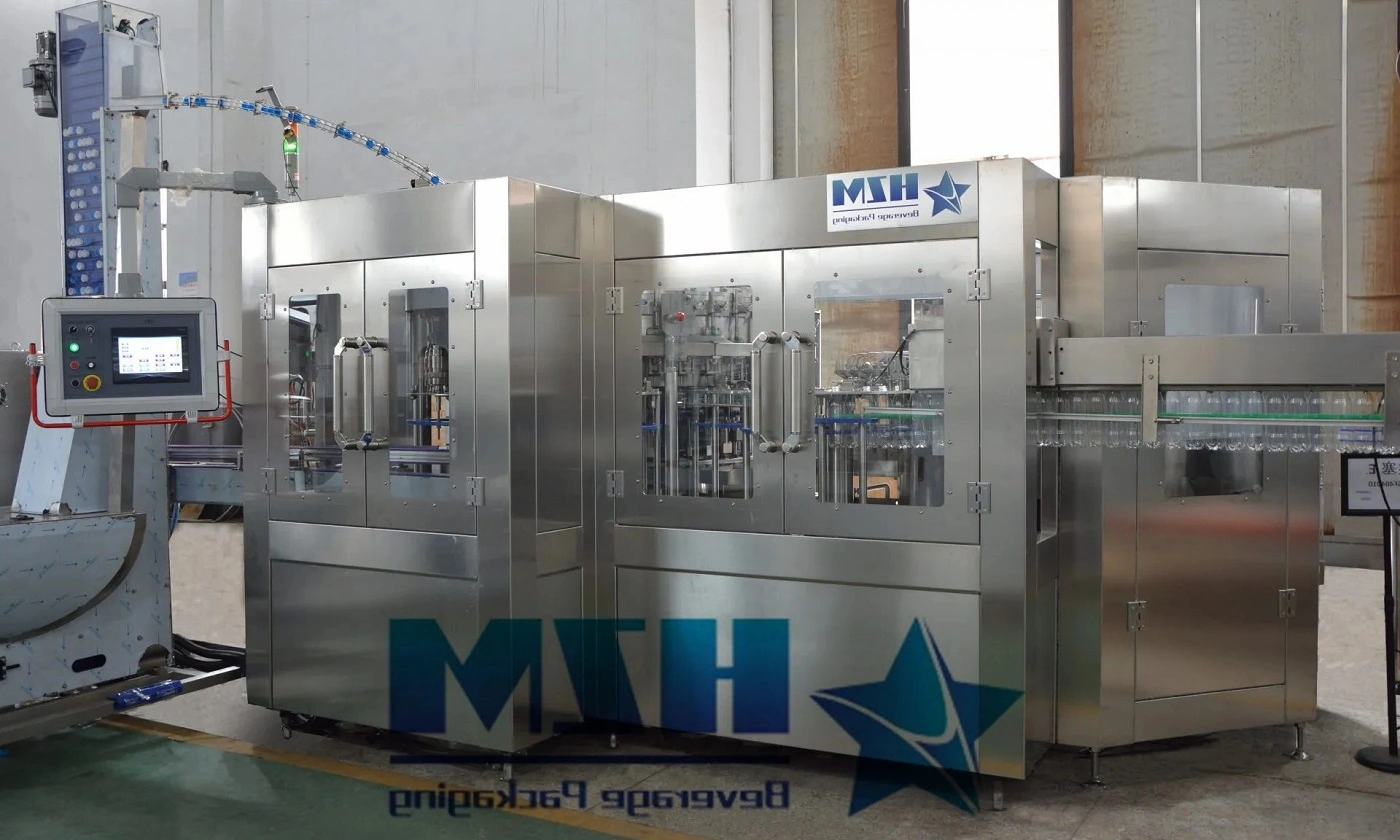
Equipment
Soft Drinks Sparkling Water Filling Machine
PET bottle filling for soft drinks and sparkling water, combining rinsing, counter-pressure filling and capping.
Learn more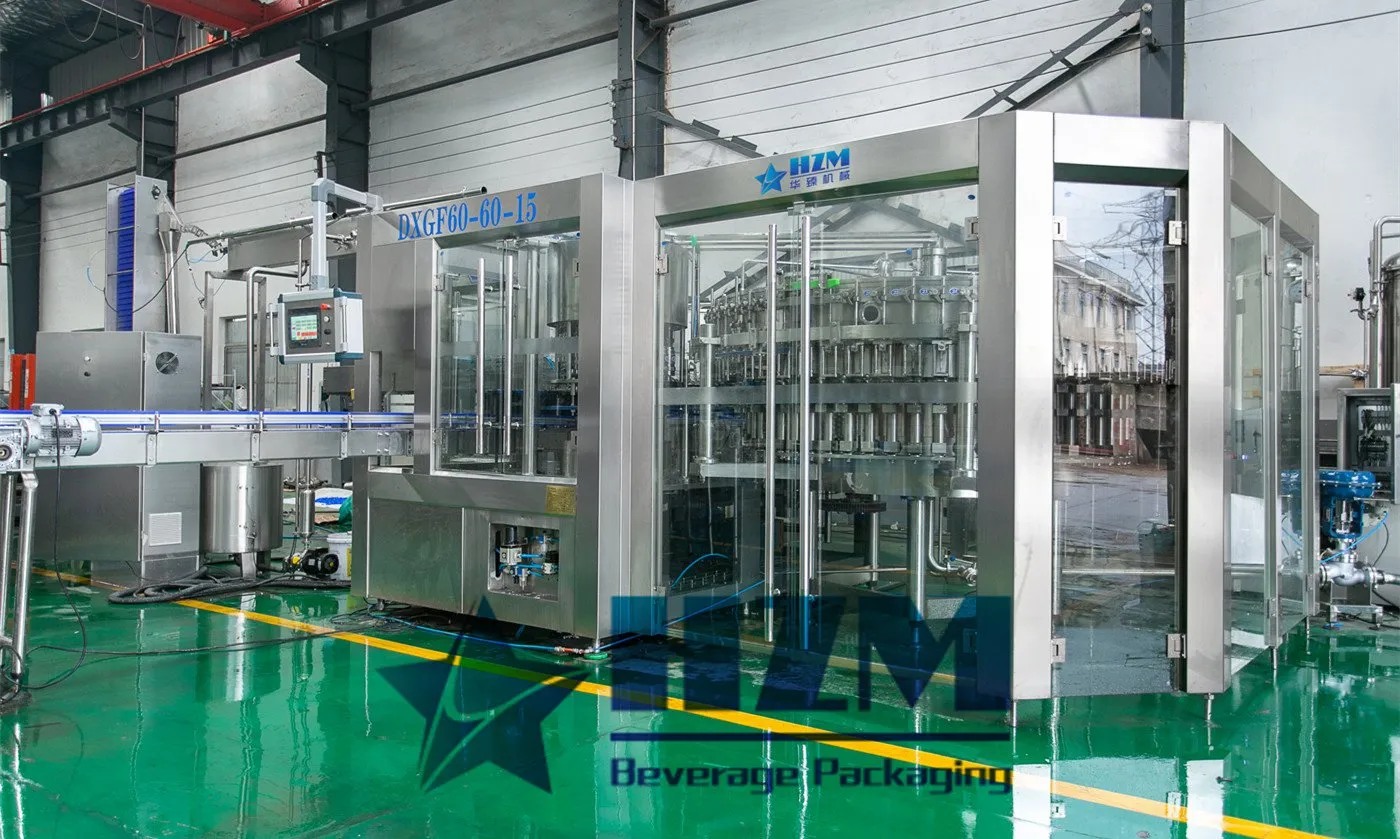
Equipment
Soda Water Filling Machine
Soda water filling equipment with bottle rinsing, isobaric filling and capping for PET-bottled sparkling water.
Learn more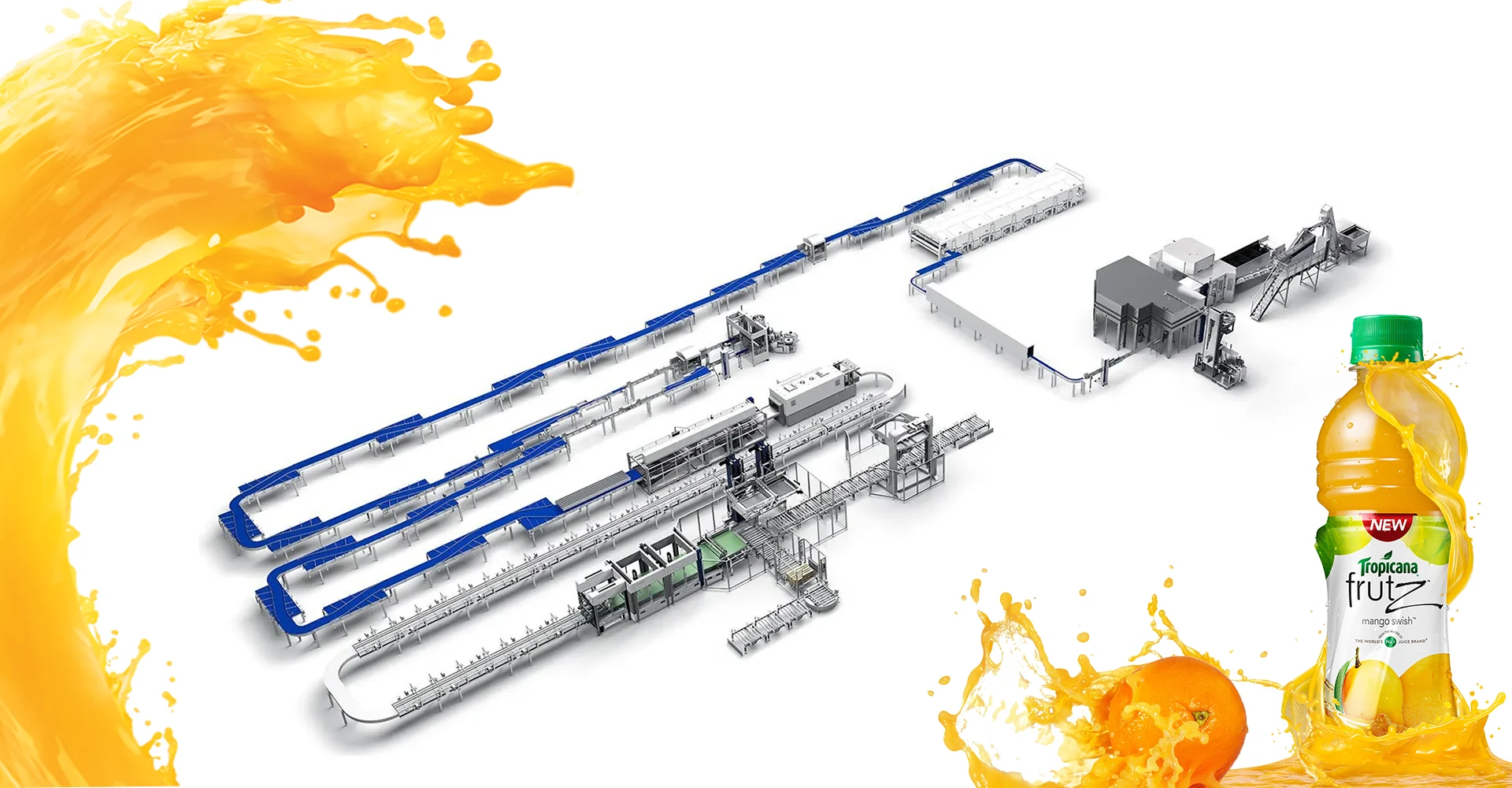
Equipment
Beverage Filling Machine & Turnkey Filling Line for Juice, Soft Drinks and Cans
Beverage filling machines and turnkey lines for juice, soft drinks, water and beer in PET bottles, glass bottles or cans.
Learn more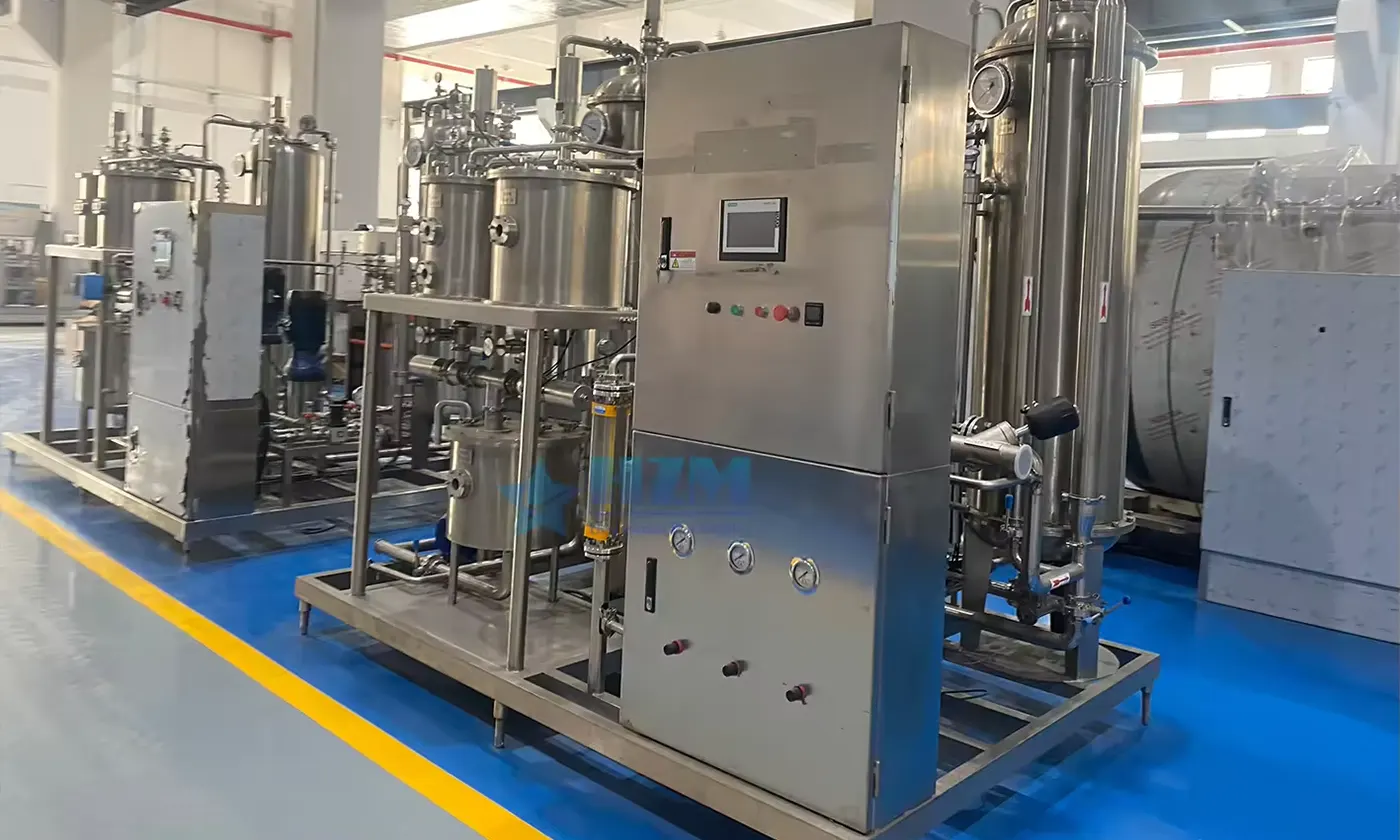
Equipment
Carbonated Drink Co2 Mixer Machine
The CO2 mixer blends beverage ingredients and carbonates the drink before filling.
Learn more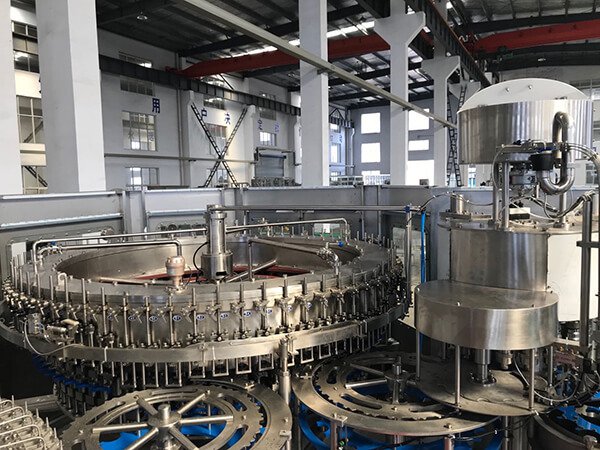
2023-03-24
Carbonated Soft Drink Packaging Process
The word “carbonated” means that the soft drink is packaged into the container with carbon dioxide under pressure. The production process for the carbonated drink, consists of a series of stages which occur within the carbonated soft drink filling line. The process begins with obtaining water. The water obtained undergoes processes of purification, filtration in sand, […]
Learn more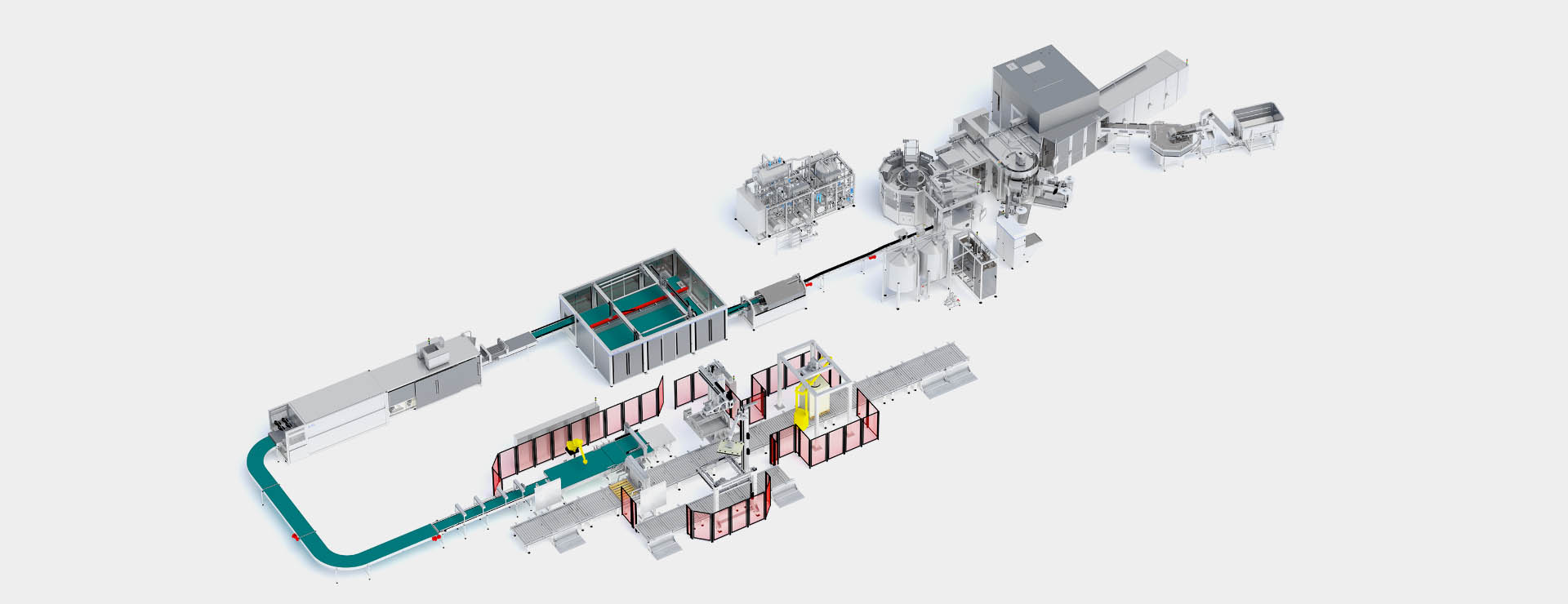
2023-09-26
Carbonated Soft Drink (CSD) Filling Machine
CSD Filling Machines are typically automated or semi-automated systems that can fill a large number of containers quickly and consistently. They often include components like bottle rinsers, filling nozzles, carbonation systems, and capping or sealing stations to complete the packaging process.
Learn more2023-06-09
Beer Production Line 200ml Carbonated Soft Drink Filling Machine
High quality Beer Production Line 200ml Carbonated Soft Drink Filling Machine from China, China's leading 200ml Carbonated Soft Drink Filling Machine product, with strict quality control 200ml Beer Production Line factories, producing high quality 54000 BPH Carbonated Soft Drink Filling Machine products.
Learn more2023-06-09
28000 BPH SS316 Carbonated Soft Drink Filling Machine For Sale
This top-of-the-line filling machine boasts an impressive 28,000 bottles per hour (BPH) output, making it ideal for large-scale beverage production. Constructed from durable SS316 stainless steel, it's built to handle the demands of high-volume carbonated soft drink filling with precision and efficiency.
Learn more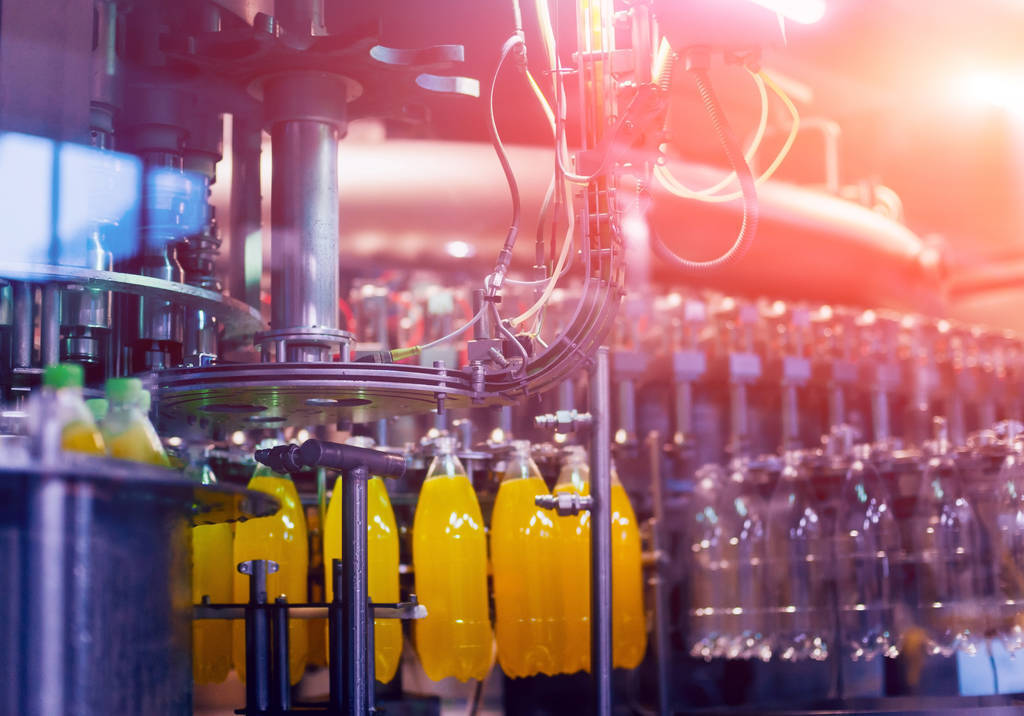
2023-08-11
Soft Drinks VS Water Filling Machine: A Comparison
In the modern beverage industry, carbonated beverages and mineral water are two popular categories that require efficient and hygienic filling processes. However, there are significant differences between the carbonated beverage filling machine and the mineral water filling machine in terms of various factors, including similarities, dissimilarities, price, and applicable industries.
Learn more2023-09-18
Bottled water production process PDF
The PDF document on the bottled water production process encompasses detailed information on how bottled water is manufactured, including a comprehensive description of production steps, illustrated process diagrams, and in-depth explanations of quality control methods.
Learn more