
Insights & Updates
What Equipment Do You Need to Build a Beverage Production Line? Complete Cost Breakdown
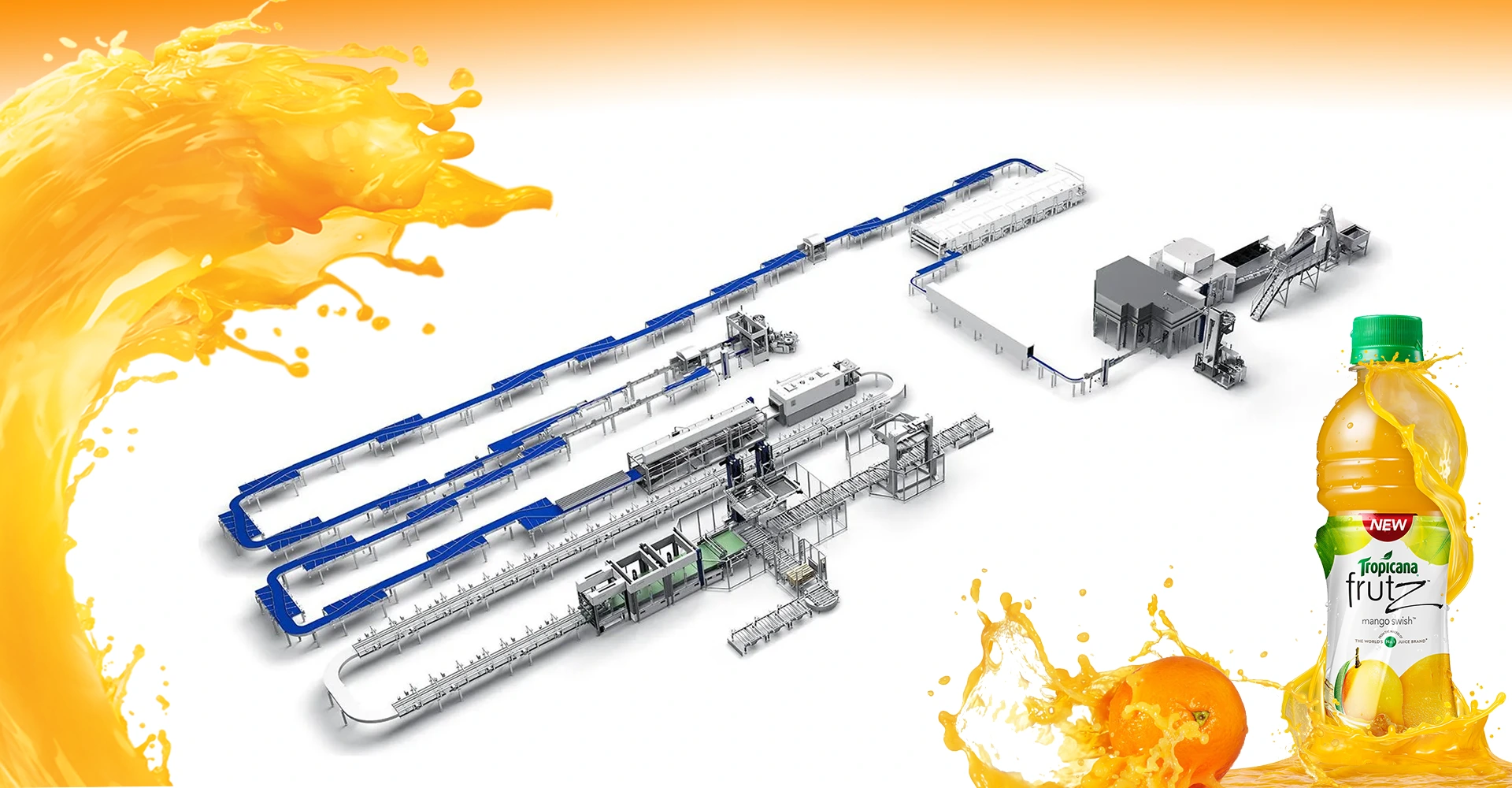
Launching a commercial beverage production line requires systematic equipment procurement covering raw material treatment, processing, filling, packaging, and auxiliary support systems. Beverage production lines vary greatly in configuration and cost based on product types (still water, juice, carbonated drinks, functional beverages), production capacity, and automation levels. This article sorts out the core equipment composition of a standard beverage production line and provides a detailed 2026 market cost breakdown for small, medium, and large-scale production projects, offering a clear reference for factory investment and project planning.
Core Equipment Required for a Full Beverage Production Line
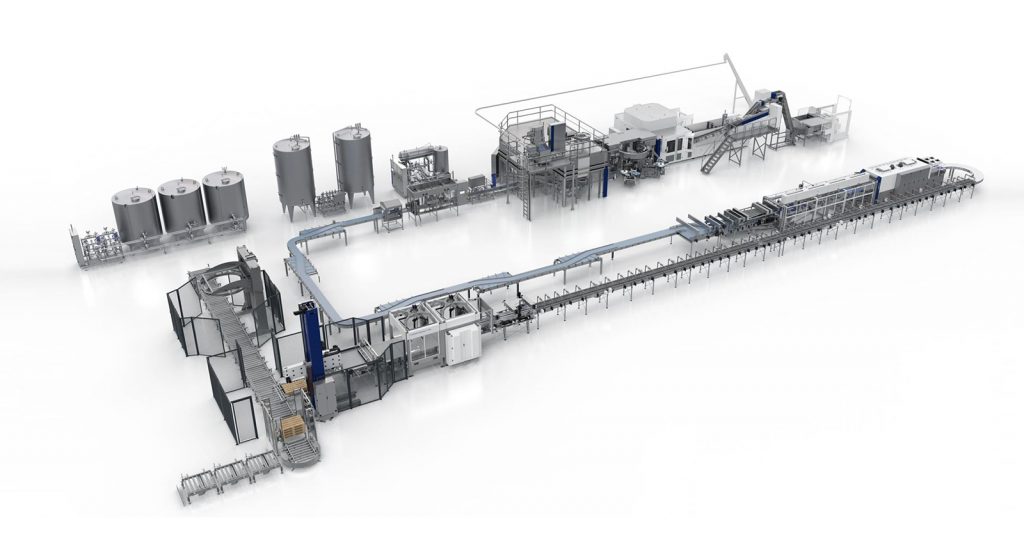
A complete beverage production process is divided into four key links: raw water treatment, raw material blending and processing, filling and sealing, and finished product packaging. Each link corresponds to professional supporting equipment, and all devices are essential for standardized, hygienic, and continuous industrial production.
1. Raw Water Treatment System (Foundation of Beverage Production)
Water accounts for over 90% of most beverages, so water treatment equipment is the primary guarantee for product quality. This set of equipment removes impurities, bacteria, heavy metals, and peculiar smells from raw water to meet beverage-grade water standards, applicable to all types of beverage production lines.
Main equipment: Raw water booster pump, quartz sand filter, activated carbon filter, precision filter, RO reverse osmosis water purifier, UV sterilizer, ozone disinfection device, pure water storage tank.
Function: Purify tap water or groundwater into qualified beverage production water, avoid product deterioration and taste deviation, and meet food safety production specifications.
2. Raw Material Blending & Processing System (Product Forming Core)
This system is mainly used for mixing, dissolving, sterilizing, and refining beverage raw materials such as fruit juice concentrates, sugar, additives, and functional ingredients. The configuration varies slightly according to beverage types: juice and milk beverages require homogenization and degassing equipment, while carbonated drinks need carbonation mixing devices.
Main equipment: High-speed mixing tank, sugar melting tank, material filter, homogenizer, vacuum degasser, pasteurizer, ultra-high temperature instantaneous sterilizer (UHT), carbonator (for carbonated drinks only).
Function: Uniformly mix raw materials, eliminate bubbles and particulate impurities, kill harmful microorganisms, stabilize beverage taste and texture, and extend product shelf life.
3. Filling & Sealing System (Core Production Link)
As the most critical part of the production line, the filling and sealing system determines production efficiency and product sealing quality. It is highly customized, classified by packaging forms (PET bottles, glass bottles, aluminum cans) and beverage properties (normal temperature filling, hot filling, aseptic cold filling).
Main equipment: Automatic bottle blowing machine (for PET bottles), bottle washing machine, integrated filling-capping machine, capping machine, can sealing machine (for canned beverages), sterile filling isolation cover.
Function: Complete automatic bottle cleaning, quantitative filling, and tight sealing to prevent liquid leakage and secondary pollution, realizing continuous high-speed production.
4. Finished Product Packaging System
After filling and sealing, finished beverages need subsequent packaging and coding to complete commercialization. This set of equipment realizes automated post-processing and improves product market compliance.
Main equipment: Automatic labeling machine, inkjet printer (production date coding), bottle overturning sterilization machine, light inspection machine, heat shrinkable film packaging machine, carton packing machine, palletizing machine.
Function: Complete product labeling, date marking, secondary sterilization, quality inspection, and outer packaging, meeting market circulation and warehouse storage requirements.
5. Auxiliary Supporting Equipment
Auxiliary equipment ensures the stable operation of the entire production line, including air compressors, refrigeration units, water pumps, power distribution cabinets, and cleaning systems (CIP automatic cleaning machines), which are indispensable supporting facilities for formal production.
2026 Cost Breakdown of Beverage Production Lines (By Scale & Type)
The total investment cost of a beverage production line is mainly determined by production capacity, automation level, beverage type, and packaging form. Based on the latest FOB market prices of Chinese beverage equipment manufacturers in 2026, the cost is divided into three grades, covering small startup workshops, medium-scale factories, and large automated production bases.
1. Small-Scale Production Line (Capacity: 500–2,000 Bottles/Hour)
Suitable for startup enterprises, small beverage factories, and regional small-batch production, mainly for pure water, simple flavored water, and ordinary carbonated drinks, with semi-automatic operation and low site and labor requirements.
Equipment configuration scope: Basic water treatment equipment, simple mixing tank, semi-automatic filling and capping machine, manual labeling and packaging auxiliary equipment.
Total cost range: USD 12,000 – USD 50,000
Cost details: Water treatment system (USD 19,500–25,000), filling and capping core equipment (USD 12,000–32,000), auxiliary packaging equipment (USD 3,000–8,000). This type of production line has low investment risk and is the preferred choice for market entry.
2. Medium-Scale Automatic Production Line (Capacity: 3,000–8,000 Bottles/Hour)
Suitable for mature small and medium-sized enterprises, supporting diversified production of fruit juice, functional beverages, and carbonated drinks, with full-automatic operation, high production efficiency, and stable product quality, meeting regional market supply needs.
Equipment configuration scope: Full set of RO water treatment system, UHT sterilization equipment, high-precision homogenizer, integrated automatic bottle washing-filling-capping machine, automatic labeling and film wrapping machine, complete CIP cleaning system.
Total cost range: USD 75,000 – USD 88,000
Cost details: Core processing and filling equipment accounts for 60%–65% of the total investment, supporting intelligent continuous production, with lower labor costs and higher product qualification rates compared with small lines.
3. Large-Scale Intelligent Production Line (Capacity: 10,000–20,000 Bottles/Hour)
Suitable for large beverage factories and brand enterprises, supporting high-standard production of NFC juice, sterile cold-filled beverages, and high-end functional drinks, with full intelligent automation, unmanned production, and strict food safety control systems.
Equipment configuration scope: Ultra-pure water treatment system, aseptic cold filling unit, intelligent constant-temperature blending system, high-speed integrated filling and sealing machine, automatic palletizing and warehousing auxiliary equipment, full-process intelligent monitoring system.
Total cost range: USD 150,000 – USD 500,000+
For special canned beverage production lines, the cost of medium and large-scale equipment is maintained at USD 16,800–30,000 for single core units, and the overall supporting investment increases synchronously with production capacity.
Key Factors Affecting Production Line Costs
First, beverage type: Pure water lines have the lowest cost, while juice, dairy, and sterile cold-filled beverage lines require additional sterilization, homogenization, and aseptic equipment, increasing investment by 20%–40%. Second, automation degree: Full-automatic lines save long-term labor costs but have higher initial investment than semi-automatic lines. Third, packaging form: Aluminum can and glass bottle filling equipment is more expensive than PET bottle equipment. Fourth, customization demand: Intelligent monitoring, high-precision detection, and personalized configuration will further increase the total cost.
Conclusion
Building a beverage production line covers five major equipment systems: water treatment, raw material processing, filling and sealing, finished product packaging, and auxiliary support. For investors, small-scale lines with an investment of about USD 50,000 are suitable for trial production, medium-scale full-automatic lines of USD 75,000–88,000 balance efficiency and cost for mass production, and large-scale intelligent lines above USD 150,000 are suitable for large-scale brand operation. Reasonable equipment matching based on product positioning and production capacity demand can effectively control investment costs and improve production return on investment.
Talk to our engineering team
Need help planning your packaging line?
Share your product, bottle and capacity requirements for a practical equipment recommendation.
2023-09-09
What Does It Take to Build a Mineral Water Production Line?
Mineral water is a fast-moving consumer product, particularly in the summer. Establishing a small-scale mineral water production line for a thriving business requires the following conditions
Learn more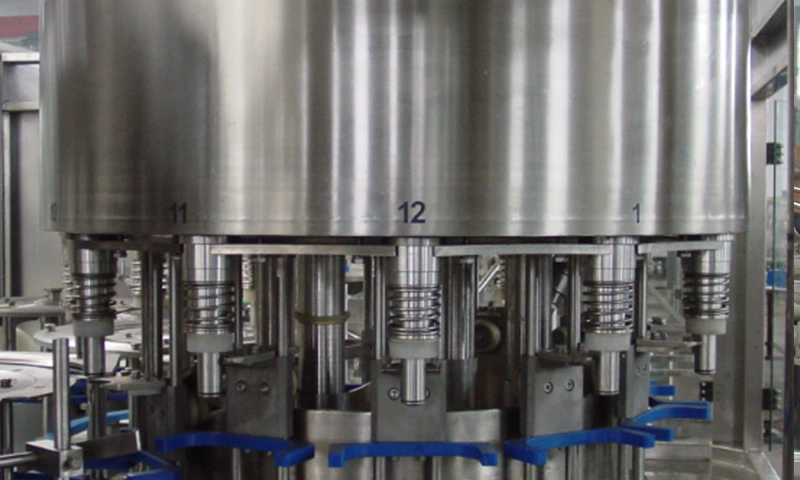
2026-08-11
Filling Machine Spare Parts: Build a Risk-Based Inventory and PM Plan
Classify critical filling-line spares by failure impact, lead time and wear rate, then connect inventory with preventive maintenance and usage records.
Learn more