
Insights & Updates
CO2 Saturators for Beverage Production: Control, Sizing and Troubleshooting
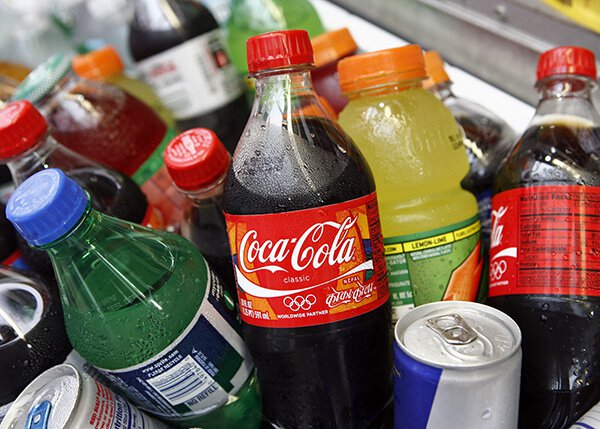
A CO2 saturator, often called a beverage carbonator or mixer-carbonator, dissolves food-grade carbon dioxide into water or a blended drink before filling. The machine has a direct effect on taste, bubble character, filling stability and product giveaway. When carbonation varies from batch to batch, the cause is rarely “not enough gas” alone; product temperature, dissolved air, pressure control and contact conditions all need to be checked.
How a beverage CO2 saturator works
Carbonation is a gas-liquid mass-transfer process. Food-grade CO2 is brought into close contact with a cold liquid under pressure. Depending on the design, the machine may use a spray nozzle, venturi, mixing element, packed vessel or another contact method to increase the surface area between gas and liquid.
The liquid remains under pressure as it leaves the carbonator and enters the filler. Releasing that pressure too early allows dissolved CO2 to escape. For this reason, the carbonator, buffer vessel and isobaric filler should be engineered as a connected system.
Temperature is the first control point
CO2 is more soluble in colder liquid. If product temperature rises, the same gas pressure produces less stable carbonation and more foam at the filler. A refrigeration shortage during a hot shift can look like a filling-valve problem even when the filler is mechanically sound.
Measure temperature at the carbonator inlet and outlet and trend it during sustained production. The cooling system should be sized for the warmest incoming product and local ambient conditions, not only an ideal factory test.
Remove dissolved air before adding CO2
Water and blended beverage can contain oxygen and other gases. Deaeration reduces competition for gas space, improves carbonation consistency and can help protect flavor. Vacuum deaeration is common, but its effectiveness depends on liquid temperature, vacuum level, contact area and stable flow.
Air leaks on the suction side of a pump or uncontrolled splashing in a tank can undo the benefit of deaeration. Inspect the complete product route, not only the vacuum vessel.
Key parameters to monitor
| Parameter | Why it matters | Typical symptom when unstable |
|---|---|---|
| Product temperature | Determines how readily CO2 remains dissolved | Foam, CO2 loss and variable taste |
| Gas pressure | Provides the driving force for dissolution | Low or fluctuating carbonation |
| Liquid flow | Sets residence and contact conditions | Carbonation changes with line speed |
| Deaeration vacuum | Removes unwanted dissolved gas | Large bubbles and poor CO2 retention |
| Brix or blend ratio | Controls recipe consistency | Carbonation appears different because the base drink changed |
| Buffer level | Prevents pressure and supply interruptions | Filler starvation or repeated pressure swings |
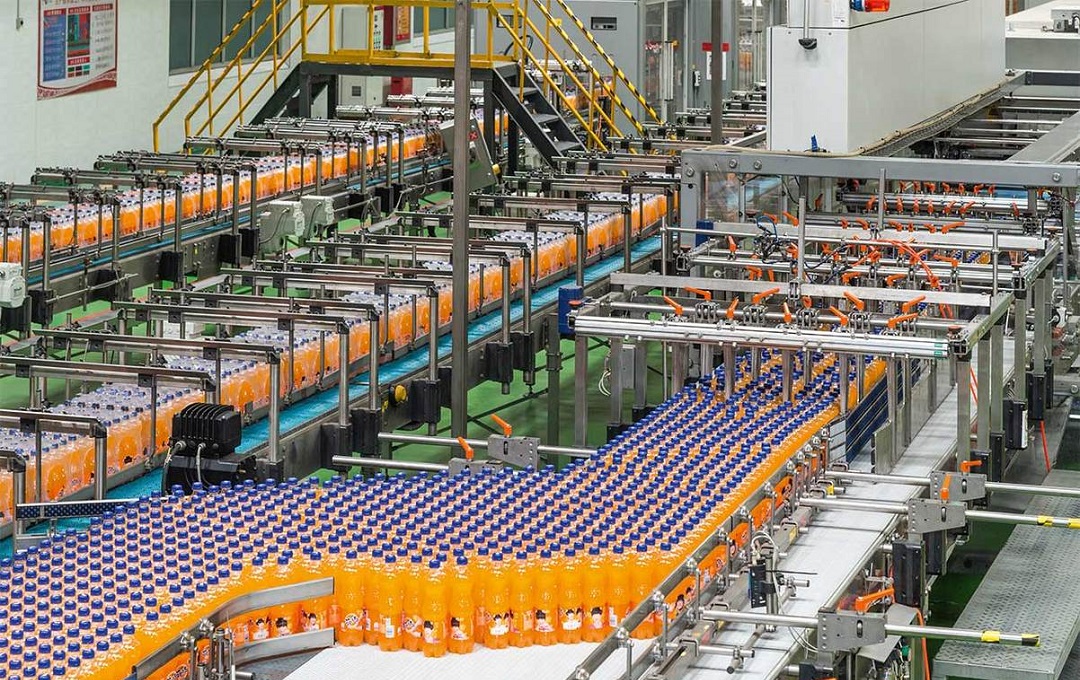
How to size a carbonation system
Capacity should be based on the filler demand plus a reasonable process reserve. The supplier needs the following data:
- Finished beverage flow in liters per hour.
- Product type, Brix, viscosity and filling temperature.
- Target CO2 volume or mass concentration.
- Incoming product temperature and available chilled-water conditions.
- Minimum and maximum line speed.
- CO2 supply pressure, purity, storage and vaporizer capacity.
- Required automation, recipe count and cleaning program.
A larger vessel is not automatically better. Excessive hold-up increases changeover loss and cleaning time, while an undersized system responds poorly to filler demand. The design must match the production schedule.
Common carbonation problems
Low carbonation
Confirm the measurement method first. Then check product temperature, CO2 supply pressure, gas-flow control, nozzle or mixing-element condition, liquid flow and deaeration. A leak or pressure drop between the carbonator and filler can reduce the result after it leaves the machine.
Carbonation varies during the shift
Trend temperature and flow against the measured CO2 result. Chiller load, recipe concentration, tank level and changing filler speed often explain a repeating pattern. Avoid adjusting several variables at once.
Excessive foam at the filler
Warm product, rapid pressure release, unstable bowl pressure and damaged filling-valve seals are common causes. Foam does not prove that the beverage has “too much CO2.” Test carbonation at the appropriate point and inspect the counter-pressure filling sequence.
Coarse bubbles or weak mouthfeel
Bubble perception also depends on recipe, dissolved air, temperature and package. Stable, fine carbonation generally requires good deaeration and controlled gas-liquid contact, followed by gentle pressurized transfer.
Hygiene, materials and maintenance
Product-contact parts should use suitable stainless steel, hygienic seals and drainable pipework. The carbonator and product vessel need a validated CIP cycle. Inspect spray nozzles, venturis, level probes, pressure instruments, heat-exchanger surfaces and gas non-return devices according to the maintenance plan.
CO2 can inhibit some microorganisms, but carbonation is not a substitute for hygienic design, validated processing or sanitation. Product safety must be established for the recipe and distribution conditions.
Questions to ask before ordering
- What finished-beverage capacity is guaranteed at the specified inlet temperature?
- How are Brix, temperature, pressure, flow and CO2 addition controlled?
- What is included in the refrigeration and deaeration scope?
- How is carbonation measured during the acceptance test?
- Which product-contact components are included in CIP?
- How does the system respond when the filler slows or stops?
- Which spare seals, instruments and gas components are recommended?
The CO2 saturator should be selected together with the mixer, cooling system and isobaric filler. See HZM’s carbonated soft drink filling line for the wider process context.
Talk to our engineering team
Need help planning your packaging line?
Share your product, bottle and capacity requirements for a practical equipment recommendation.
Equipment
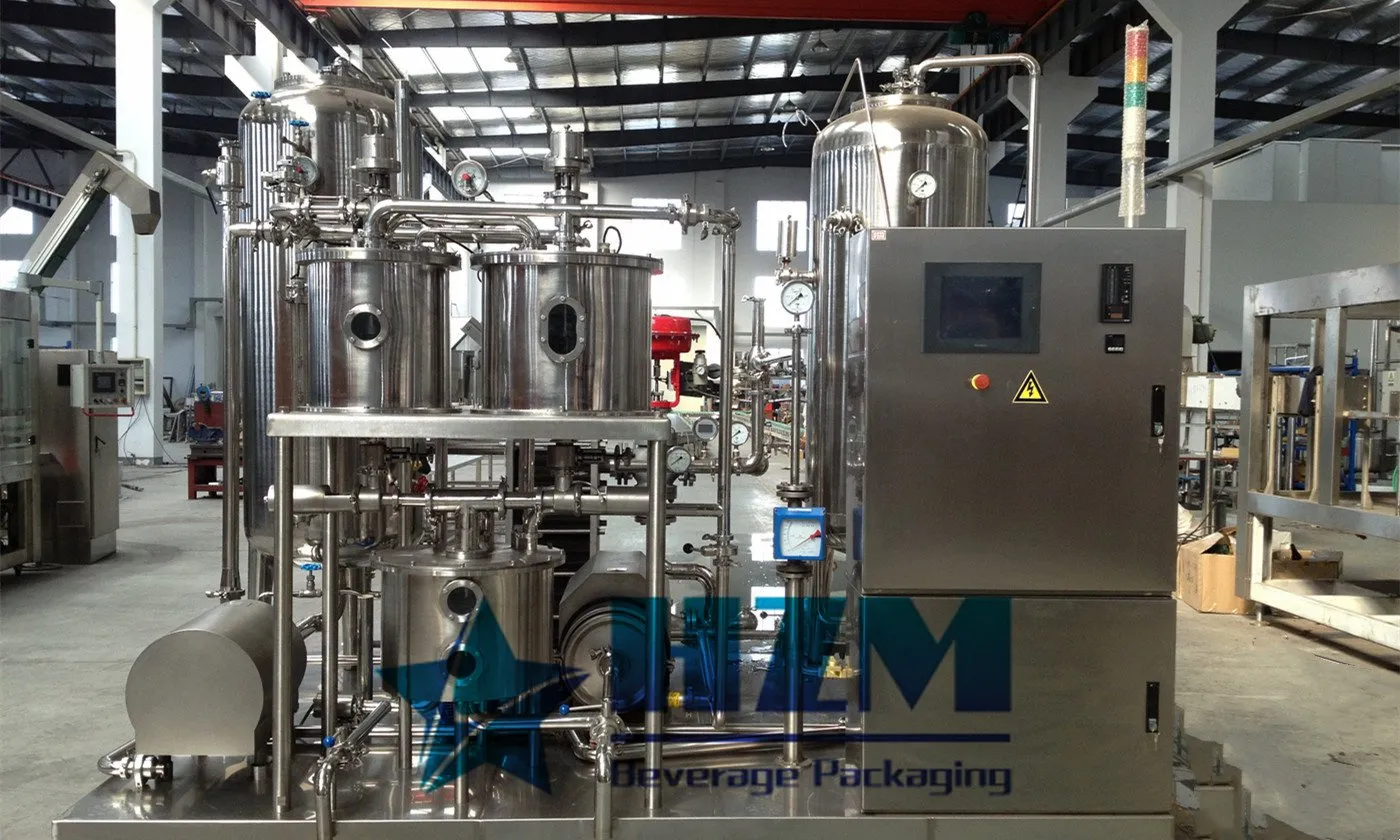
CO2 Saturator | Co2 mixer machine
Five-tank beverage mixing and carbonation system for soda water and soft drinks, with capacities of 4–20 tonnes/hour.
Learn more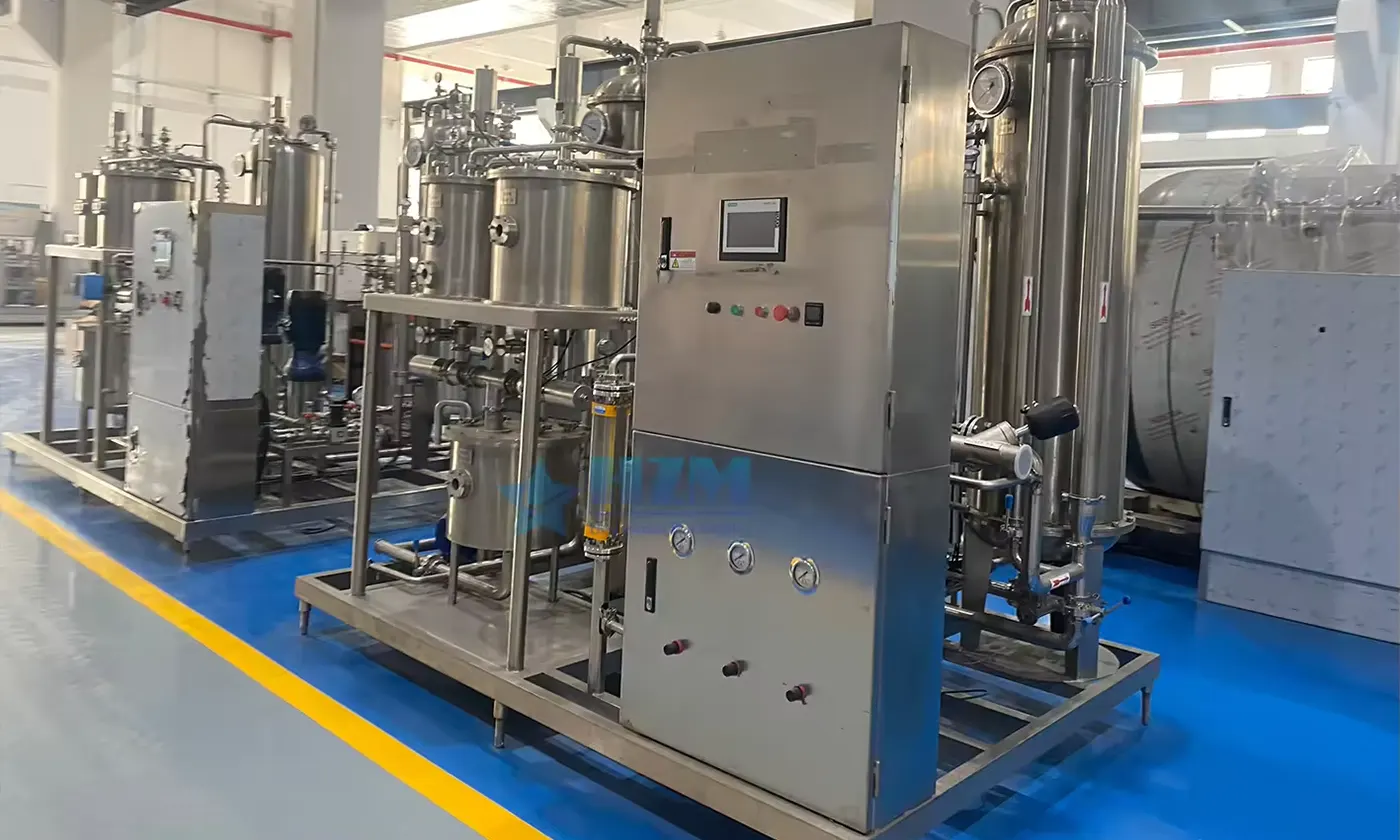
Equipment
Carbonated Drink Co2 Mixer Machine
The CO2 mixer blends beverage ingredients and carbonates the drink before filling.
Learn more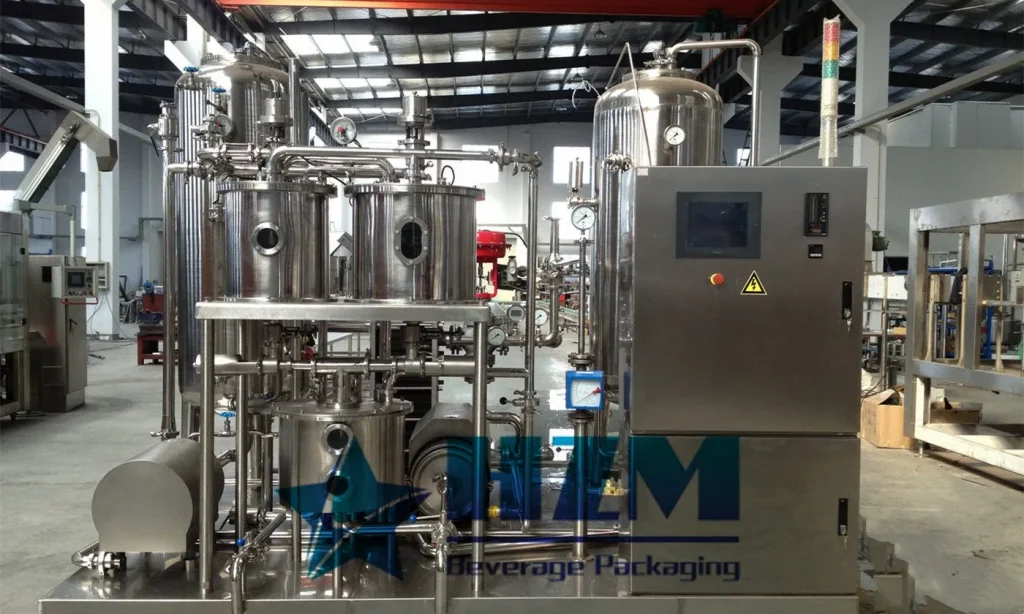
2023-06-30
Troubleshooting Common Issues and Practical Maintenance Tips for CO2 Saturator
The CO2 saturator is a commonly used device that controls and regulates the concentration of carbon dioxide (CO2). However, there are instances when the CO2 saturator may encounter malfunctions that require troubleshooting
Learn more2023-05-05
CO2 mixer machine carbonated beverage production line
A CO2 mixer machine is a device used for mixing gases, typically in beverage production lines. It can mix carbon dioxide gas with water or other liquids to produce carbonated drinks
Learn more
2023-06-30
The Application of CO2 Saturator(CO2 Mixer Machine) in Beer Production Lines
CO2 Saturator, also known as a carbon dioxide mixer, is a device used to dissolve carbon dioxide into liquids. In beer production lines, CO2 Saturators are utilized to dissolve carbon dioxide into beer, inducing carbonation.
Learn more2023-07-04
Introducing Saturator CO2 – Your Complete Solution for Carbonated Drink Production
Saturator CO2 is commonly used in the food and beverage industry for the production of carbonated drinks, soda, and beer. In these beverage manufacturing processes, the Saturator CO2 is used to control and adjust the carbon dioxide content in the drinks, ensuring the appropriate level of carbonation and mouthfeel.
Learn more2023-06-30
HZM Machinery: Your Premier CO2 Saturator Manufacturer
Whether you're in the business of manufacturing carbonated beverages, beer, soda, or sparkling water, choosing HZM Machinery as your CO2 Saturator manufacturer is the wisest decision you can make
Learn more
2023-06-30
What is the role of carbon dioxide in soft drinks?
carbon dioxide plays a vital role in soft drinks by providing a cooling sensation, contributing to distinctive flavors, and acting as a natural preservative to inhibit microbial growth, thus extending the shelf life of the product.
Learn more