
Insights & Updates
Stainless Steel Glass Bottle 25TPH Beverage Processing System
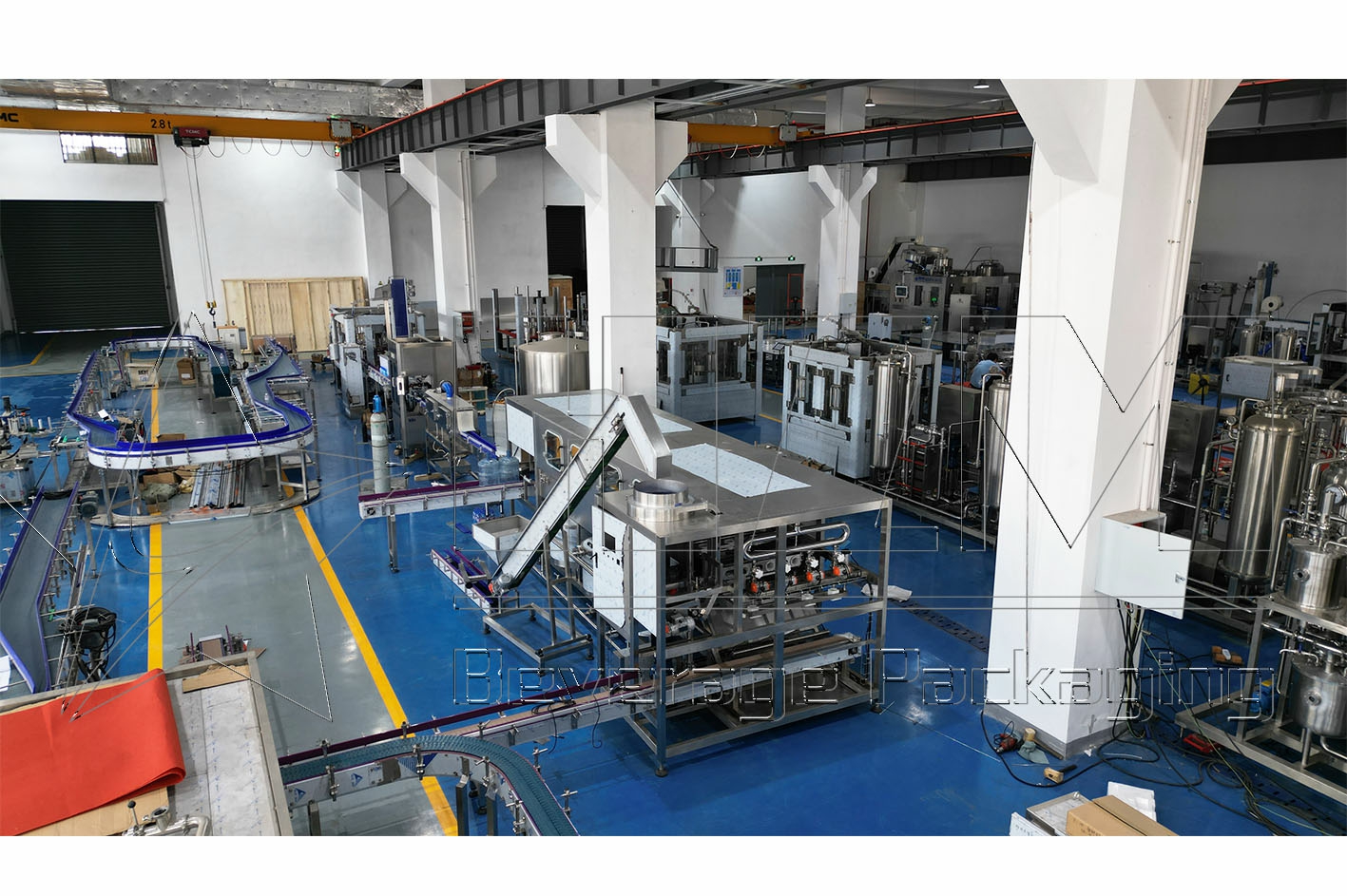
| Material: | Stainless Steel | Certification: | GB/T19001-2000 |
|---|---|---|---|
| Origin: | Zhangjiagang China | Product: | Juice, Milk, Tea, Etc. |
| ProdCapacityuct: | 3TPH-25TPH | Dimension(L*W*H): | Designed |
| Weight: | Designed | Bottle Type: | PET Bottle/Glass Bottle |
| High Light: | 25 TPH Beverage Processing System, 3 TPH Beverage Processing System, 25 TPH Glass Bottle Processing System | ||
Stainless Steel Glass Bottle 25TPH Beverage Processing System
Stainless Steel Easy Operation Beverage Processing System
|
Material |
Stainless steel |
|
Certification |
GB/T19001-2000 |
|
Origin |
Zhangjiagang China |
|
Product |
Juice, milk, tea, etc. |
|
ProdCapacityuct |
3-25T/H |
|
Dimension(L*W*H) |
Designed |
|
Weight |
Designed |
|
Bottle type |
PET bottle/Glass bottle |
1. Extraction System: Extraction System
The purpose of the extraction operation is to effectively extract the active ingredients of plants, not only to maintain the unique color, aroma and taste of the original liquid as much as possible, but also to effectively prevent the over-dissolution of non-original ingredients from causing turbidity and precipitation of active ingredients in the beverage.
After extraction, the juice should be clarified to remove impurities, colloids and non-polyphenol macromolecular compounds in the juice to avoid turbidity and precipitation during the product shelf life. Especially suitable for the extraction of tea juice, it is a reliable, high-quality special extraction equipment.
2. Sugar dissolving system
The sugar dissolving system is mainly used to dissolve granulated sugar. It is composed of a material-liquid mixing pump, a hot and cold cylinder, a double filter, a frame and a connecting pipe. Dissolve sugar with good texture in a certain amount of hot water to achieve the desired concentration. The syrup is stored after insulation, sterilization, filtration and cooling for later use.
3. Allocation system
Before mixing the concentrated fruit juice, it is necessary to add an appropriate amount of water to dilute the concentrated fruit juice. Send all the syrup and auxiliary materials into the mixing tank in order, and then add water to the mixing tank to stir, mix evenly and maintain a constant volume for the next step.
4. Mixer
The function of the mixer is a device that mixes syrup, water and carbon dioxide. It can be well combined with carbon dioxide without generating bubbles, thus ensuring the quality and stability of the beverage. The whole process of the system is automatically controlled and easy to operate.
5. UHT system
The English abbreviation for super heat treatment is ultra high temperature instantaneous sterilization system. The product is continuously subjected to short-term rapid heating and cooling treatments in a completely sealed system, which can kill all harmful microorganisms, while retaining the product's flavor and nutrients, and preventing secondary pollution. Therefore, the UHT system is widely used for the sterilization of fruit juices, beverages, dairy products, ice cream, etc.
6. CIP system
The English abbreviation of Clean In Place is called in-situ cleaning (online cleaning, on-site cleaning), which can not only clean the machine, but also kill all microorganisms, and has a rapid sterilization effect. It is generally non-toxic after dilution and is not affected by water hardness. , Can form a thin film on the surface of the device. Various forms of cleaning are carried out according to process requirements.
Quality Control
To guarantee the excellent performance of our beverage production lines and beverage machinery, we introduce advanced technology from Germany and Italy, and constantly improve our production technology of liquid filling. Apart from that, free trainings are offered to our employees to help them improve technical skills. In addition, we strongly believe that beverage production lines and beverage machines with high pass rate and reliable quality can effectively reduce production cost. Thus, we strictly implement product inspection in every step of production, from raw material acquisition to shipping our finished products, to ensure the quality and pass rate. Besides, much attention is also placed on perfect management system and high quality employees for a higher working efficiency.
Talk to our engineering team
Need help planning your packaging line?
Share your product, bottle and capacity requirements for a practical equipment recommendation.
Equipment
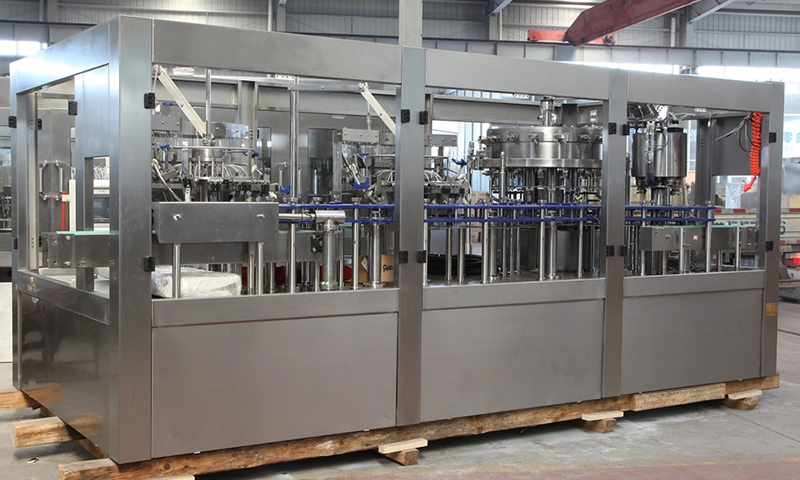
Glass Bottle Filling Machine – DXGF14-12-5
DXGF14-12-5 glass bottle rinsing, isobaric filling and capping for carbonated drinks, at 2,000–3,000 bottles/hour for 750 ml bottles.
Learn more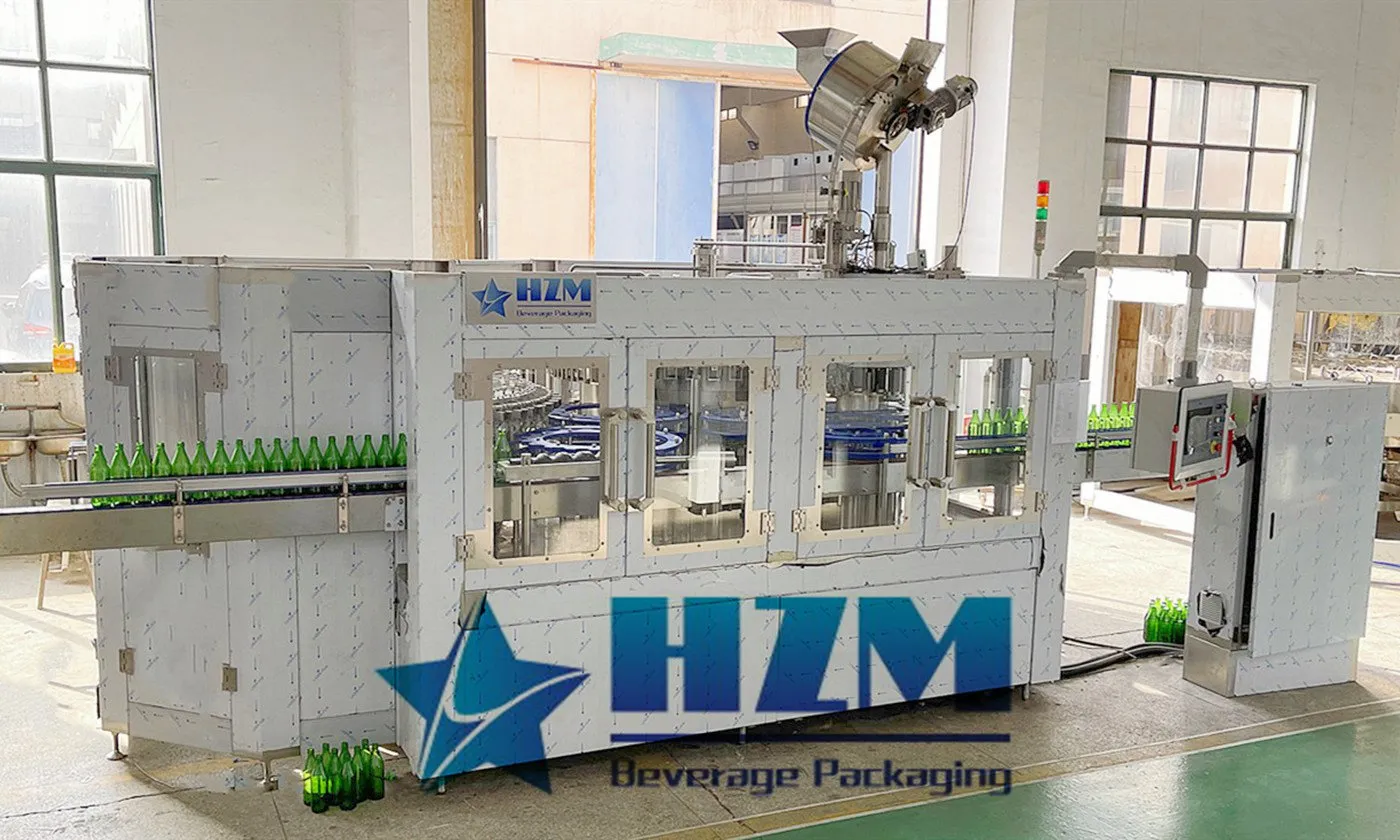
Equipment
Glass Bottle CSD Beverage Filling Machine
Glass bottle filling for carbonated beverages, with isobaric filling and capacities of 2,000–20,000 bottles/hour at 500 ml.
Learn more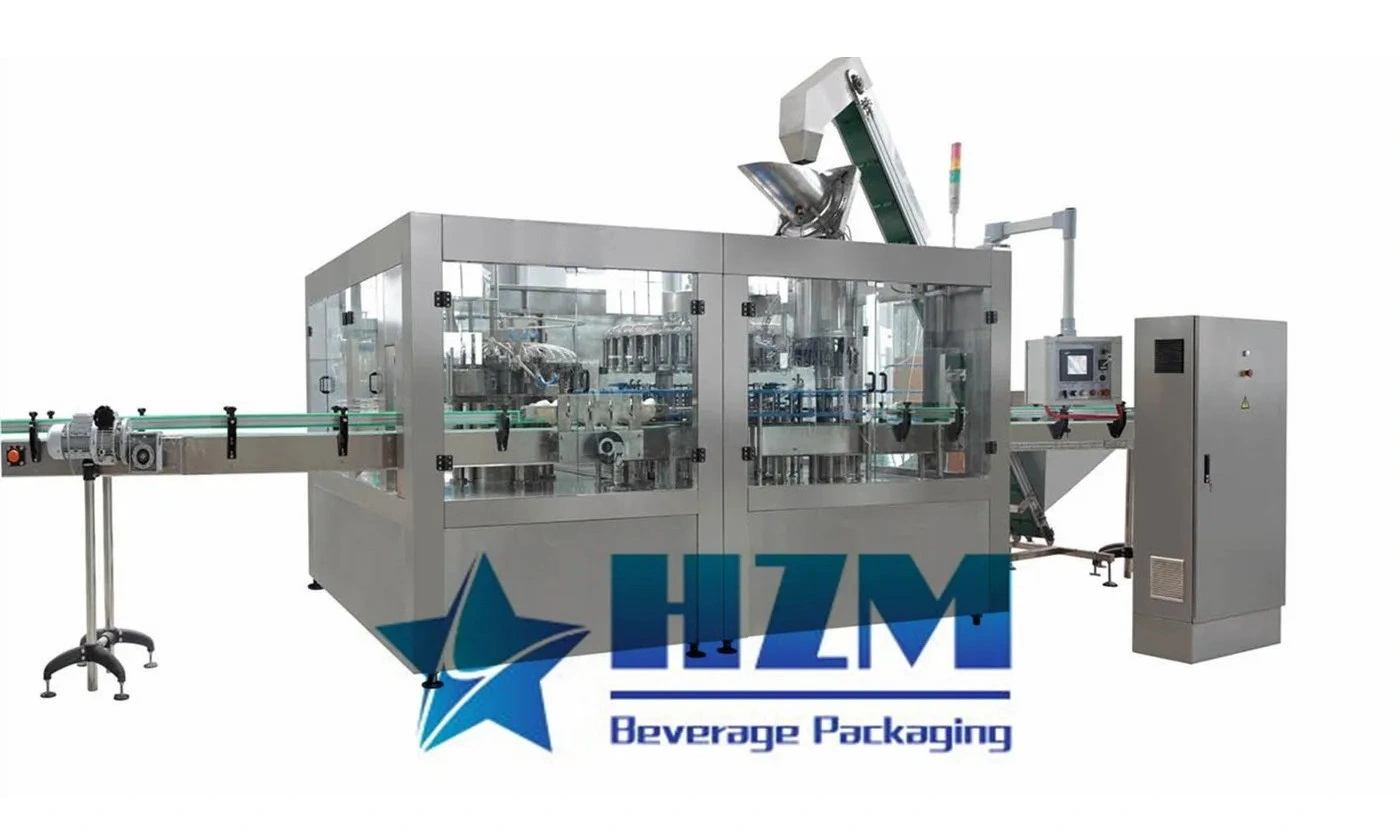
Equipment
Glass Bottle Juice Beverage Filling Machine
Glass bottle juice filling with rinsing and capping, for juice, tea and other still beverages.
Learn more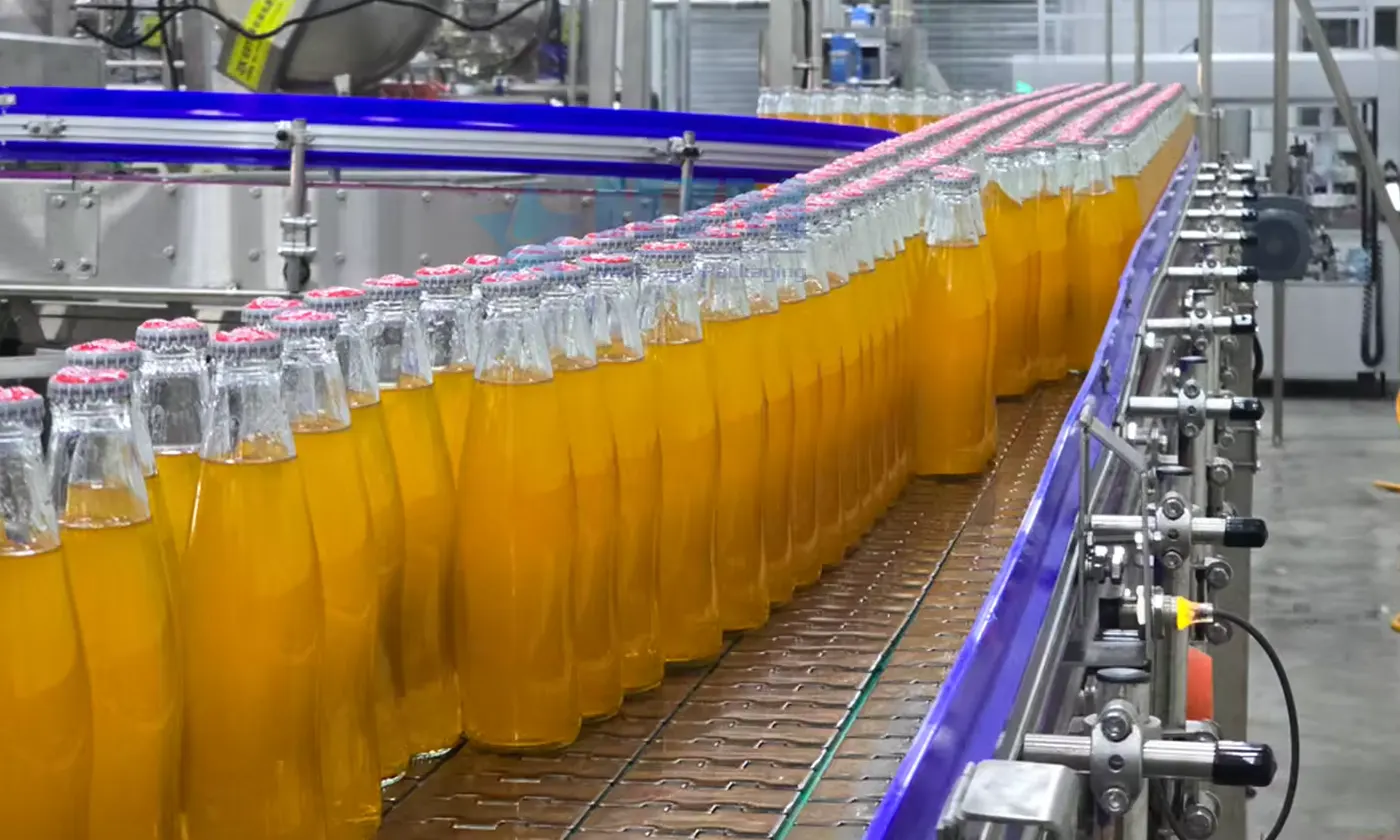
Equipment
Glass Bottle Carbonated Beverage Filling Bottling Line
This glass bottle carbonated beverage line combines bottle rinsing, isobaric filling and capping with conveying, labelling and packing.
Learn more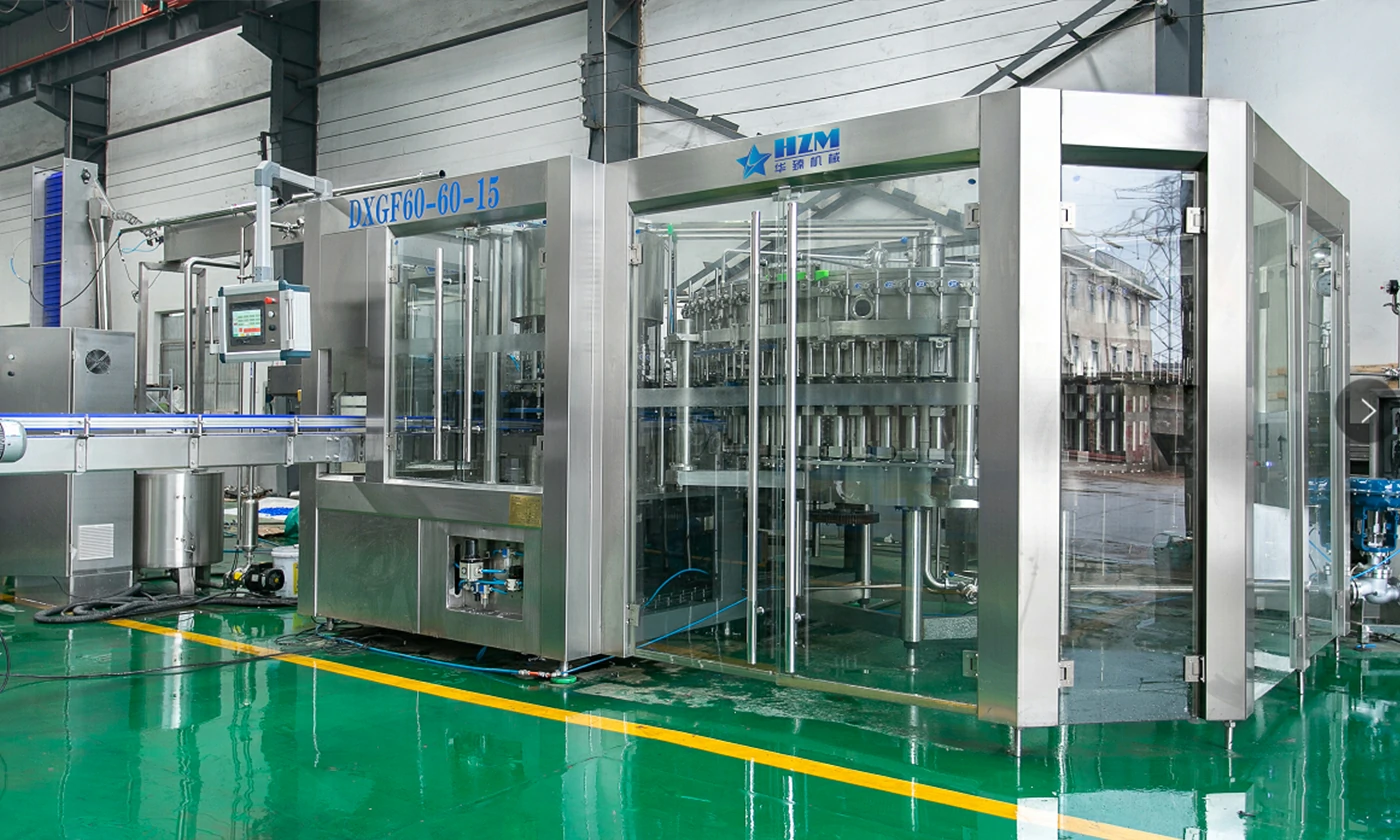
Equipment
Glass Bottle Beer & Beverage Filling Machine
DXGF60-60-15 glass bottle rinsing, isobaric filling and capping for beer and beverages, at 18,000 bottles/hour for 500 ml bottles.
Learn more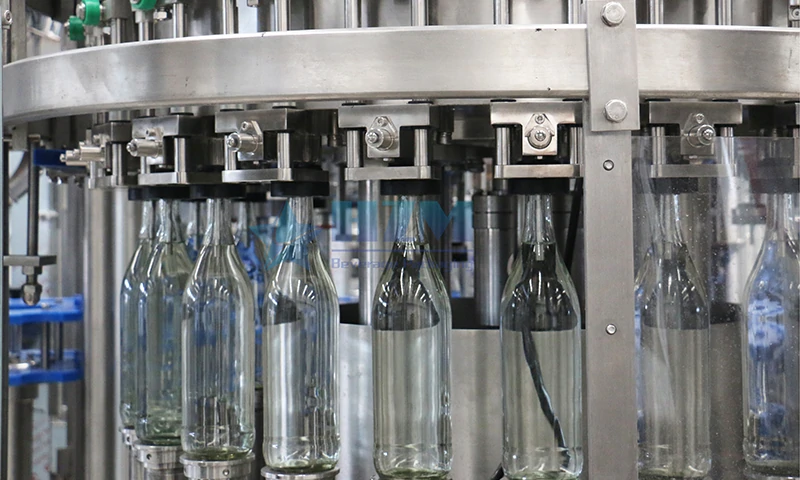
Equipment
Glass Bottle CSD & Water Drinks Filling Machine
DXGF24-24-8-8 glass bottle isobaric filling for carbonated drinks, with rinsing and two capping stations.
Learn more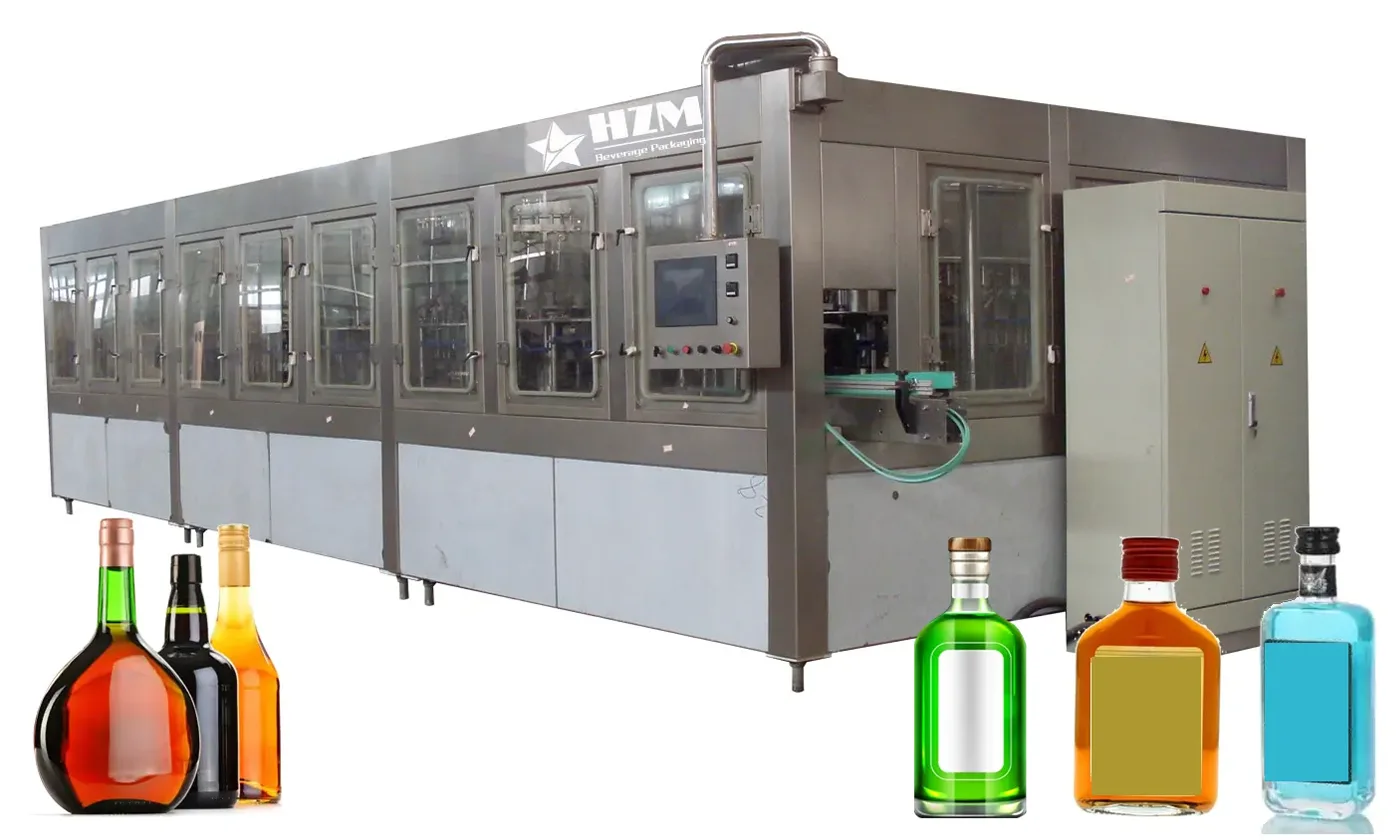
Equipment
Automatic Glass Wine Bottle Filling Machine
The glass-bottle filling machine combines rinsing, filling and capping for wine and compatible beverage products.
Learn more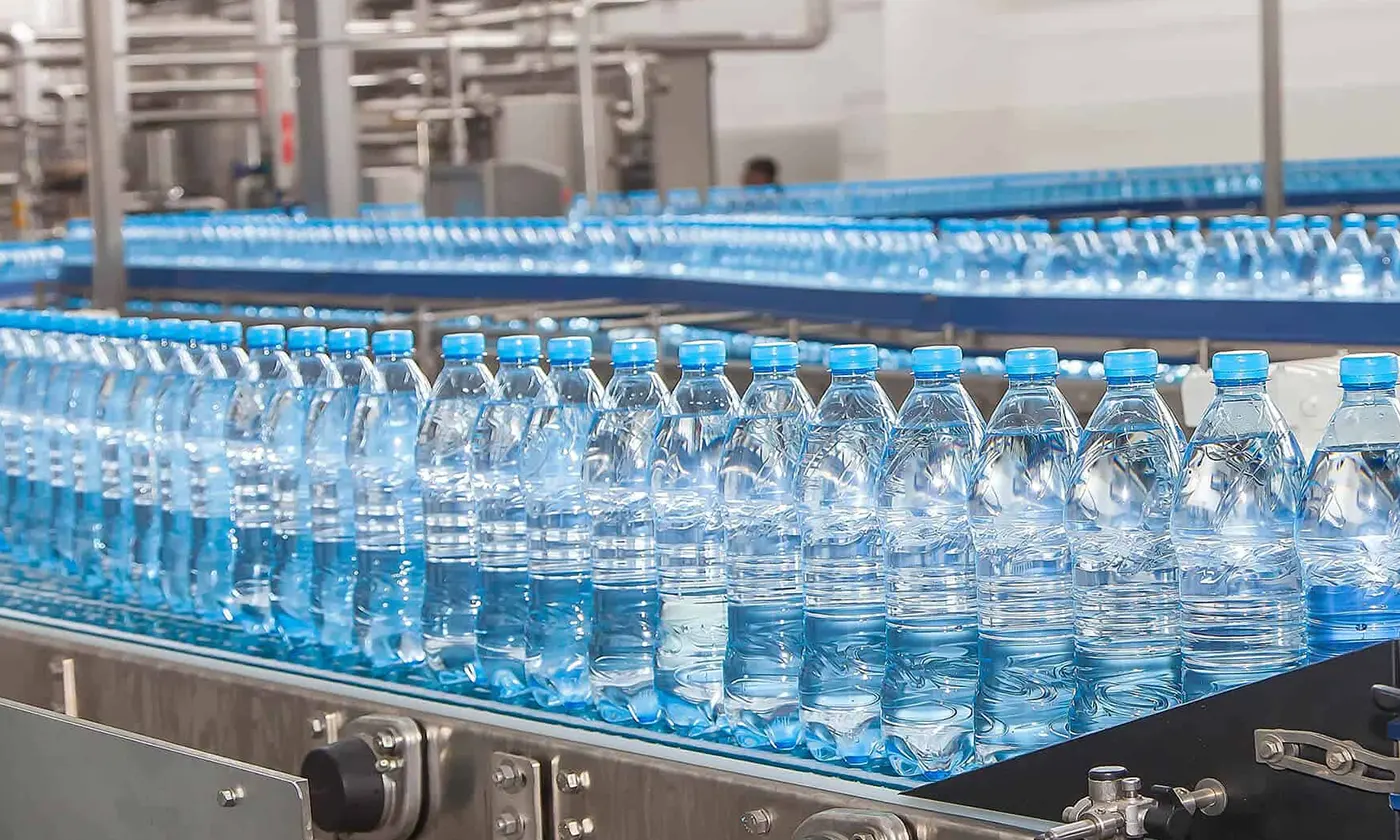
Equipment
Conveyor Belt System For PET Bottle And GLASS Bottle
The conveyor system transfers PET and glass bottles between production machines.
Learn more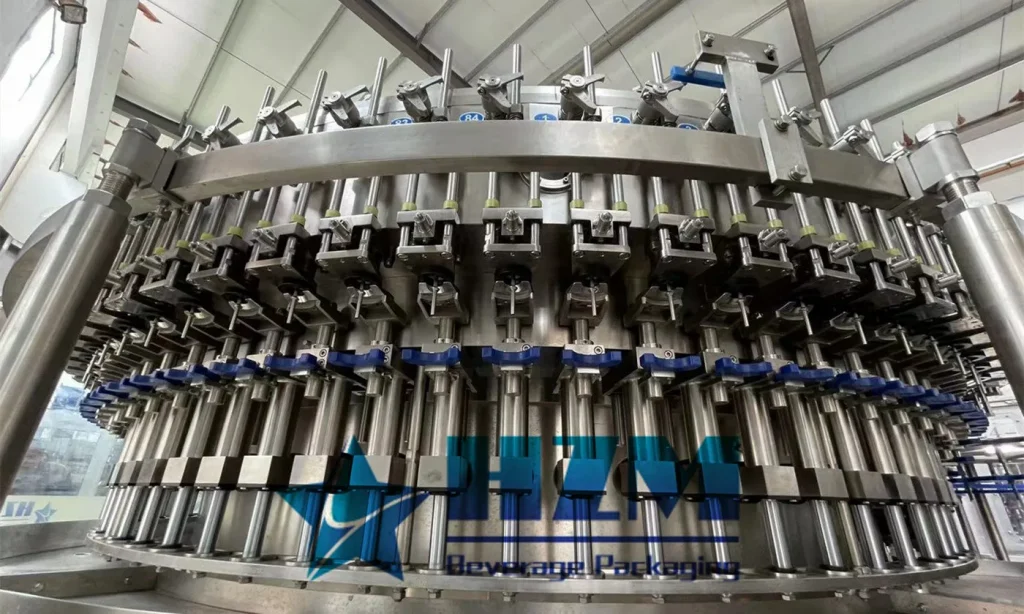
2023-08-20
Why Use 304 Stainless Steel in Filling Machines?
Filling machines are highly efficient mechanical devices widely utilized in industries such as food, beverages, and cosmetics. They offer advantages such as precise filling, high production efficiency, and user-friendly operation. Stainless steel materials are commonly employed in the production of filling machines, with 304 stainless steel being extensively used in their construction. So, why is 304 stainless steel chosen for filling machines?
Learn more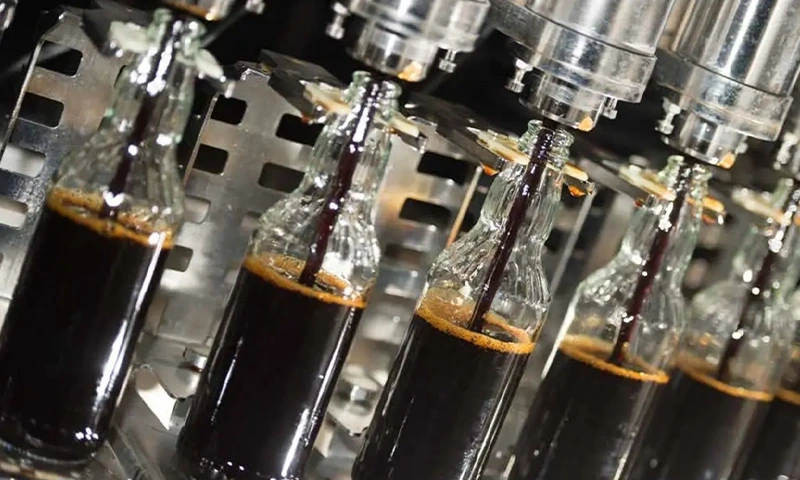
2023-12-03
Why Liquid Filling Machines Choose 304 Stainless Steel?
Liquid filling machines are essential mechanical devices in industries such as food, beverages, and cosmetics, known for their high filling precision, efficiency, and user-friendly operation. In the manufacturing process of these machines, stainless steel is commonly used, with 304 stainless steel being widely applied. So, why is 304 stainless steel the preferred choice for liquid filling machines?
Learn more2023-06-09
316 Stainless Steel 48000bph Beverage Can Filling Machine
High quality 316 Stainless Steel 48000bph Beverage Can Filling Machine from China, China's leading 48000 bph Beverage Can Filling Machine product, with strict quality control 1500ml Beverage Can Filling Machine factories, producing high quality 48000bph can filling production line products.
Learn more2023-06-09
Stainless Steel 36000bph Automatic Dry Filling Machine
High quality Stainless Steel 36000bph Automatic Dry Filling Machine from China, China's leading 36000 bph Automatic Dry Filling Machine product, with strict quality control 36000 bph Auto Dry Filling Machine factories, producing high quality 36000 bph Dry bottle Filling Machine products.
Learn more2023-06-09
Stainless Steel 20000 BPH PET Bottled Water Filling Machines
High quality Stainless Steel 20000 BPH PET Bottled Water Filling Machines from China, China's leading 20000bpm PET Bottled Water Filling Machines product, with strict quality control 20000bpm Bottled Water Filling Machines factories, producing high quality 20000bpm PET Bottle Water Filling Machines products.
Learn more2023-06-09
Stainless Steel Labeller 3Mpa Automatic Labeling Machine
High quality Stainless Steel Labeller 3Mpa Automatic Labeling Machine from China, China's leading 3Mpa Automatic Labeling Machine product, with strict quality control 3Mpa Stainless Steel Labeller factories, producing high quality SS304 Automatic Labeling Machine products.
Learn moreBuild your production line
Talk with an HZM beverage packaging specialist
Tell us your beverage, container, capacity and target market. Our engineering team will prepare a practical line proposal.