
Insights & Updates
What is a Beverage Processing System? Equipment Overview & Purchasing Guide
1. What is a Beverage Processing System?
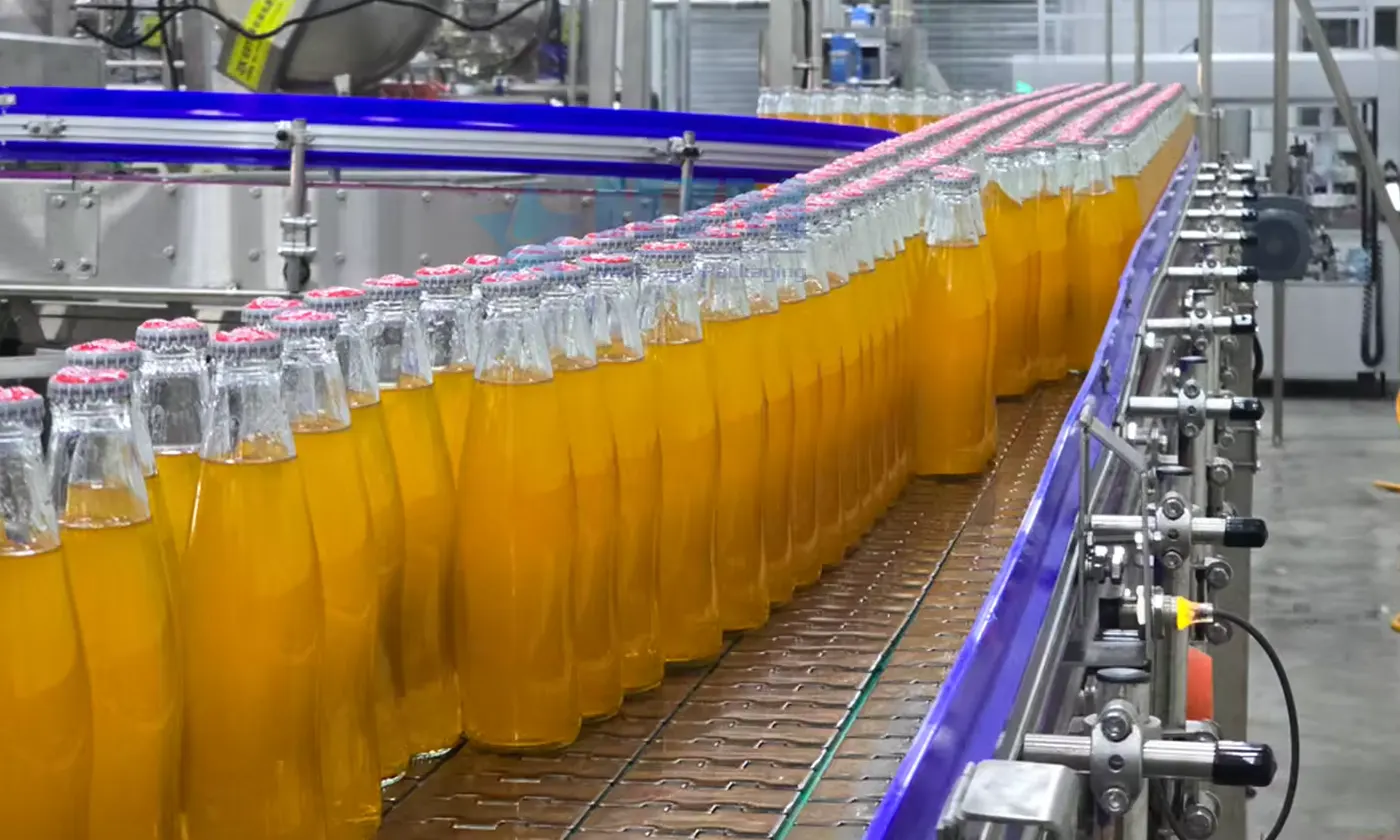
A Beverage Processing System is a complete set of equipment used to process beverage products—such as juice, carbonated drinks, energy drinks, dairy-based beverages, and tea—through every stage, from raw material handling and mixing to sterilization, filling, and packaging.
These systems are designed for industrial-scale production, helping manufacturers achieve high-volume, efficient, and hygienic beverage production.
2. What Equipment Does a Beverage Processing System Include?
A typical beverage processing system consists of the following main components:
1. Water Treatment System
-
Function: Filters and purifies water to meet food-grade standards.
-
Common equipment: Sand filters, activated carbon filters, reverse osmosis (RO) units, water softeners, UV sterilizers.
2. Raw Material Mixing System
-
Function: Mixes sugar, juice concentrates, flavors, and additives with purified water.
-
Common equipment: Sugar melting tanks, mixing tanks, blending vessels, high-shear mixers, in-line mixers.
3. Sterilization System
-
Function: Sterilizes the mixed beverage to extend shelf life.
-
Common equipment: Pasteurizers, UHT (Ultra-High Temperature) sterilizers, plate heat exchangers.
4. Carbonation System (for carbonated drinks only)
-
Function: Injects CO₂ into the beverage for sparkling taste.
-
Common equipment: Carbonation mixers, CO₂ dosing units.
5. Storage Tanks
-
Function: Temporarily stores the processed beverage before filling.
-
Features: Typically made of food-grade stainless steel with temperature control.
6. Filling System
-
Function: Accurately fills bottles or cans with the finished beverage.
-
Common types: PET bottle fillers, glass bottle filling machines, aluminum can fillers, aseptic filling machines.
7. Capping and Labeling System
-
Function: Seals bottles/cans and applies product labels.
-
Common equipment: Capping machines, sealing units, shrink sleeve machines, labeling machines.
8. Packaging System
-
Function: Packs the final products for storage and transportation.
-
Common equipment: Shrink wrapping machines, carton packers, palletizers.
3. What Should You Consider When Purchasing a Beverage Processing System?
Purchasing a beverage processing system is a major investment. Here are key factors to consider:
1. Product Type & Production Capacity
-
Are you producing juice, carbonated beverages, dairy drinks, or something else?
-
What is your desired output (bottles per hour)?
These determine the type and configuration of equipment needed.
2. Level of Automation
-
Do you need a fully automated system?
-
Look for PLC control systems, touchscreen interfaces, and remote monitoring capabilities.
3. Hygiene Standards & Material
-
Ensure all equipment is made of food-grade stainless steel (SUS304 or SUS316L).
-
Look for CIP (Clean-in-Place) compatibility and compliance with hygiene certifications such as CE, FDA, or ISO.
4. Energy Efficiency
-
Evaluate heating, cooling, and air compression efficiency.
-
Quality equipment can significantly reduce long-term energy costs.
5. Compatibility & Scalability
-
Can the system be upgraded in the future?
-
Can it handle different bottle or can sizes?
6. After-Sales Support & Spare Parts
-
Is local technical support available?
-
Are spare parts easy to source and replace?
7. Cost vs. Quality
-
Cheaper isn’t always better. Balance between price, performance, reliability, and long-term value.
Talk to our engineering team
Need help planning your packaging line?
Share your product, bottle and capacity requirements for a practical equipment recommendation.