
Semi-Automatic PET Blow Molding Machine for 20-Liter Bottles
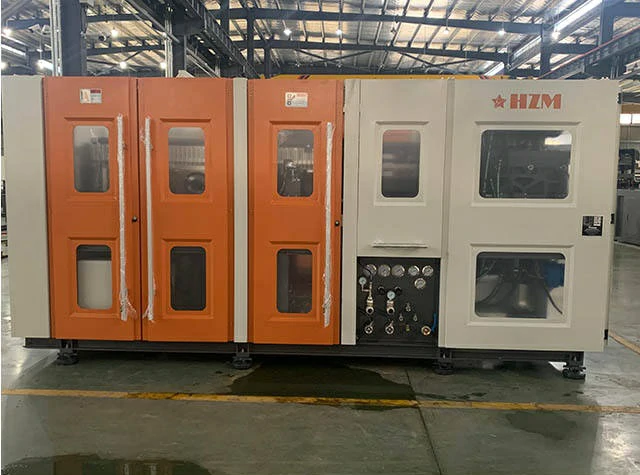
Semi-Automatic PET Blow Molding Machine for 20-Liter Bottles
Producing a 20-liter PET water bottle requires more than a large blow mold. The PET preform, heating system, stretch-blowing process, compressed-air supply and bottle design must work together to form a container with the required dimensions and wall thickness.
For manufacturers producing large drinking-water bottles, a semi-automatic PET blow molding machine provides a production method in which the preforms are heated before operators transfer them into the blowing station. The machine then performs the programmed molding cycle.
However, equipment designed for 500 ml or 2 L bottles cannot be assumed to handle 20 L containers. The machine’s bottle-size range, mold space, preform handling arrangement and operating capacity must match the larger container.
This article explains how semi-automatic 20 L PET bottle production works, what affects output and which specifications buyers should establish before purchasing equipment.
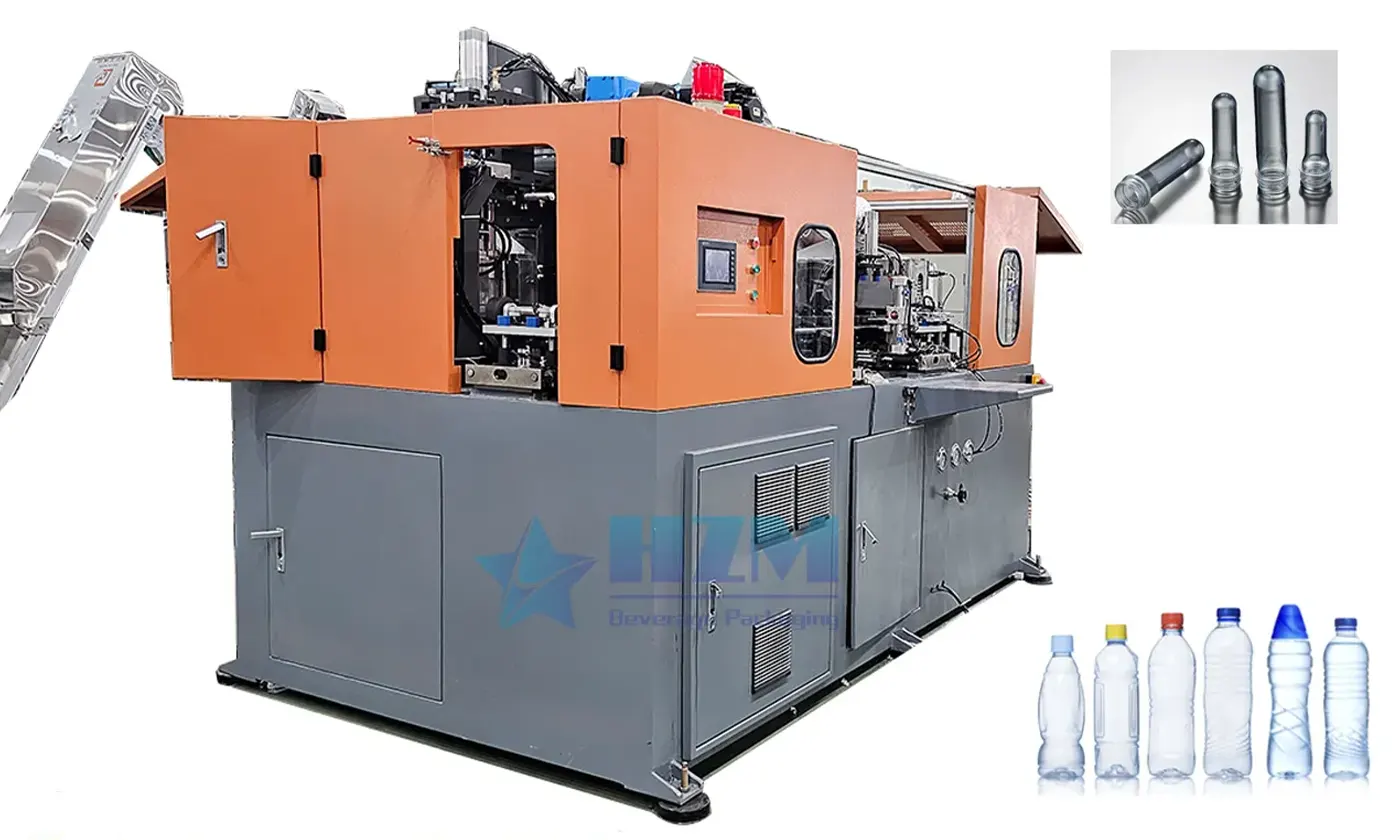
1. How Does a Semi-Automatic 20L PET Blow Molding Machine Work?
Most two-stage PET bottle manufacturing processes begin with an injection-molded PET preform. The preform already contains the formed neck finish and is subsequently reheated and stretched into its final bottle shape.
For a semi-automatic large-bottle system, production generally involves a preform heater and a separate blow molding unit.
Preform Heating
The operator places PET preforms into the heating system, where infrared heating raises the material to a suitable forming-temperature profile.
Large PET bottle preforms can have comparatively thick walls, making heat distribution particularly important.
Heating only the outside of the preform is not sufficient if the internal material has not reached an appropriate forming condition. Excessive surface heating can also create problems before the inner wall is adequately conditioned.
The heating arrangement must therefore account for preform thickness, heater positioning, exposure time and the preform’s movement through the heating system.
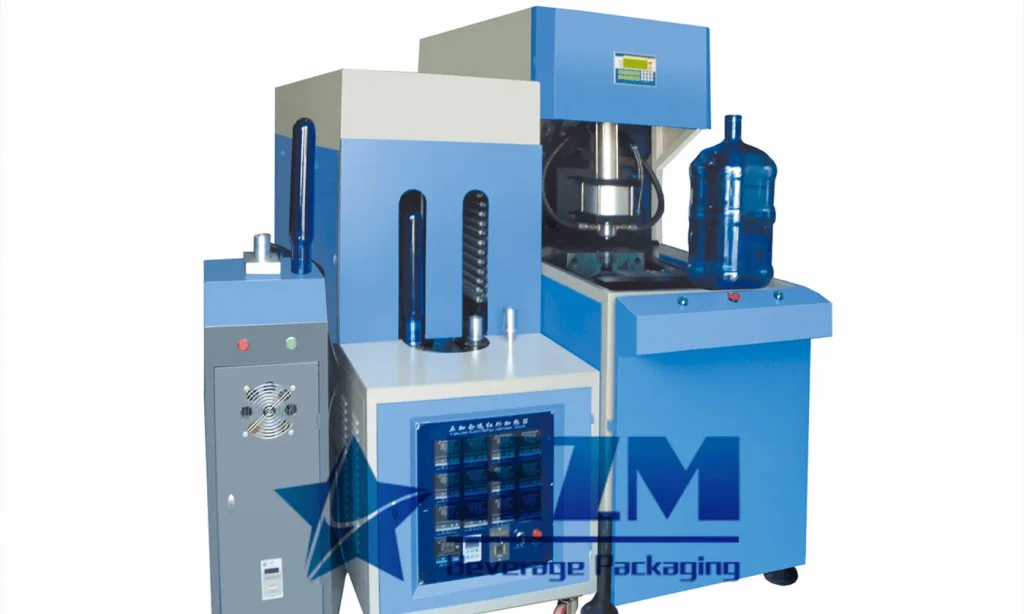
HZM Machinery’s large-bottle blow molding equipment information describes a rotary infrared heating unit and a separate blowing station.
Preform Transfer and Stretch Blowing
After heating, the operator transfers the conditioned preform to the blowing mold.
The mold closes around the preform, and the programmed stretching and compressed-air sequence forms the bottle.
The stretch rod extends the material along the bottle’s length, while compressed air expands the preform toward the mold cavity.
Together, these actions influence the material distribution throughout the bottle body, shoulder and base.
The timing of stretching and air introduction is significant. Changing these settings can affect how the PET material moves before it reaches the mold wall.
A successful molding cycle must produce the intended bottle shape without leaving excessively thin or improperly formed areas.
Cooling and Bottle Removal
Once the bottle has formed and reached a suitable release condition, the mold opens and the finished container is removed.
The operator can then inspect the bottle before transferring it to the next handling or packaging stage.
In a semi-automatic arrangement, manual transfer and removal form part of the production cycle. Their duration and consistency should be included when estimating the machine’s actual output.
2. Is a 20L Bottle the Same as a 5-Gallon Water Bottle?
Not exactly.
Large drinking-water containers are frequently described as 5-gallon bottles, 18.9-liter bottles or 20-liter bottles. These descriptions may refer to similar commercial applications, but the nominal volumes are not identical.
One U.S. liquid gallon equals approximately 3.785 liters.
Therefore:
5 U.S. gallons = approximately 18.93 liters
A container specified as 20 liters has a different nominal volume.
More importantly, nominal capacity alone does not establish bottle compatibility.
Two containers with similar volumes may have different heights, diameters, shoulder designs, handles, bases or neck finishes.
These differences matter when designing the blow mold, selecting preforms and matching the bottles with filling and capping equipment.
For purchasing purposes, identify the exact container volume and provide a dimensioned bottle drawing rather than referring only to a “5-gallon bottle.”
3. Choosing the Right PET Preform and Bottle Mold
A properly matched preform and mold are essential for producing consistent large PET containers.
The preform is not simply a quantity of plastic that can be stretched into any bottle shape. Its geometry, weight distribution and neck finish influence the final container.
The following specifications should be established before choosing the blowing equipment.
| Specification | Why it matters |
|---|---|
| Bottle volume | Defines the required container capacity |
| Bottle height and diameter | Determine mold and machine-space requirements |
| Neck finish and opening diameter | Affect preform handling, closure compatibility and filling connections |
| Preform length and wall thickness | Influence heating and stretching behavior |
| Preform weight | Affects available material and final wall distribution |
| Bottle shoulder and base design | Influence forming behavior and container stability |
| Intended filling and handling process | Determines which finished-bottle performance tests are necessary |
Why Preform Weight Alone Is Not Enough
A heavier preform does not automatically produce a better 20 L bottle.
Material must be distributed appropriately after stretching and blowing. A bottle may contain sufficient total material but still have an excessively thin shoulder, unstable base or uneven sidewall.
The correct preform specification depends on the required bottle geometry and performance.
If an existing preform is already available, its drawing and physical samples should be used when assessing the molding equipment.
If the bottle is a new design, the preform and blow mold should be developed as a compatible combination.
Checking the Neck Finish
The bottle neck is particularly important because the finish is established during preform injection molding.
The blow molding process is not intended to create an entirely different neck thread or opening diameter.
The preform finish must match the intended cap, sealing arrangement and filling machine.
This is especially important for large drinking-water containers because different markets and bottle designs may use different closure systems.

4. How Much Output Can a Semi-Automatic 20L Blowing Machine Produce?
The number of bottles produced per hour depends on the complete operating cycle, not simply on bottle volume.
For a single-cavity configuration, the cycle includes loading the heated preform, closing the mold, stretching and blowing, cooling, opening the mold and removing the bottle.
A useful preliminary capacity calculation is:
Theoretical bottles/hour = 3,600 ÷ Cycle time in seconds
For multiple cavities, multiply by the number of bottles produced during each complete cycle, provided all cavities operate as specified.
This formula does not account for operator delays, rejected bottles, equipment stoppages or interruptions in preform heating.
Example: Planning Production for a Single Shift
Suppose a water bottling plant needs 600 acceptable 20 L bottles during an eight-hour shift.
For this hypothetical calculation, assume:
- Seven hours of actual productive time
- A 95% acceptable-bottle yield
- A target of 600 accepted bottles per shift
The required production rate before rejection losses would be:
600 ÷ (7 × 0.95) = approximately 90.2 bottles/hour
The equipment would therefore need to support at least approximately 91 attempted bottles per productive hour under these assumptions.
This is a planning example, not a published production guarantee for any HZM model.
If the plant operates several shifts or intends to increase output, the calculation should be repeated using the expected production schedule.
Match Bottle Production with the Filling Line
Blow molding capacity and water filling capacity are not necessarily equal.
A factory may blow empty bottles separately and store them before filling. Another facility may require a more closely coordinated flow between bottle production and the filling line.
For example, a filling machine processing 300 bottles per hour consumes 2,400 empty bottles during eight hours of continuous operation.
If a blow molding machine produces fewer bottles during the same period, production planning must account for the difference through inventory, additional operating time or additional bottle-making capacity.
For plants using returnable water containers, bottle recovery, inspection and washing also affect the number of new bottles required.
New-bottle demand should not automatically be treated as equal to total daily filling output in a returnable-container operation.
5. Compressed Air and Supporting Equipment
Compressed air is a critical utility in PET stretch blow molding.
The blowing process requires sufficient pressure and air delivery to form the bottle within the programmed cycle.
When selecting an air compressor, the required pressure must be considered together with the volume of air needed and the operating pattern of the blowing machine.
A compressor’s nominal pressure rating alone does not establish that it can support continuous production.
For a large-bottle installation, the supporting equipment may include:
| Equipment | Function |
|---|---|
| Air compressor | Supplies compressed air for molding operations |
| Air receiver | Provides compressed-air storage and helps accommodate demand fluctuations |
| Air dryer and filters | Control moisture and contaminants in the compressed-air system |
| Preform infrared heater | Conditions PET preforms before stretching |
| Cooling system | Supports temperature control where required by the machine and mold |
| Bottle mold | Defines the finished container geometry |
The required auxiliary equipment depends on the approved machine configuration.
Before installation, the equipment specification should identify the compressor’s delivered air capacity at the required pressure, air-quality requirements, electrical supply, heating load and cooling connections.
Air leakage, unstable supply pressure or insufficient air delivery can interfere with consistent bottle formation.
6. Common Quality Problems in 20L PET Bottle Production
Large PET bottle quality depends on the interaction between material, heating, stretching and cooling.
Problems should be diagnosed from the location and appearance of the defect rather than by changing several machine settings at once.
| Observed problem | Possible areas to investigate |
|---|---|
| Uneven wall thickness | Preform design, heating distribution, stretch timing and air introduction |
| Incomplete bottle shape | Insufficient or unstable blowing conditions, preform temperature and process timing |
| Distorted neck finish | Excessive neck heating, inadequate neck protection or incompatible handling components |
| Unstable bottle base | Base geometry, material distribution, stretching sequence and cooling conditions |
| Localized whitening or poor appearance | Preform condition, temperature distribution, excessive stretching or material-related issues |
These are possible causes, not definitive diagnoses. Similar defects may result from different process conditions.
Why Heating Adjustment Requires Care
When an area of the finished bottle is too thin, simply increasing the overall heating temperature may not correct the defect.
The problem could be related to where material is distributed during stretching.
Adjusting individual heating zones may change the movement of PET material into different parts of the bottle. Stretch timing and preform design can also influence the result.
An effective troubleshooting procedure records the current machine settings, identifies the affected bottle area, makes a controlled adjustment and checks the resulting bottles.
For recurring defects, wall-thickness measurements and comparisons between sample bottles are more informative than visual inspection alone.
All parameter adjustments should remain within the equipment manufacturer’s operating and safety instructions.
7. What Should Buyers Check Before Accepting a 20L Blow Molding Machine?
A machine demonstration should establish more than whether a single acceptable bottle can be produced.
The test should use the agreed PET preform, blow mold and bottle specification.
The following conditions deserve particular attention.
Bottle dimensions and closure compatibility
Finished bottles should be measured against the approved drawing. The neck finish must remain suitable for the intended closure and filling equipment.
Wall-thickness distribution
Measurements at specified locations can reveal differences in material distribution that are not obvious from appearance alone.
Container stability and performance
Testing should reflect how the bottle will be filled, lifted, stored, transported or reused, as applicable. Suitable tests and acceptance limits depend on the intended container design.
Production consistency
The machine should be observed over an agreed continuous production period, including repeated operator loading, blowing and bottle removal.
Utility conditions
The test should record relevant compressed-air conditions, electrical operating requirements and cooling conditions.
Accepted production output
Capacity assessment should count conforming bottles rather than relying only on the machine cycle counter.
Where applicable, the purchase agreement should define the test duration, bottle acceptance criteria, allowable interruptions and agreed production rate.
For drinking-water applications, the finished container and all relevant materials must also meet applicable food-contact and hygiene requirements in the target market. Machine capability alone does not demonstrate regulatory compliance.
8. When Is a Semi-Automatic Machine a Suitable Choice?
Semi-automatic blowing equipment is worth considering when a plant can accommodate manual preform transfer and bottle handling within its required production schedule.
Potential applications include facilities with limited daily bottle demand, production organized into separate bottle-making and filling shifts, or projects requiring a defined large-container format.
The purchasing decision should account for more than equipment price.
Operator time, production consistency, handling requirements, utilities, maintenance arrangements and the cost of rejected bottles all influence operating cost.
If the planned output requires continuous production at a rate that cannot be maintained with manual loading and removal, a more automated configuration may be more appropriate.
The decision should be based on the required number of acceptable bottles per shift and the operating conditions rather than a general assumption that semi-automatic equipment is always less expensive to operate.
9. HZM Machinery Equipment for Large PET Water Bottles
HZM Machinery supplies PET blow molding equipment for beverage and water packaging applications.
Its published 5 Gallon Bottle Blow Molding Machine information includes a single-cavity configuration for 10–20 L containers, with a separate infrared preform heater and blowing unit.
The specific machine configuration must be matched to the bottle drawing and selected preform. Published equipment ranges should not be interpreted as a guarantee that every bottle design can be produced at the same speed.
For projects involving large drinking-water containers, HZM also supplies 3–5 Gallon Water Filling Lines, including equipment for washing, filling and capping returnable water jars.
The blow molding and filling systems are separate production stages. Their container dimensions, closure specifications and required output must be compatible if they are included in the same project.
Request a 20L PET Blow Molding Machine Configuration
For a technical quotation, provide the intended bottle volume, bottle drawing, preform specification, target production quantity and available plant utilities.
If the bottles will be used in a complete water bottling operation, include the filling equipment requirements and whether the containers are intended for single use or returnable service.
HZM Machinery can use these details to review the proposed bottle-making equipment and define the required machine configuration, auxiliary systems and project scope.
Contact HZM Machinery for Equipment Specifications and a Quotation
Need help planning your packaging line?
Share your product, bottle and capacity requirements for a practical equipment recommendation.
PET Bottle Blow Molding Machine
PET bottle blow moulding with 6–12 cavities and capacities of 12,000–21,600 bottles/hour at 500 ml.
Learn more
Automatic Blow Molding Machine
Automatic PET bottle blowing for water and beverage packaging, with capacities of 12,000–24,000 bottles/hour at 500 ml.
Learn more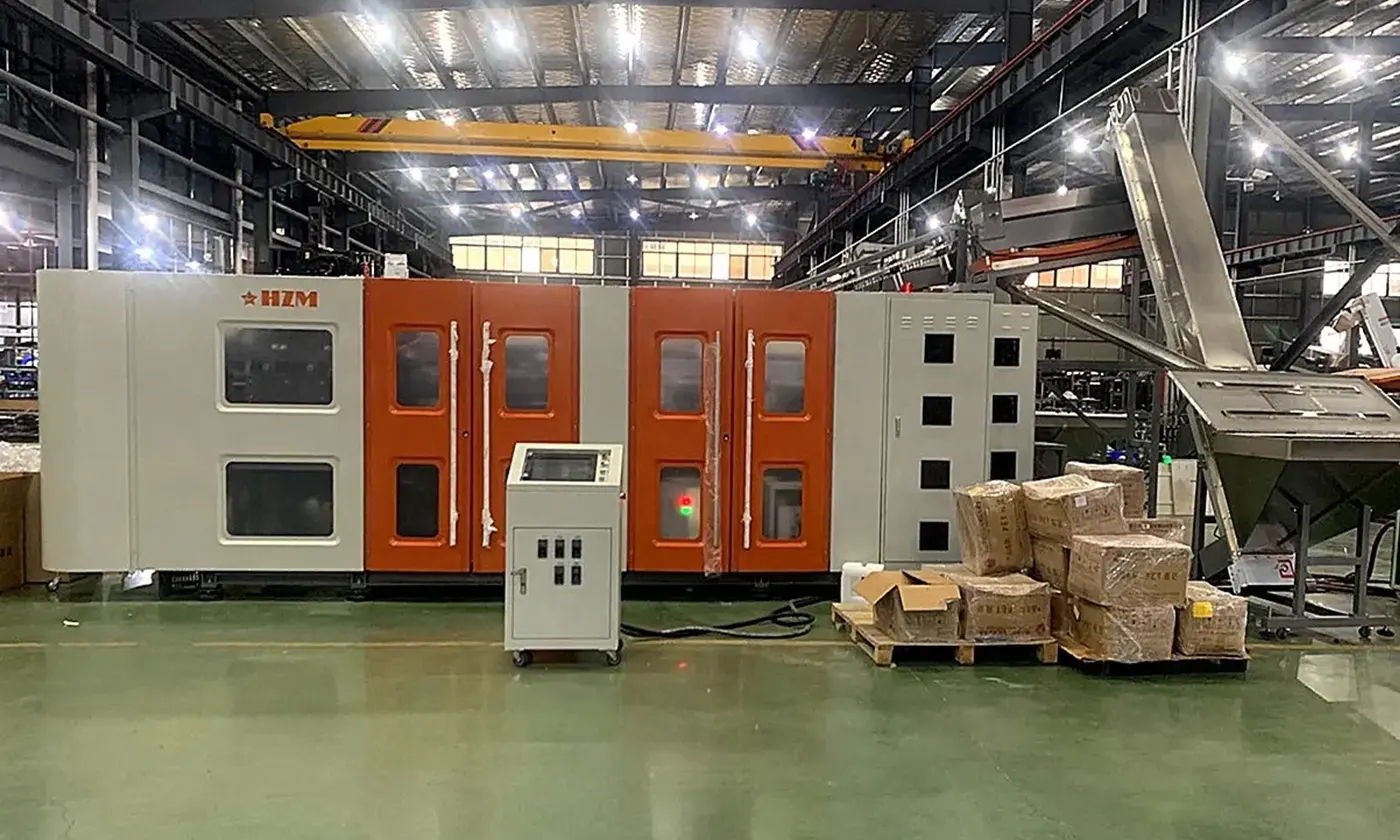
Automatic PET Stretch Blow Molding Machine
Automatic PET stretch blow moulding with 2, 4 or 6 cavities and HZM-ECO model capacities of 1,800–7,000 bottles/hour.
Learn more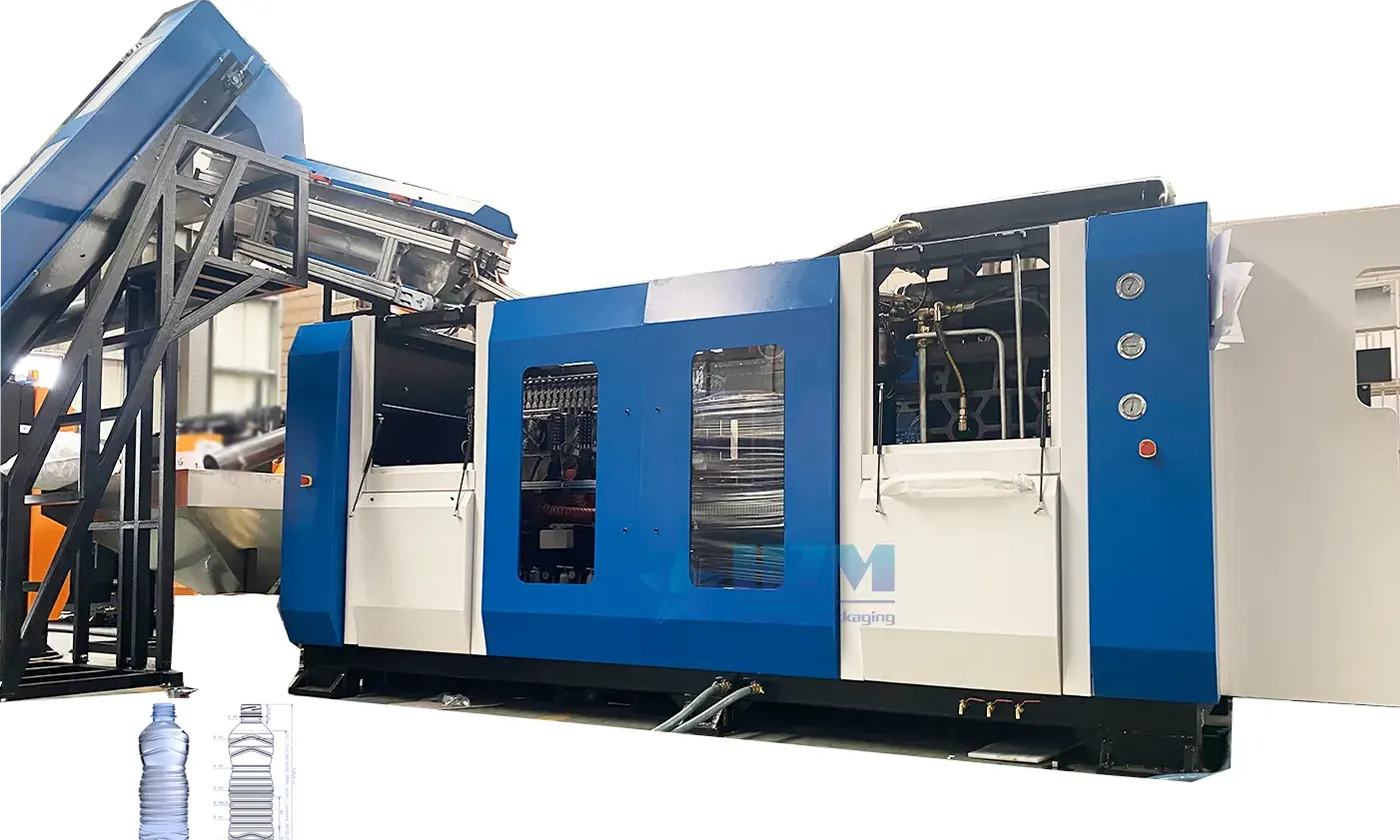
Automatic Water Bottle Blowing Molding Machine
Automatic water bottle blowing from PET preforms, with 6–12 cavities and capacities up to 21,600 bottles/hour at 500 ml.
Learn more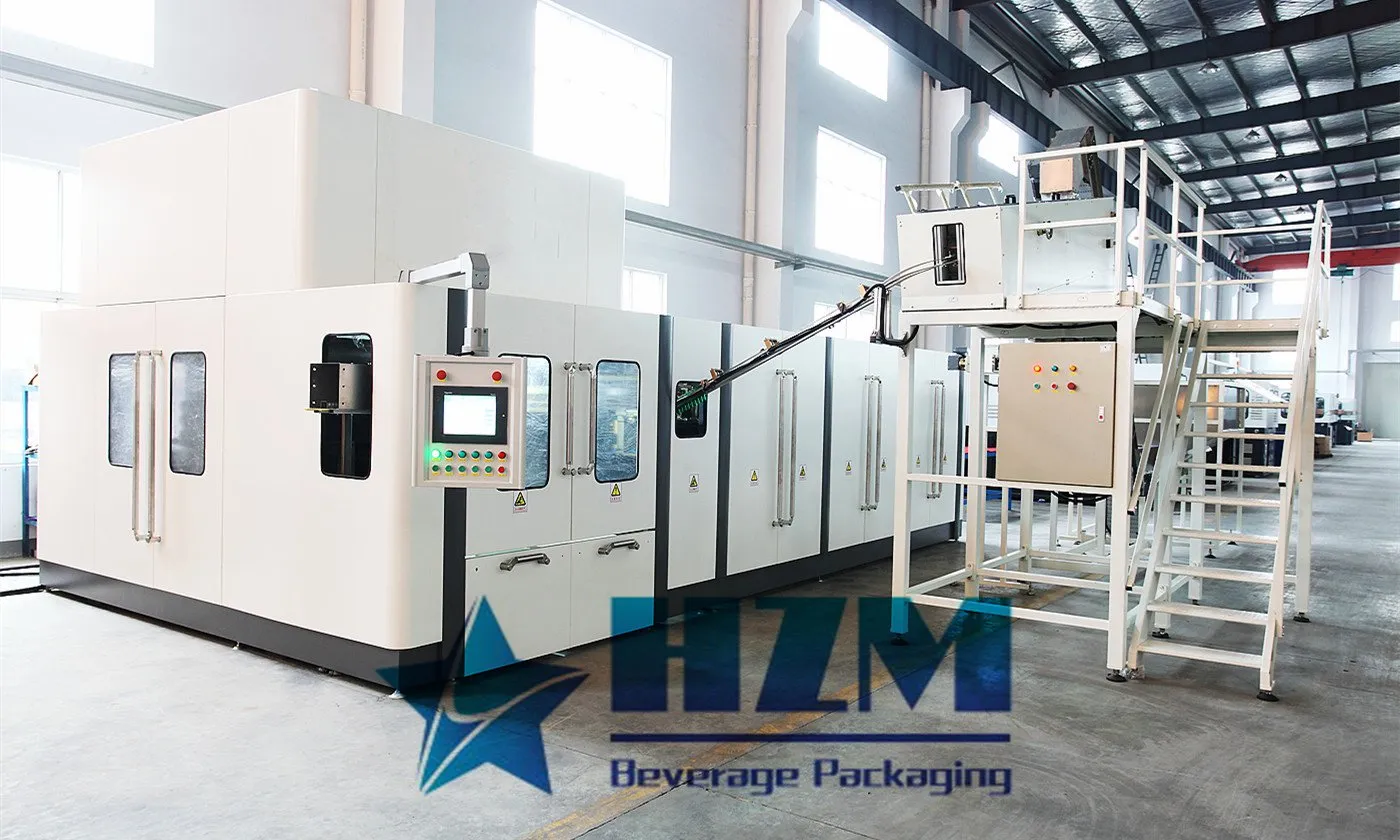
Automatic Rotary Blow Molding Machine
Rotary PET bottle blow moulding for water and beverage packaging, with 6–24 cavities and capacities up to 48,000 bottles/hour at 500 ml.
Learn more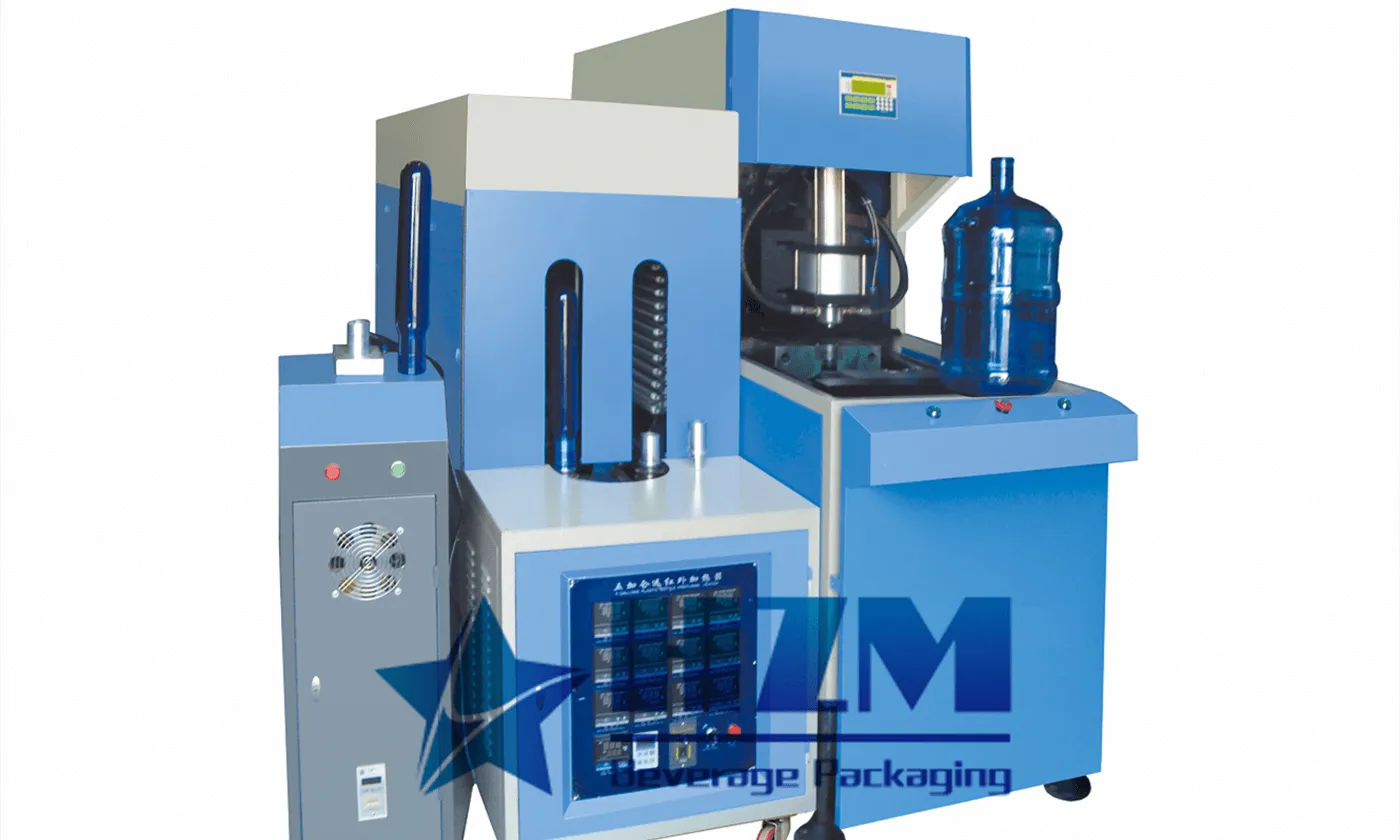
5 Gallon Bottle Blow Molding Machine
This blow moulding machine produces large PET water bottles, including 5-gallon containers.
Learn more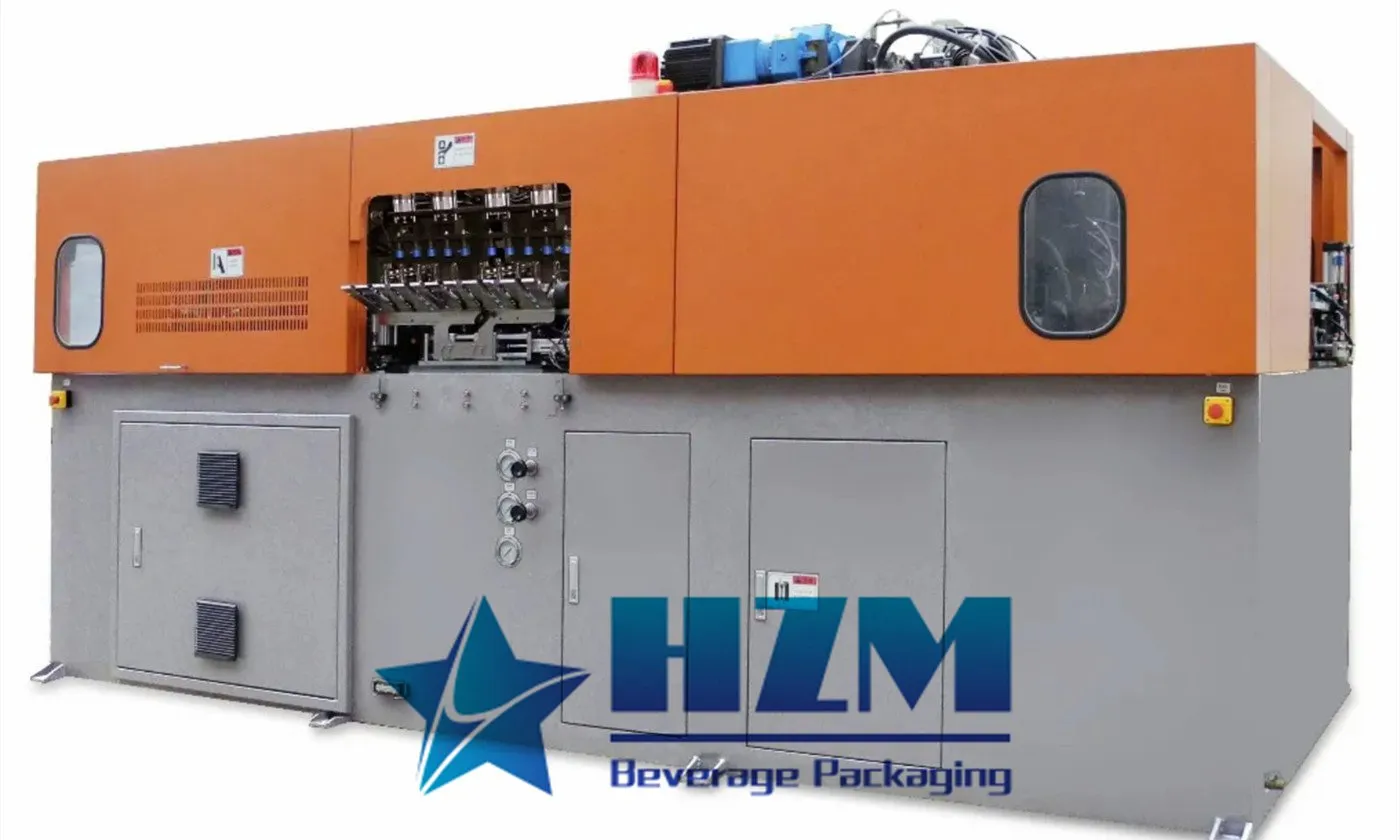
Full Electric Servo Type Blow Molding Machine
Full-electric servo PET blow moulding with 4, 6, 9 or 10 cavities and capacities of 5,400–13,000 bottles/hour at 500 ml.
Learn more
Blowing-Filling-Capping Machine
A PET combiblock that combines preform heating, bottle blowing, filling and capping at 12,000–48,000 bottles/hour at 500 ml.
Learn more
Plastic Bottle Blowing Machine, making machine
PET bottle making for drinking water, beverages and liquid packaging, with automatic preform heating and stretch blowing.
Learn morePET Blow Molding Machine Principles and Process
Currently, most blow molding machines employ a two-step method, requiring the conversion of plastic raw materials into preforms before the actual blowing process. The commonly used material is environmentally friendly PET (Polyethylene Terephthalate) plastic, collectively referred to as PET blow molding machines.
Learn morePlastic Bottle Blow Molding Machine Price
Plastic bottle blow molding machine is an important equipment for plastic bottle production, and its price is affected by many factors. This article will introduce the factors affecting the price of plastic bottle blow molding machine, the price of HZM Machinery plastic bottle blow molding machine, and the precautions for purchasing plastic bottle blow molding […]
Learn morehow does a blow molding machine work
How Does a Blow Molding Machine Work? Exploring the Process with HZM Blow Molding Machine Manufacturer
Learn moreSolutions for Blow Molding Plastic Bottles
This article will discuss the price, HZM manufacturer, functions, applicable industries, solutions, procurement considerations, and maintenance techniques related to blow molding machines.
Learn moreEssential Maintenance Tips for Your Fully Automatic Blow Molding Machine
Fully automatic blow molding machines offer an efficient and high-volume solution for plastic bottle production. However, maintaining optimal performance requires diligent care and proactive maintenance.
Learn moreAutomatic PET Bottle Blowing Machine Price?
HZM Machinery, as a professional manufacturer of automatic bottle blowing machines, is dedicated to providing high-quality and efficient equipment, offering customers an ideal solution with 2 years of warranty and global sales.
Learn more