
Insights & Updates
How to Choose a Milk Filling Machine: 10 Features That Matter
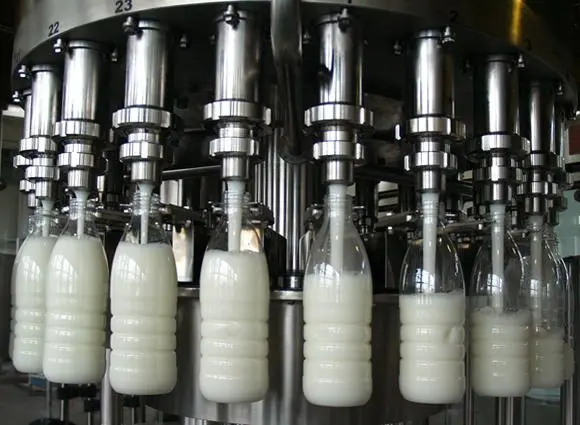
“Milk filling machine” is a broad label. A machine for a chilled, short-shelf-life drink in a plastic bottle is not automatically suitable for a shelf-stable dairy beverage, a product with particles, or a package that requires sterile handling. Buyers who compare only bottles per hour and price often discover the missing requirements after the equipment reaches the factory.
The selection should begin with the product risk and intended shelf life, then work outward to the filling method, container, cleaning process, room conditions, and downstream packaging. The following features are the ones that have the greatest effect on product safety, uptime, and total operating cost.
Food-safety note: milk and many dairy beverages are low-acid, microbiologically sensitive products. Heat treatment, hygienic or aseptic design, packaging sanitation, storage temperature, and shelf-life validation must be established by qualified specialists for the actual formulation and market requirements.
1. A process matched to the required shelf life
Start by defining whether the product will be distributed chilled or at ambient temperature, how long it must remain saleable, and how the container will be sanitized and sealed. This decision affects much more than the filler. It can determine upstream heat treatment, buffer-tank design, room classification, air treatment, cap handling, and the level of cleaning or sterilization required.
Do not assume that a standard non-carbonated beverage filler can be converted into an aseptic dairy line by adding a few accessories. The complete sterile boundary and validation approach must be designed from the beginning.
2. Hygienic product-contact design
Product-contact surfaces should be compatible with the formulation and cleaning chemicals, smooth, accessible where required, and arranged to avoid product traps. Review weld quality, valve type, seals, dead legs, drainability, and how the filler bowl or product manifold is cleaned.
“Stainless steel” is not a complete specification. Confirm the grade and surface finish for contact parts, the elastomer materials, and whether replacement seals are locally available.
3. CIP and, where required, SIP readiness
A credible cleaning plan explains how cleaning solution reaches every product-contact path, at what flow condition, where it returns, and how the system is drained. Ask which components require manual removal and how the machine prevents a production start when cleaning parts are not restored correctly.
If steam or another sterilization method is required, verify that valves, seals, instruments, and piping are rated for the actual cycle. The supplier should provide an interface and sequence description, not only state that the machine is “CIP capable.”
4. A filling principle suited to viscosity and inclusions
Thin drinking milk, flavored dairy beverages, yogurt drinks, and products containing pulp or particles do not behave the same way. Filling valves must handle the viscosity range and any inclusions without damaging the product or blocking. The supplier should test the most difficult formulation, not just water.
Specify the minimum and maximum product temperature because viscosity and foaming can change during production. If recipes vary by season or market, include all of them in the user requirement specification.
5. Foam and product-loss control
Foam can reduce fill accuracy, contaminate the bottle neck, and interfere with closure application. Useful controls may include gentle product transfer, controlled valve opening, diving nozzles, suitable buffer-tank management, and a fast/slow fill profile. The solution depends on the product and container.
During acceptance testing, record saleable output and product loss rather than focusing only on the machine counter.
6. Stable bottle handling and clean closure application
Lightweight bottles can deform or tip, while glass containers require careful transfers. Confirm the allowable container tolerances and how bottles are guided through infeed, filling, capping, and discharge. Closure feeding should minimize contamination and prevent caps from being applied when the bottle is absent or incorrectly positioned.
7. Repeatable, low-risk changeovers
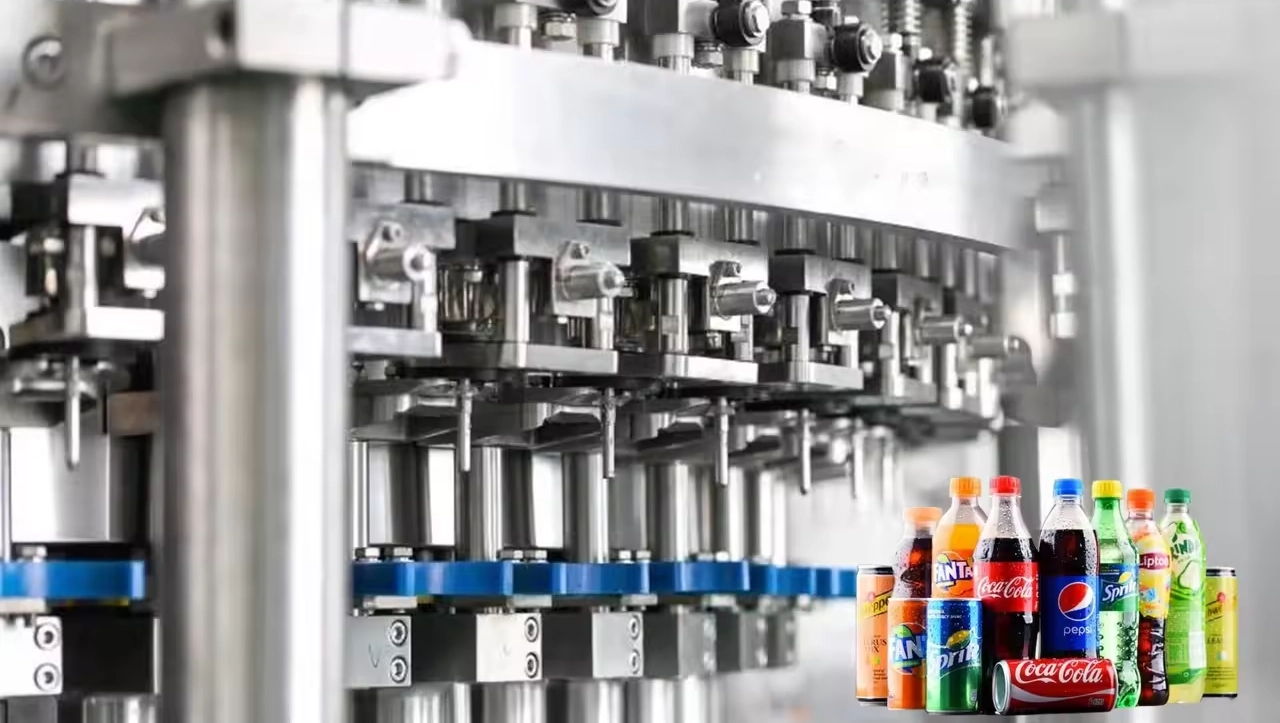
Ask which parts must be changed for each bottle and cap, how much adjustment is manual, and how the correct setup is verified. Recipe management can store speed, valve timing, fill quantity, and other parameters, but it cannot correct a poorly designed mechanical changeover.
Measure “first good bottle” time during the trial. A short mechanical changeover followed by an hour of adjustment is not a fast changeover.
8. Controls that help operators prevent mistakes
The interface should show the line state, production recipe, alarms, and clear recovery steps. Access levels are useful for separating daily operation from engineering settings. Check whether the system records alarm history, batch counts, rejects, and recipe changes in a form the factory can use.
9. Integration with processing and packaging equipment
The filler needs defined signals with the upstream process or buffer tank and with downstream conveyors, cappers, coders, labelers, inspection systems, and packers. Buffer capacity and stop logic should protect the product when another machine stops.
Line speed should be stated for a defined product, bottle, cap, and pack format. The rated filler speed alone does not tell you the sustained output of the complete line.
10. Maintainability, spare parts and technical support
Review access to valves, sensors, nozzles, belts, change parts, and lubrication points. Ask for a preventive-maintenance schedule, recommended spare-parts list, electrical drawings, software backup, and remote-support procedure. The best machine for a factory is one its team can keep in a hygienic, repeatable condition.
Selection questions by product and package
| Requirement | Question to resolve | Why it matters |
|---|---|---|
| Chilled or ambient distribution | What validated process and package sanitation are required? | Defines the hygiene concept and much of the line design |
| Viscosity and particles | What is the range at the actual filling temperature? | Affects valve selection, speed, and cleanability |
| Container and closure | What are the dimensions, tolerances, material, and seal method? | Determines handling, change parts, and closure control |
| Cleaning | Which circuits are automatic and which parts are manual? | Impacts food safety, downtime, and labor |
| Output | What sustained good-product rate is required for each format? | Prevents a theoretical speed from being mistaken for plant output |
What to send when requesting a quotation
- Product formulation summary, viscosity range, particles, and filling temperature
- Required shelf life and chilled or ambient distribution
- Container drawings and physical samples for every size
- Closure samples and required seal or torque checks
- Target output for each product and package
- Cleaning and sanitation method
- Factory layout, utilities, local electrical standard, and room conditions
- Required coding, labeling, inspection, packing, and production-data functions
HZM Machinery supplies configurable bottle filling machines and production-line equipment. If the application involves milk or another sensitive dairy beverage, the proposal should clearly state the processing, hygiene, and package conditions under which the equipment is intended to operate. Also review the milk filling machine installation checklist before finalizing the factory layout.
Frequently asked questions
Can the same machine fill milk and juice?
It may be mechanically possible for some products, but compatibility must be assessed for viscosity, particles, cleaning, allergens, filling temperature, shelf life, and package sanitation. Product safety requirements take priority over mechanical convenience.
Is a higher automation level always better?
Automation is valuable when it reduces repeatable losses or prevents mistakes. It also requires trained maintenance, reliable utilities, and spare-parts support. Choose controls the plant can sustain.
How should filling accuracy be evaluated?
Agree on the product, temperature, container, sample size, measurement method, and tolerance before the test. Check both individual variation and the average to identify underfill and product giveaway.
What is the biggest mistake in milk filler selection?
Selecting the filler before defining the shelf-life process and package. That decision can force expensive changes to the room, utilities, cleaning system, and upstream processing later.
Talk to our engineering team
Need help planning your packaging line?
Share your product, bottle and capacity requirements for a practical equipment recommendation.
2026-07-24
Beverage Filling Machine Features That Matter in Production
Learn which beverage filling machine features affect hygiene, accuracy, changeover time, container handling, automation, maintenance and total cost of ownership.
Learn more2023-06-09
Contactless Aseptic Bottle Milk Filling Machine
High quality Contactless Aseptic Bottle Milk Filling Machine from China, China's leading PLC Milk Bottle Packing Machine product, with strict quality control PLC Aseptic Bottle Packing Machine factories, producing high quality Contactless Milk Bottle Filling Machine products.
Learn more2023-06-09
Juice Milk Tea Bottle 200ml Aseptic Cold Filling Machine
High quality Juice Milk Tea Bottle 200ml Aseptic Cold Filling Machine from China, China's leading 200ml Aseptic Cold Filling Machine product, with strict quality control 1500bph Aseptic Cold Filling Machine factories, producing high quality 200ml Juice Aseptic Filling Machine products.
Learn more2023-06-09
Intelligent 300ml Aseptic Cold Filling Machine 15000bph For Juice Milk Carbonated Drinks
High quality Intelligent 300ml Aseptic Cold Filling Machine 15000bph For Juice Milk Carbonated Drinks from China, China's leading cold intelligent aseptic filling machine product, with strict quality control 300ml aseptic cold filling machine factories, producing high quality 15000bph aseptic cold filling machine products.
Learn more2023-07-30
Milk Filling Machine Installation Checklist: Utilities, Hygiene and Commissioning
A practical milk filling machine installation checklist covering hygienic layout, utilities, piping, electrical safety, commissioning, and acceptance testing.
Learn more2023-06-09
Three Rinsing Filling Capping 5 in 1 Monoblock Machine
High quality Three Rinsing Filling Capping 5 in 1 Monoblock Machine from China, China's leading spout pouch filling and capping machine product, with strict quality control Spout Pouch Filling Capping Machine factories, producing high quality 1500bph Pouch Filling And Capping Machine products.
Learn more