
Insights & Updates
Juice Filling Machines: Applications, Process Choices and Buying Criteria
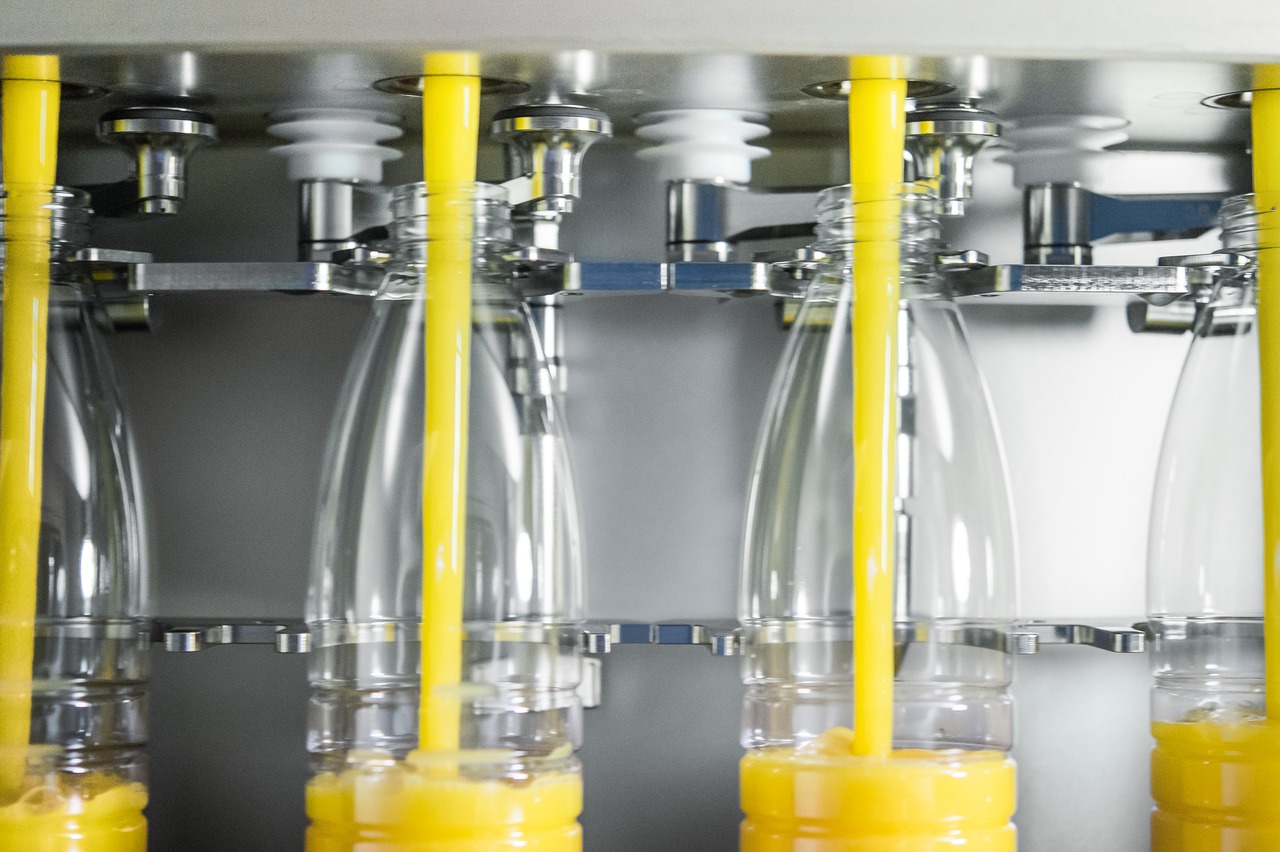
A juice filling machine is selected around the product, not around the bottle speed printed on a quotation. Clear apple juice, pulpy mango nectar and a low-acid vegetable blend behave differently during heating, filling and cleaning. If viscosity, pulp size, filling temperature or shelf-life target is missing from the project brief, the wrong valve or process can look acceptable on paper and fail during production.
This guide connects the main juice applications with the processing and filling choices that determine product quality, downtime and operating cost.
Where juice filling machines are used
Juice filling equipment is used for clear juice, nectar, fruit drinks, tea beverages, functional drinks and some vegetable-based products. The same filling block may handle several recipes only when the product-contact path, valve opening and cleaning program suit the most difficult product.
- Clear, low-viscosity drinks: usually easier to meter and clean, but oxygen control may be critical.
- Nectars and purees: require attention to viscosity, deaeration, pump selection and valve passages.
- Pulp-containing drinks: require the maximum particle size and concentration to be stated; narrow passages can separate or block the product.
- Low-acid beverages: demand a validated thermal or aseptic process because their microbiological risk differs from acidic fruit drinks.
- Heat-sensitive recipes: may need shorter heat exposure, aseptic processing or refrigerated distribution.
Choose the preservation process before the filler
Hot filling
Hot filling is widely used for acidic juices and tea drinks. The product is heated, filled into a heat-resistant bottle, capped and held or inverted as required before controlled cooling. It is a proven process, but the bottle must tolerate the temperature and vacuum created during cooling. Excessive residence time can damage flavor, color and vitamins.
Ultra-clean or cold filling
Ultra-clean systems reduce contamination through controlled bottle and cap treatment, hygienic enclosure and filtered air. They are not automatically equivalent to aseptic filling. The required shelf life and distribution temperature determine the necessary level of control.
Aseptic filling
Aseptic production sterilizes the product and package separately, then fills in a controlled sterile zone. It can preserve a fresher sensory profile, but it requires stronger validation, more disciplined operators and a higher capital and maintenance budget.
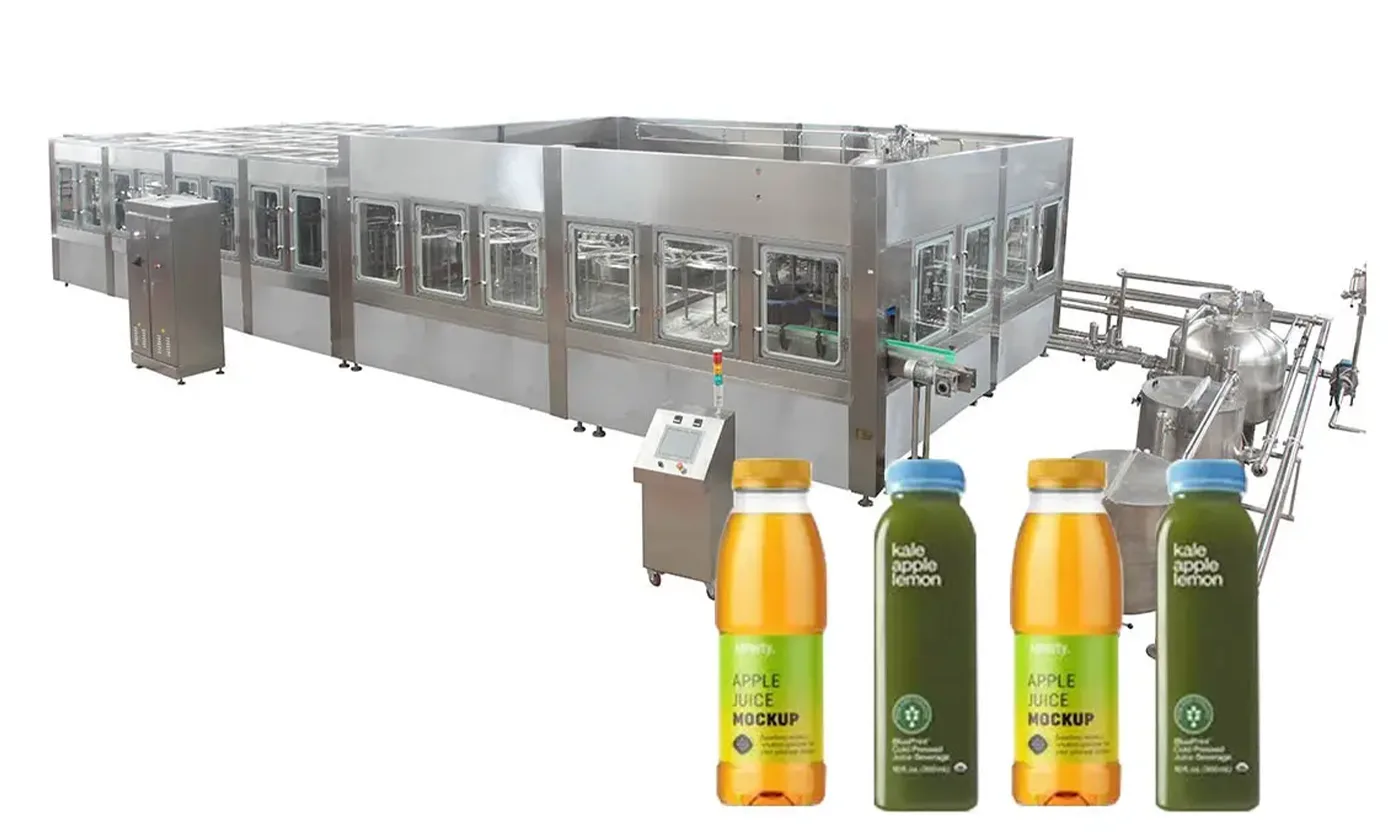
HZM’s juice filling line page shows how processing, filling and downstream packaging can be integrated for different project requirements.
Equipment commonly included in a juice line
The exact scope depends on whether the factory receives fresh fruit, concentrate or a prepared base. A typical line may include:
- Raw-water treatment and treated-water storage.
- Fruit washing, sorting, crushing and juice extraction when fresh fruit is processed.
- Filtration or finishing suited to the desired pulp level.
- Sugar dissolving and ingredient preparation tanks.
- Blending tanks with load cells or metered ingredient addition.
- Homogenization for products that would otherwise separate.
- Vacuum deaeration to reduce oxygen before heating.
- Pasteurization or sterilization with controlled holding time.
- Bottle treatment, filling, capping and cooling.
- Coding, labeling, inspection, packing and palletizing.
- CIP equipment for tanks, pipelines and the filler circuit.
Specifications that change the machine design
| Product or pack detail | Why the supplier needs it |
|---|---|
| Viscosity at filling temperature | Determines pump, pipe and filling-valve behavior |
| Pulp size and concentration | Defines minimum passages and anti-blocking measures |
| Filling temperature | Affects hygienic design, bottle material and cooling duty |
| pH and recipe ingredients | Influence preservation method and material compatibility |
| Bottle neck and panel design | Affect handling, cap sealing and hot-fill deformation |
| Shelf life and distribution | Set the required level of microbial control |
| Changeover range | Determines parts, time and recipe-control requirements |
What operators struggle with in real production
Foaming and inconsistent fill level
Foaming may come from excess dissolved air, high filling temperature, unsuitable valve speed or product impact inside the bottle. Deaeration and a controlled valve profile often matter more than simply slowing the entire line.
Pulp separation or blocked valves
A sample jar does not show how particles behave after pumping and holding. Trials should use production product, including the maximum expected pulp load. Gentle agitation and a correctly sized flow path help maintain consistency.
Bottle deformation after hot filling
The cause can be insufficient bottle heat resistance, poor vacuum-panel design, excessive filling temperature or an unsuitable cooling profile. Bottle design and process settings must be tested together.
Long changeovers and difficult cleaning
Ask which parts are tool-less, which recipe settings are stored and which surfaces require manual cleaning. A line that handles several flavors also needs a verified transition method to prevent carryover.
How to compare supplier proposals
Compare net line output at your bottle size and product, not a nominal speed for water. Ask for the valve count, product-contact materials, instrumentation, CIP boundaries, bottle and cap treatment, cooling duty, changeover scope and excluded utilities. The acceptance test should measure fill volume, closure integrity, product temperature, reject rate and sustained output.
A good request for quotation includes product samples, a recipe data sheet, bottle and cap drawings, expected shelf life, output by format, local utility conditions and the required cleaning standard. That information turns a generic quotation into an engineering proposal that can be checked before money is committed.
Talk to our engineering team
Need help planning your packaging line?
Share your product, bottle and capacity requirements for a practical equipment recommendation.
Equipment
Bottled Juice Packaging Machine
Bottled juice filling equipment with rinsing and capping, from 6,000 to 18,000 bottles/hour at 500 ml.
Learn more
Equipment
PET Bottle Juice Beverage Filling Machine
PET bottle juice filling with automatic rinsing and capping, for juice, tea and still beverages.
Learn more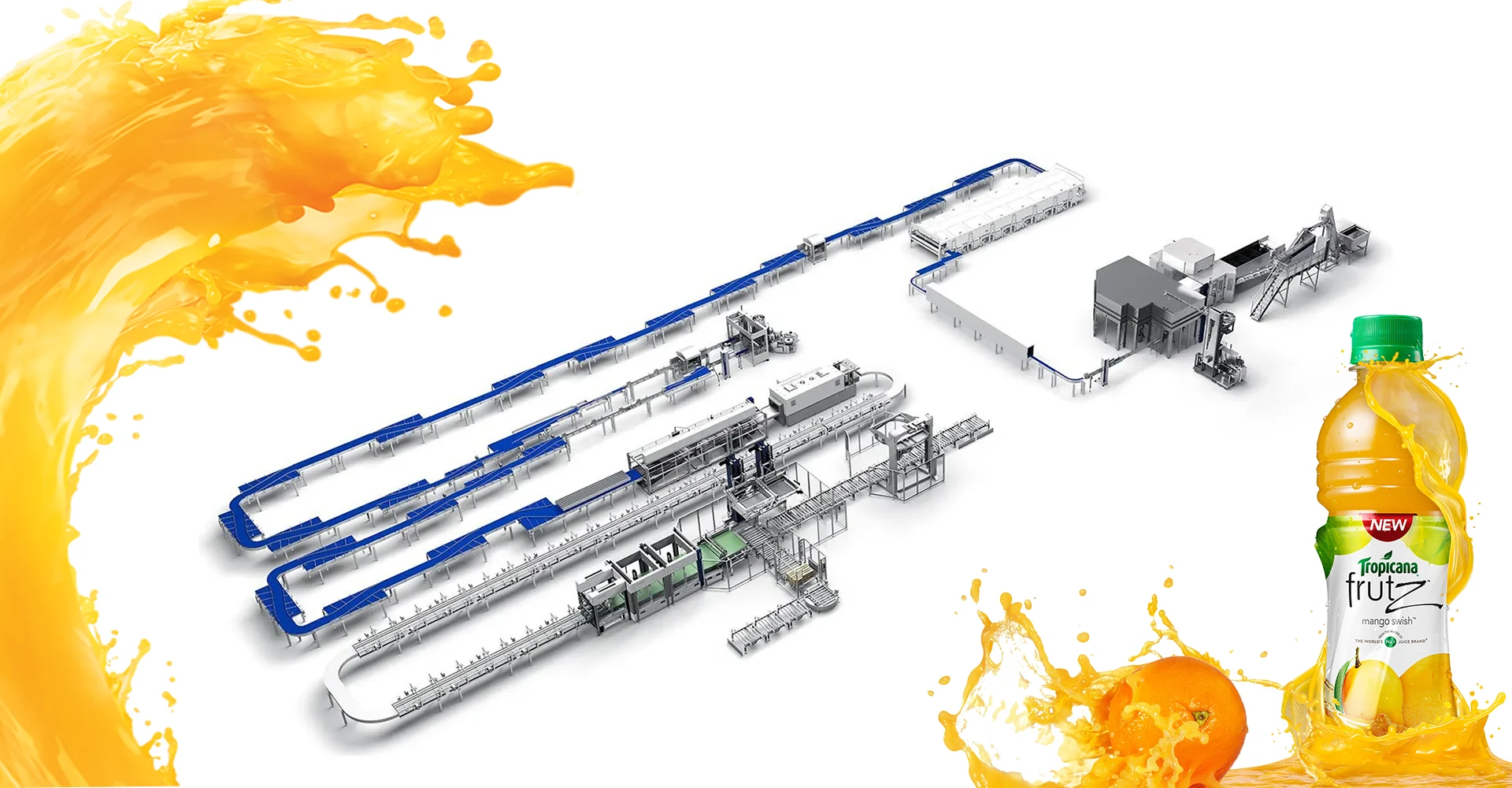
Equipment
Juice beverage bottling line
The juice beverage bottling line connects beverage preparation and thermal processing with bottle filling, capping, labelling and packing.
Learn more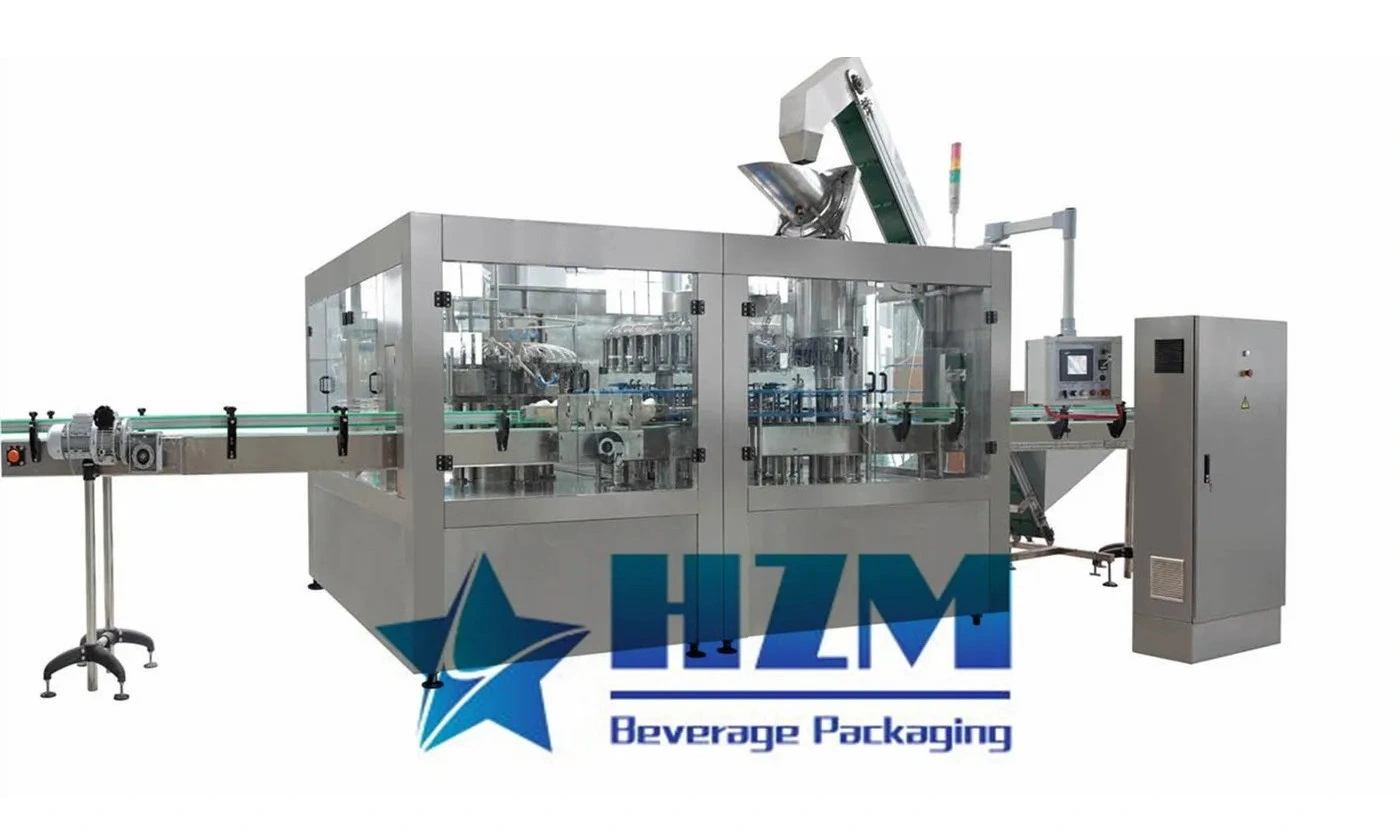
Equipment
Glass Bottle Juice Beverage Filling Machine
Glass bottle juice filling with rinsing and capping, for juice, tea and other still beverages.
Learn more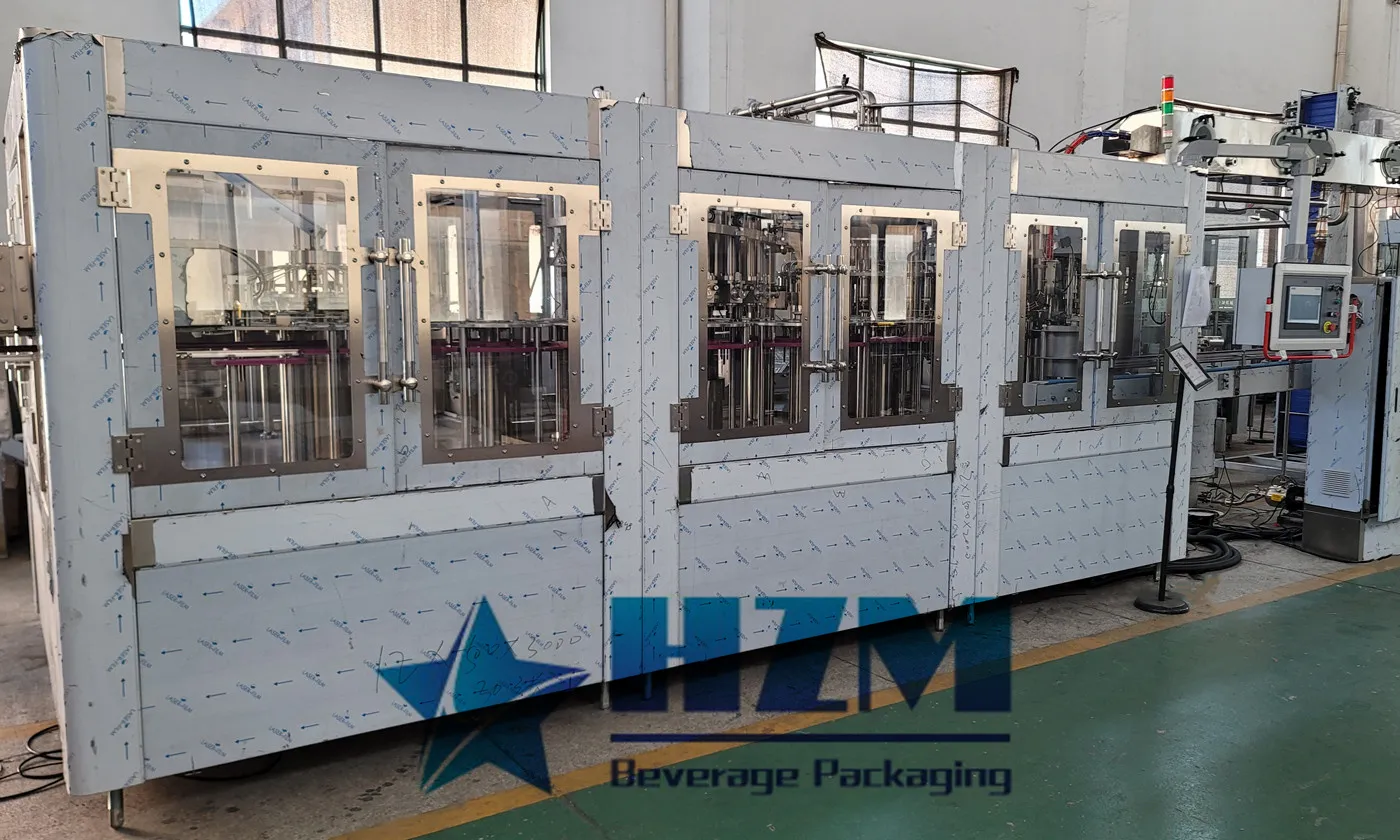
Equipment
Automatic Pulp Juice Filling Machine
Pulp juice filling with separate pulp and liquid dosing, bottle rinsing and capping for beverages containing fruit particles.
Learn more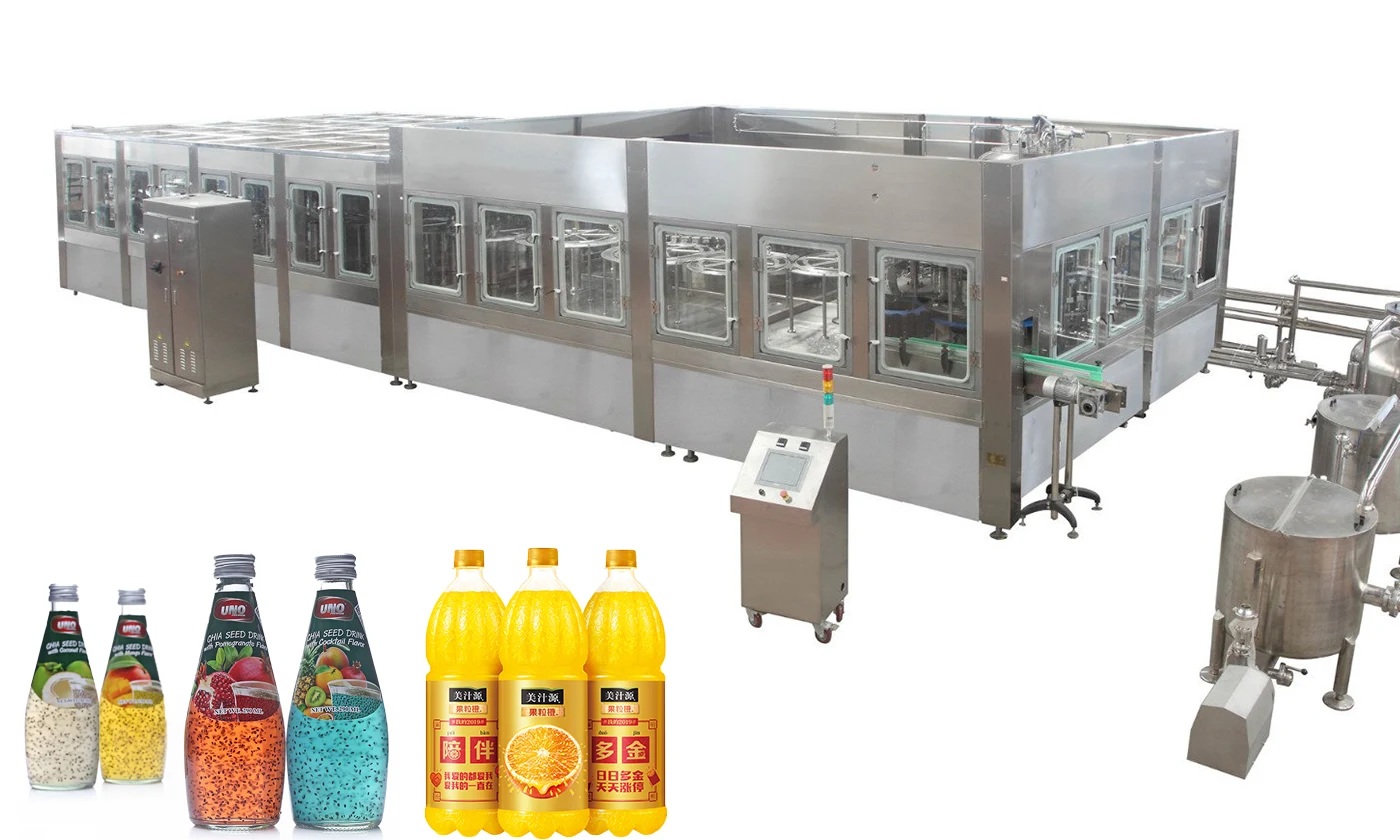
Equipment
juice Pulp Filling Machine 4 in 1
RXGGF16-16-5 pulp juice filling with separate pulp and liquid dosing, rinsing and capping at 5,000 bottles/hour for 250 ml bottles.
Learn more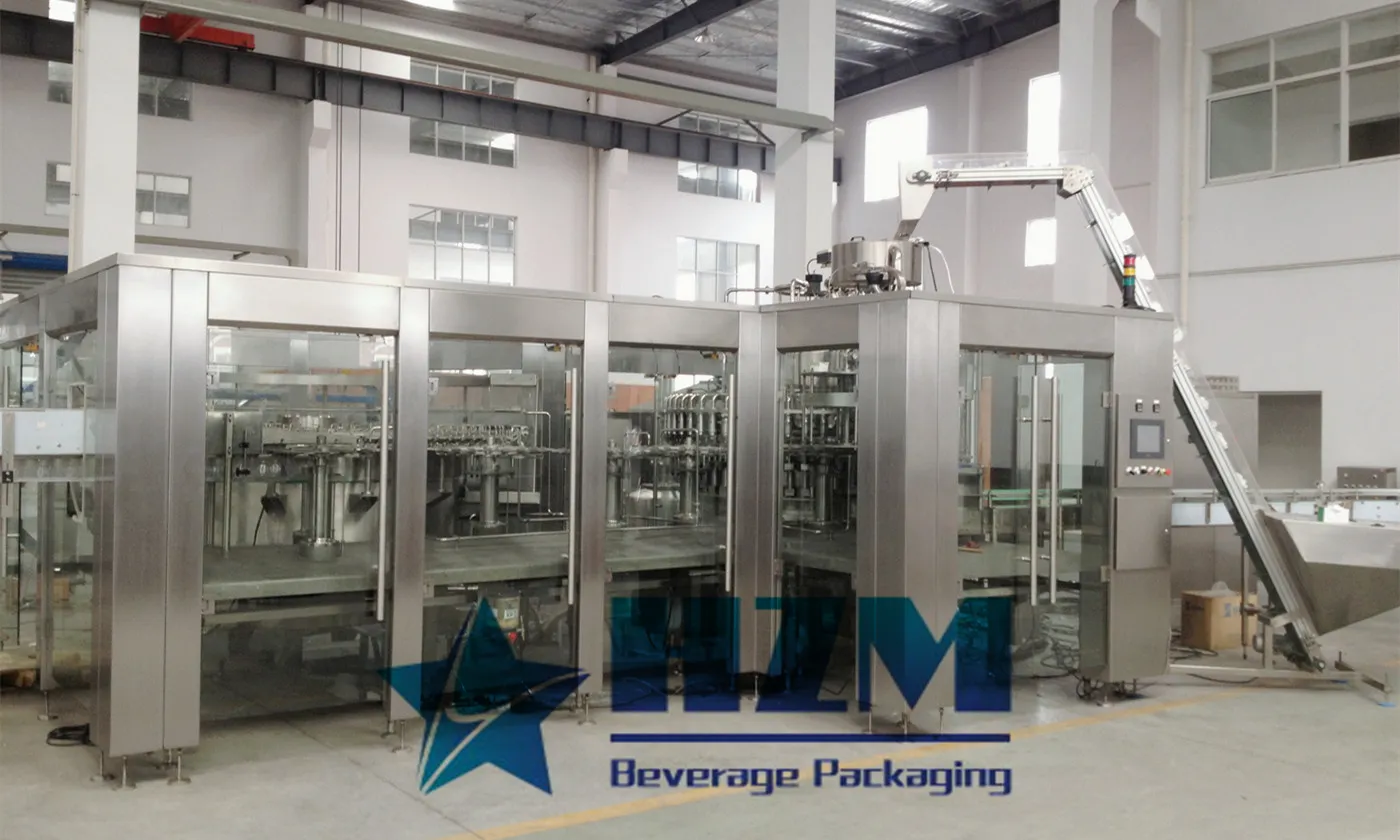
Equipment
PET Bottle juice Beverage Hot Filling Machine
Hot filling for juice and tea in heat-compatible PET bottles, with automatic rinsing, filling and capping.
Learn more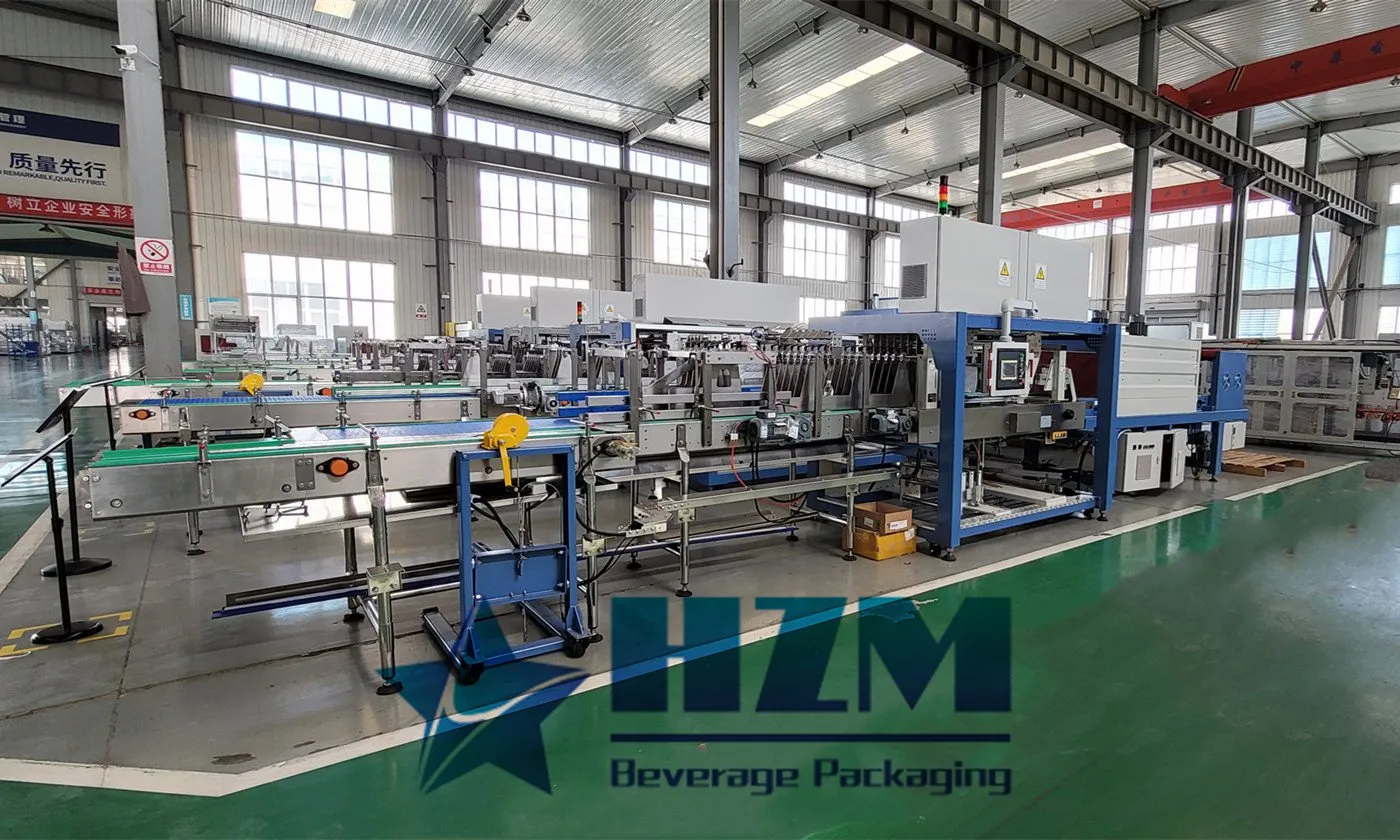
Equipment
Automatic Beverage Packaging Machines – Juice, Soda & Soft Drinks
HZM beverage packaging equipment connects juice, soda and soft drink filling with labelling, coding and secondary packaging.
Learn more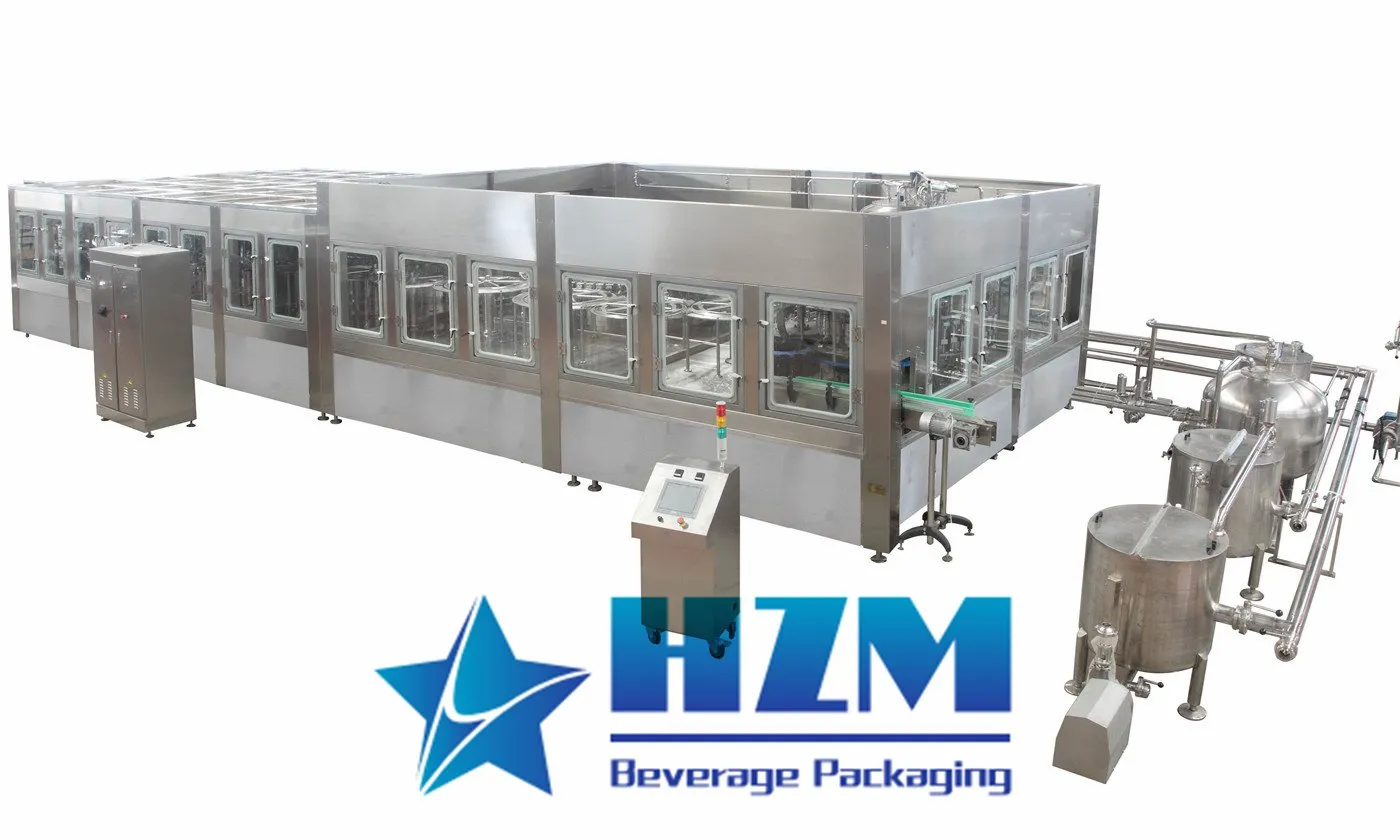
Equipment
Moderate Temperature Juice Filling Machine
Moderate-temperature juice filling with automatic bottle rinsing and capping, with XXGF models from 6,000 to 24,000 bottles/hour at 500 ml.
Learn more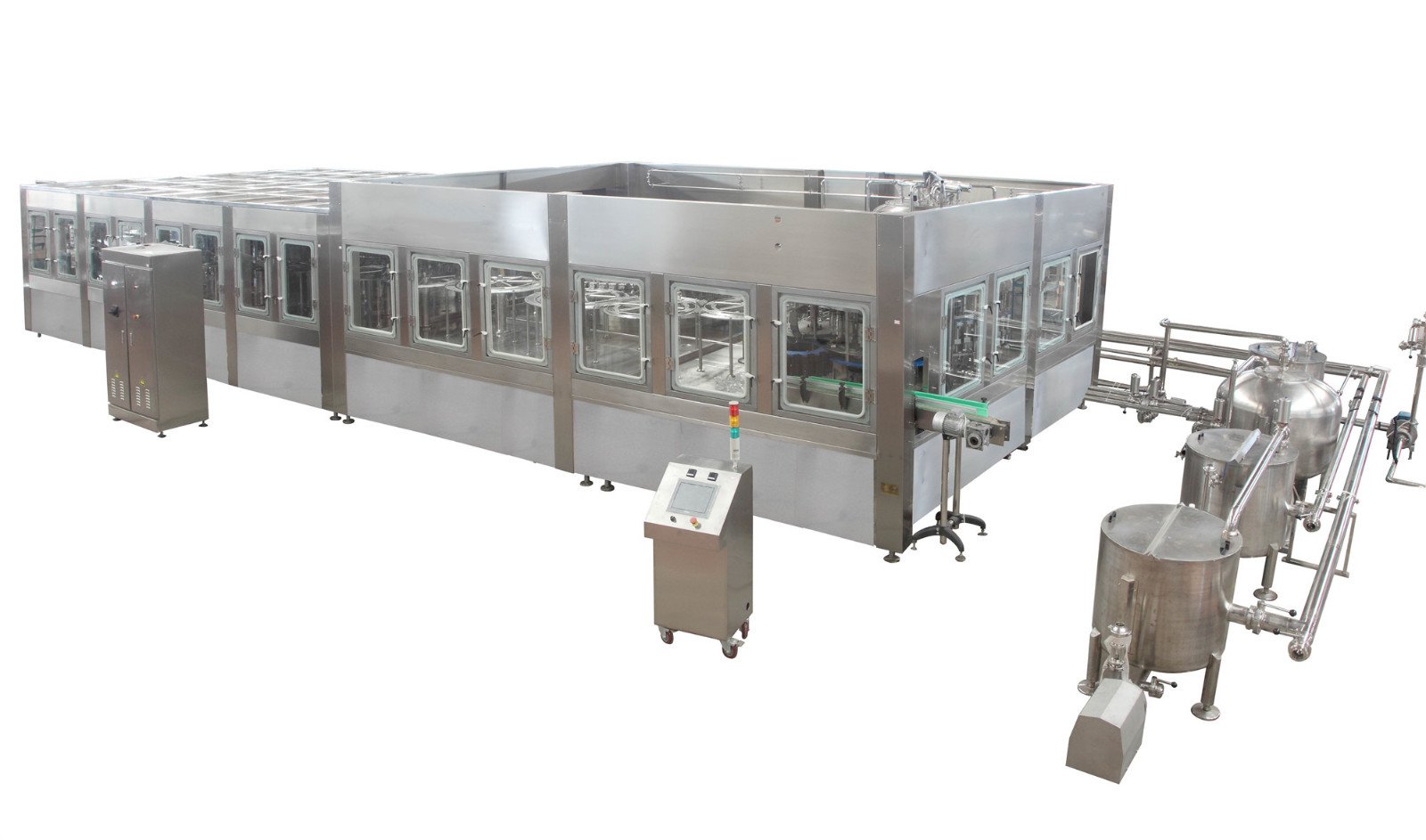
2023-03-24
The Working Principle of Juice Filling Machine
Juice filling machine and ordinary water or carbonated beverage materials are significantly different in composition, filling methods and filling processes are also different. Therefore, the structure of juice filling machine is very different from that of ordinary water filling machine in terms of filling cylinder, filling valve and management system. Because the ingredients of the juice hot filling […]
Learn more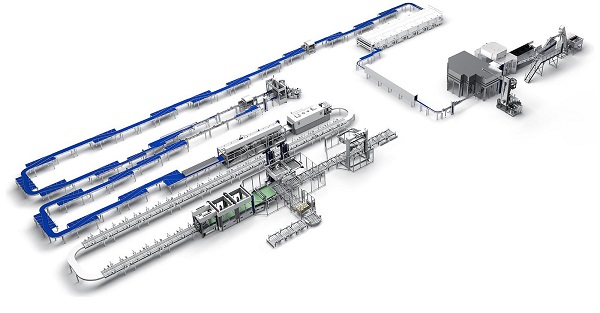
2023-09-08
Juice Beverage Filling Production Process
In the cold filling method of the beverage production line, the product is cooled to room temperature after being ultra-high-temperature sterilized. It is filled in aseptic conditions created by humans into bottles or cartons that have been sterilized with hydrogen peroxide.
Learn more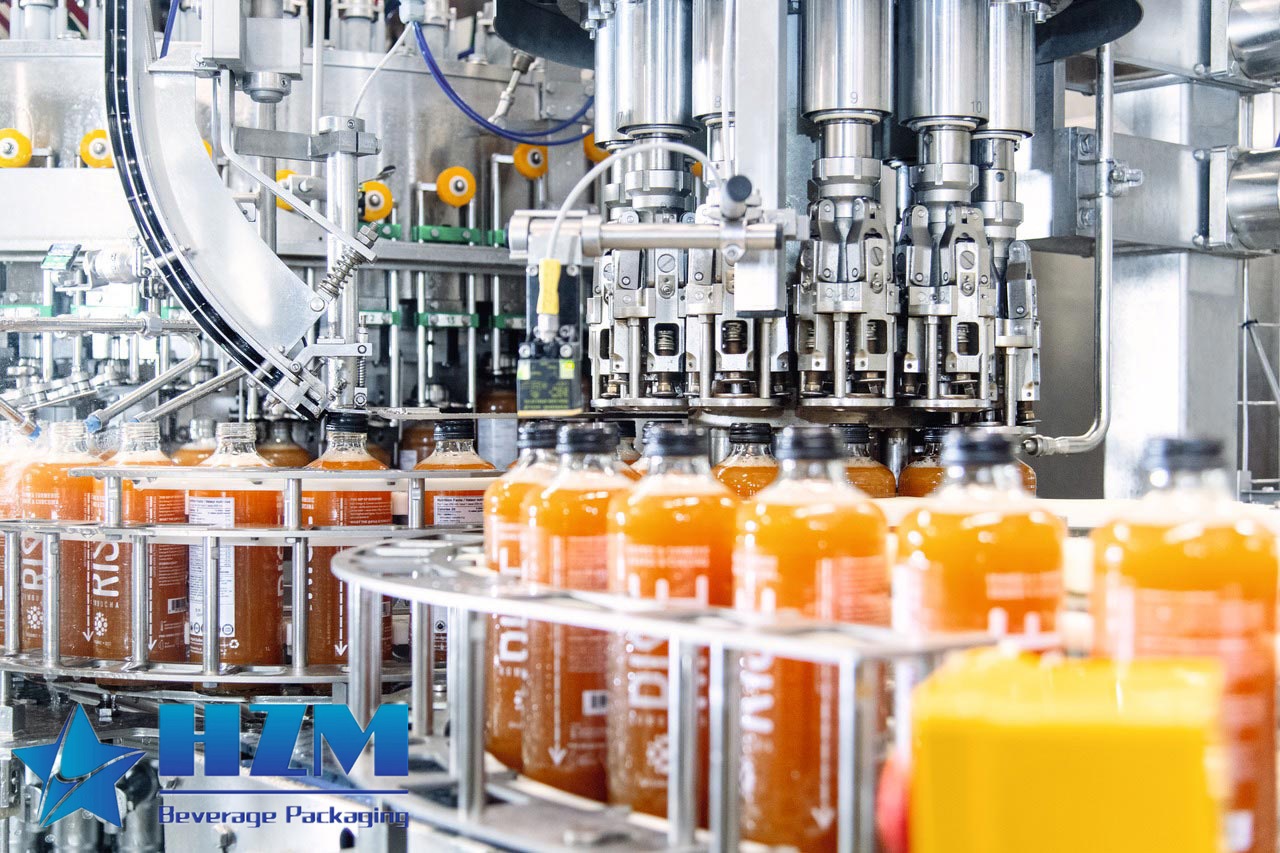
2023-08-22
The Application of Filling Machines in the Juice Beverage Industry
With the growing emphasis on healthy consumption, juice beverages have become increasingly popular in modern life. To meet market demands, juice beverage manufacturers employ advanced technologies and equipment, with filling machines playing a pivotal role in the juice beverage industry. This article focuses on the application and advantages of filling machines in the realm of juice beverages.
Learn more2023-11-22
Common Faults and Solutions in Juice Beverage Filling Machines
It is inevitable that issues may arise when using a juice beverage filling machine over an extended period. This does not necessarily indicate a problem with the quality of the equipment. Just like any other machinery, minor malfunctions can develop with time. While these issues may not immediately disrupt operations, if left unattended, they can […]
Learn more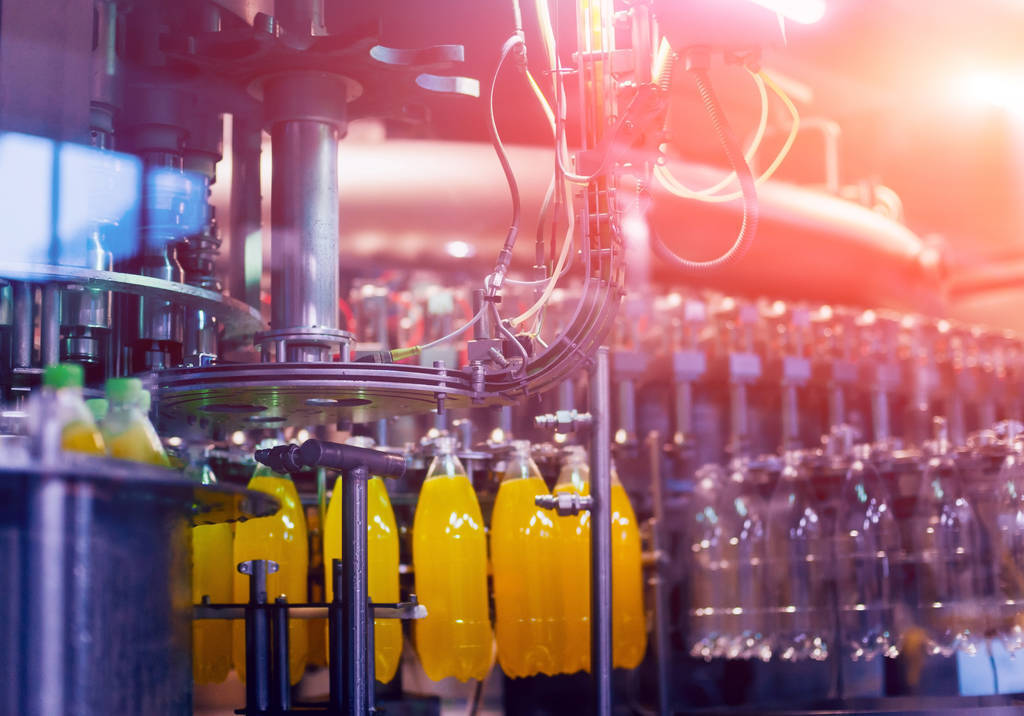
2023-07-16
Juice Beverage Filling Machine: Enhancing Production Efficiency
The flexibility and high output of the juice beverage filling machine make it an indispensable tool in the modern juice beverage production process. Whether accommodating different types and capacities of bottles or ensuring efficient production in terms of hourly output, the juice beverage filling machine plays a vital role.
Learn more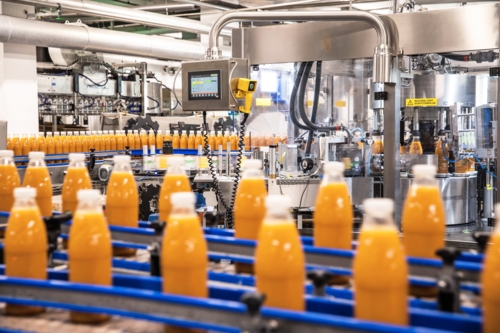
2023-11-27
Three-in-One Juice Beverage Packaging Machine
A three-in-one juice beverage packaging machine is a versatile piece of equipment that combines three essential functions into a single unit: bottle washing, filling, and capping.
Learn more