
Insights & Updates
Large vs. Small Beverage Packaging Machine: How to Choose
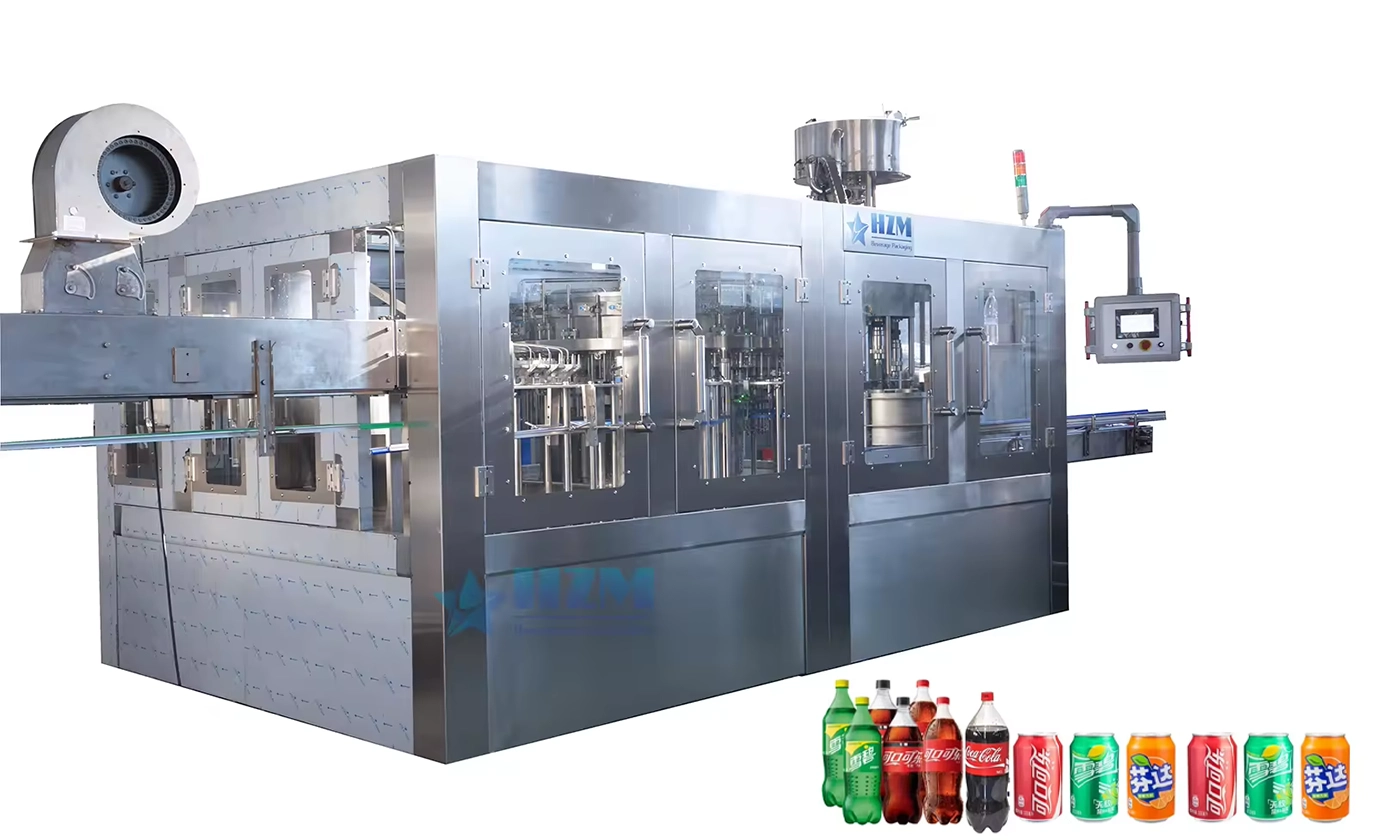
A larger beverage packaging machine is not automatically a better investment, and a small machine is not always the lowest-cost choice. The right size is the one that can meet realistic peak demand, handle the planned SKU mix and operate within the factory’s labor, utilities and cash-flow limits.
Oversizing can leave expensive equipment idle and increase changeover or maintenance complexity. Undersizing can create overtime, missed orders and an early second investment. This guide turns the choice into a capacity and business calculation.
Define “small” and “large” for your business
Machine size should not be defined by one universal BPH threshold. A 6,000 BPH line may be large for a local startup and too small for a national brand. Define scale using required weekly saleable output, scheduled hours, product range and distribution commitments.
Also separate filler capacity from complete-line capacity. If the filler can run faster than the labeler or packer, the line output is determined by the slower operation and its downtime.
Calculate the required nominal capacity
Start with the highest credible production requirement, not an optimistic sales target:
Required saleable output per hour = peak required units ÷ available production hours
Then account for changeovers, cleaning, planned maintenance, breaks and realistic operating efficiency. If the plant must produce 60,000 saleable bottles in one ten-hour day, it cannot choose a 6,000 BPH nameplate line and assume every scheduled minute will run at ideal speed. Build a loss model from actual or benchmarked operations and leave a justified capacity margin.
When a small or compact line makes sense
- Demand is still being validated or varies significantly.
- The business sells many SKUs in short batches.
- Factory space, utilities or capital are constrained.
- Local labor can support semi-automatic operations safely and consistently.
- A modular expansion path is available.
Small lines can offer useful flexibility, but manual handling should be measured honestly. Repetitive lifting, inconsistent cap application and variable packing speed can create safety or quality risk. “Low automation” still needs suitable guarding, hygiene and process control.
When a larger automatic line is justified
- Long, repeatable runs have confirmed demand.
- Distribution contracts require dependable peak output.
- Labor availability or consistency is a major constraint.
- Product and packaging formats are sufficiently standardized.
- The business can support utilities, maintenance staff and spare parts.
High-speed equipment earns its return only when upstream beverage supply and downstream packaging can keep it running. A fast filler starved by inadequate water treatment or blocked by a slow packer is an expensive conveyor.
Compare the two approaches
| Decision factor | Small or compact line | Larger automatic line |
|---|---|---|
| Capital requirement | Usually lower initial equipment scope | Higher equipment and infrastructure investment |
| Labor | More manual transfer or packing may be required | Lower direct labor per unit, with stronger technical support needs |
| SKU flexibility | Can suit short runs if changeovers are simple | Best value with longer, repeatable campaigns |
| Space and utilities | Lower demand, but access and storage still matter | More floor space, power, air, water and drainage |
| Expansion | Can add modules if interfaces are planned | More headroom, but future formats must be engineered |
Do not ignore the SKU mix
A factory producing one bottle for long campaigns can use capacity differently from a plant producing ten bottle sizes, several labels and multiple pack patterns. Estimate annual changeover hours and the line’s minimum economical batch size.
Ask the supplier to demonstrate a representative full-line changeover. Filler changeover time alone is incomplete because the labeler, packer, coder and conveyors also need settings or parts.
Calculate total cost per saleable bottle
Compare annualized equipment cost, labor, utilities, packaging waste, product loss, maintenance and downtime. Include the cost of financing and the commercial impact of insufficient peak capacity. Use saleable bottles rather than nameplate bottles in the denominator.
A small machine may have the lower purchase price but higher labor cost. A large machine may have the lower theoretical cost per bottle but poor economics at low utilization. Test several demand scenarios rather than a single forecast.
Plan utilities and factory space early
The layout needs more than machine footprints. Provide access for operators and maintenance, material staging, change-part storage, drainage, electrical panels and safe traffic routes. Check electrical supply, compressed air, treated water, cooling and any steam or thermal requirements.
A complete beverage filling and packaging line layout should identify those interfaces before equipment is built.
A staged expansion can reduce risk
Where demand is uncertain, install the capacity needed now while reserving space, utilities and conveyor connection points for a future automatic packer, palletizer or additional line. The initial machines must still be capable of communicating with future modules.
Avoid buying a temporary machine that cannot be reused. A semi-automatic station may later support samples, seasonal products or rework if its long-term role is planned.
Information to provide for equipment selection
- Monthly demand, peak-day demand and expected growth scenarios.
- Beverage, bottle, cap, label and finished-pack formats.
- Number of SKUs and expected batch length.
- Available shifts, labor cost and technical skill.
- Factory dimensions, utilities and expansion limits.
- Budget range and required commissioning date.
HZM can compare compact and higher-output beverage production equipment using the same production model. The best decision is the capacity that delivers required orders reliably with a manageable total cost and a realistic path for growth.
Talk to our engineering team
Need help planning your packaging line?
Share your product, bottle and capacity requirements for a practical equipment recommendation.
2023-12-19
How is the Quality of Beverage Packaging Machinery in China?
China, being a significant hub for the manufacturing of beverage packaging machinery on a global scale, boasts numerous manufacturers in this industry. Among this vast array of choices, HZM Machinery stands out as a professional beverage packaging machine manufacturer, garnering attention for the quality of its products.
Learn more
2026-07-24
Beverage Filling Machine vs. Packaging Machine: What Is the Difference?
Understand the difference between beverage filling and packaging machines, which equipment belongs to each stage, and how to specify a complete line without scope gaps.
Learn more
2023-08-25
What is a Beverage Packaging Machine?
A beverage packaging machine is a sophisticated piece of equipment designed to automate the process of packaging various types of beverages, including soft drinks, juices, water, energy drinks, and more. These machines encompass a range of functionalities, from filling and capping to labeling and sealing, all within a seamless production line.
Learn more2023-09-01
Beverage Production and Packaging Equipment
Beverage packaging equipment refers to machinery utilized in the production and manufacturing of various beverages. In order to accommodate the requirements of industrialized beverage production and achieve optimal economic benefits, beverage production equipment is increasingly trending towards larger scales.
Learn more2023-09-14
What is Beverage Production and Packaging Equipment
Beverage production and packaging equipment refers to various machines and devices used in the processes of beverage manufacturing and packaging. These equipment encompass the entire production process from raw material handling to final packaging.
Learn more