
Insights & Updates
Which is Better: Integrated Monoblock Filling Machine or Split-Type Filling Machine?
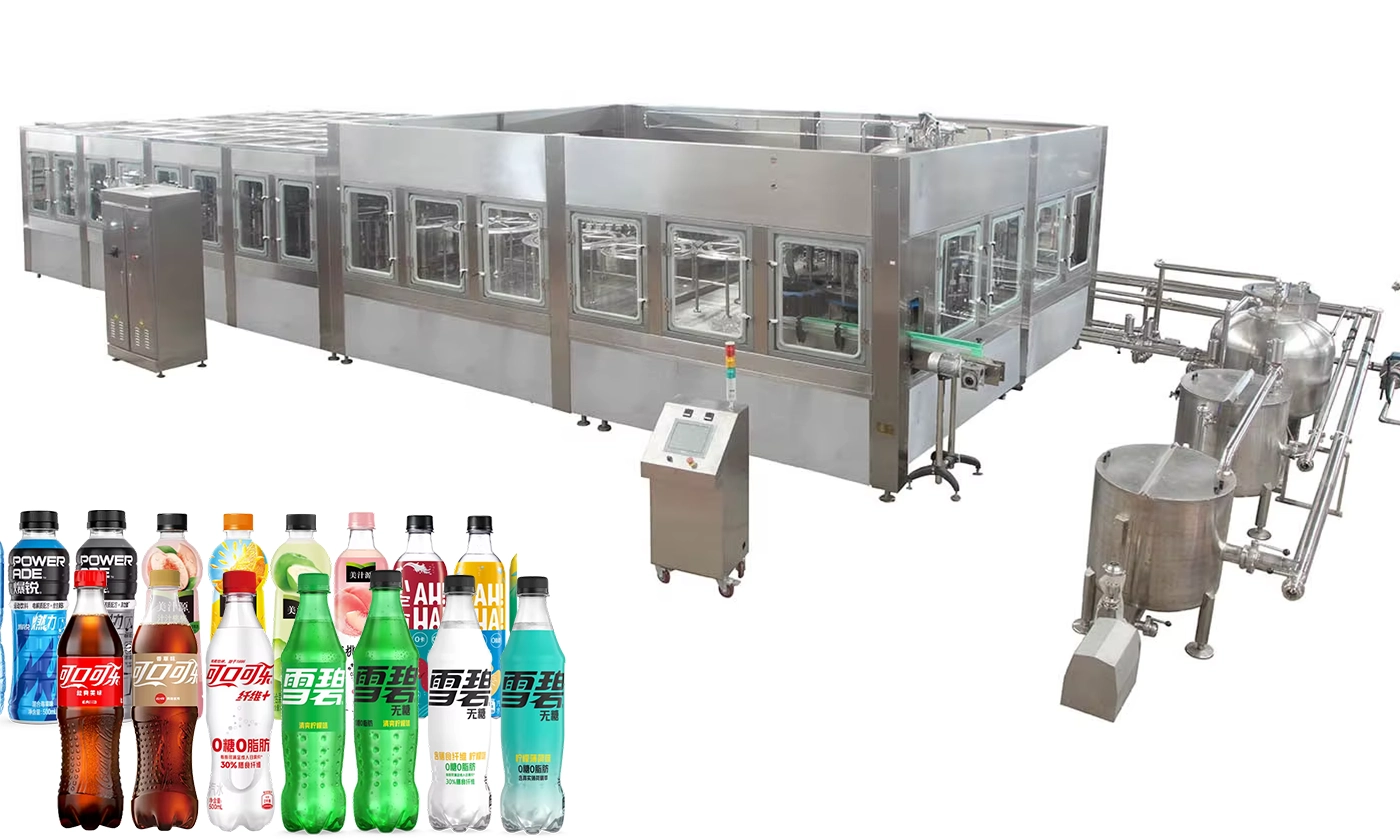
- Choose monoblock (integrated) for high output, mass single-product production and limited floor space.
- Choose split-type for multiple product types, small-batch production and limited budget.
1. Core Differences, Pros & Cons
Monoblock / Integrated Filling Machine
Advantages
✅ High speed & large output: Normally ≥2000 BPH, up to 36000 BPH; ideal for mass production.
✅ Small footprint: Integrated structure saves around 50% floor space, perfect for compact workshops.
✅ Superior hygiene & low contamination risk: Bottles stay in one closed unit with less external exposure.
✅ Centralized operation & maintenance: Controlled by one PLC with unified parameters, low failure rate and easy upkeep.
Disadvantages
❌ Slow format change & low flexibility: Customized for fixed bottle/cap types; time-consuming to adjust for new products, only suitable for long-run single products.
❌ High initial investment: Higher equipment cost, stricter requirements for water, electricity and foundation.
❌ Full line shutdown risk: One fault stops the whole production line, requiring higher backup cost.
Split-Type Filling Machine
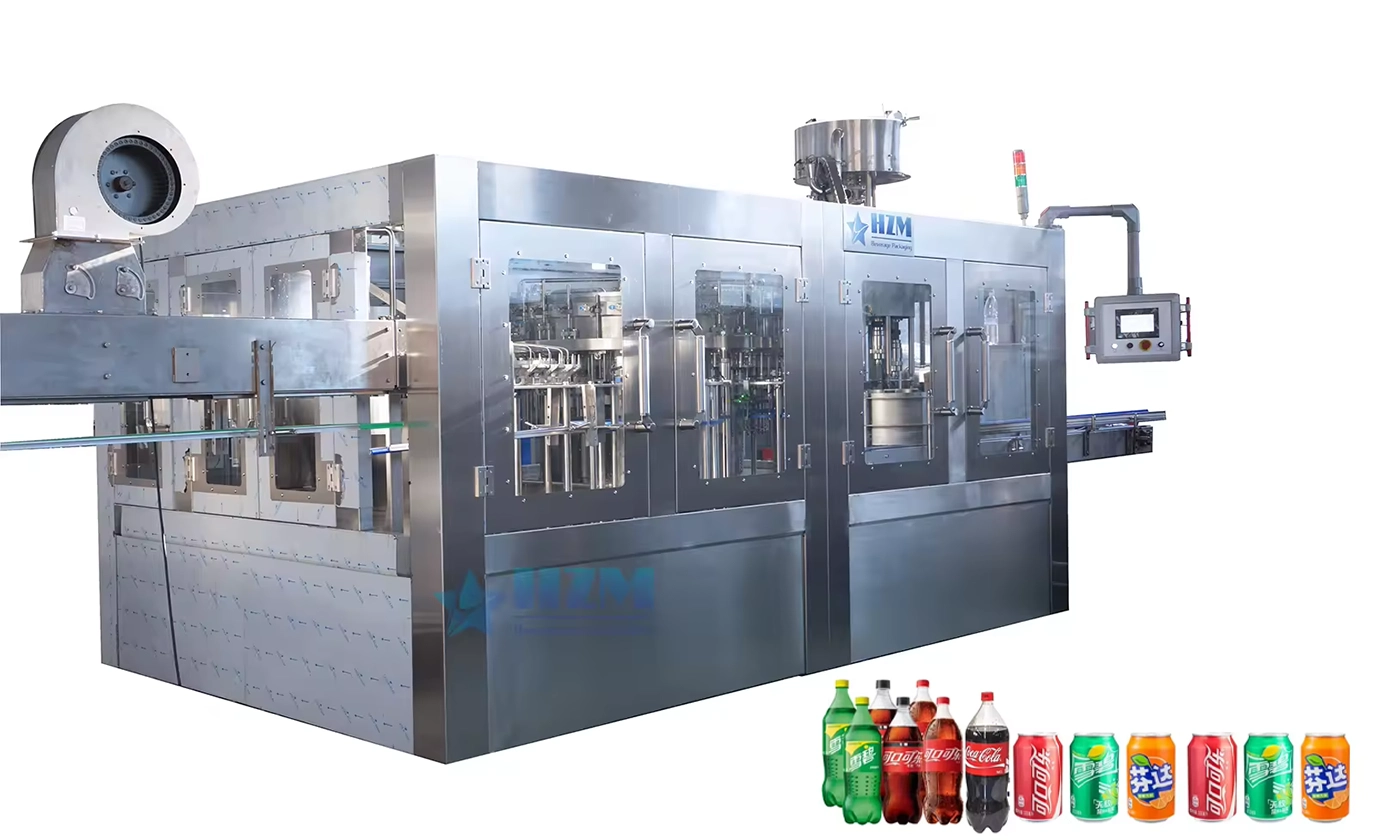
Advantages
✅ High flexibility & fast format change: Independent modules support quick switching of bottle types and products; great for multi-variety, small-batch production and trial runs.
✅ Low cost & low entry threshold: Lower equipment price; allows phased investment, suitable for startups and budget-limited users.
✅ Independent standalone operation: Fault on one machine won’t stop the whole line; manual connection is available as backup.
✅ Easy expansion & upgrade: Can add filling heads, labeling machines and other modules later as needed.
Disadvantages
❌ Low speed limit: Usually ≤2000 BPH, cannot match monoblock for high-speed production.
❌ Large floor space: Linear layout usually 12–15 meters long, low space utilization.
❌ Slightly higher hygiene risk: Bottles are transferred between separate machines with longer exposure time, requiring stricter cleanliness control.
❌ Decentralized operation & maintenance: Multiple machines need separate commissioning and daily maintenance, higher labor cost.
2. Comparison Table
| Comparison Item | Monoblock Filler | Split-Type Filling Machine |
|---|---|---|
| Production Capacity | 2000–36000 BPH | 500–2000 BPH |
| Floor Space | Small (Save ~50%) | Large (Linear 12–15m) |
| Format Flexibility | Low (Customized, slow change) | High (Modular, fast change) |
| Initial Investment | High | Low |
| Hygiene Level | High (Closed design, less exposure) | Medium (More transfer & exposure) |
| Maintenance | Centralized & easy | Decentralized & complex |
| Application Scenarios | Mass single-product, high output, limited space | Multi-variety small-batch, budget constraint, flexible production |
3. How to Choose
Choose Monoblock if you have:
- Output ≥2000 BPH, long-term production of a single product (e.g., bottled water, beverages).
- Limited factory floor space, need maximum space efficiency.
- Strict hygiene requirements for high-value products (e.g., pharmaceuticals, premium drinks).
Choose Split-Type if you have:
- Output <2000 BPH, frequent product/bottle type changes (e.g., daily chemicals, sauces, small-bottle drinks).
- Limited budget, prefer phased investment and lower risk.
- Long and narrow workshop suitable for linear layout; plan to expand production later.
4. Summary
Talk to our engineering team
Need help planning your packaging line?
Share your product, bottle and capacity requirements for a practical equipment recommendation.
Equipment
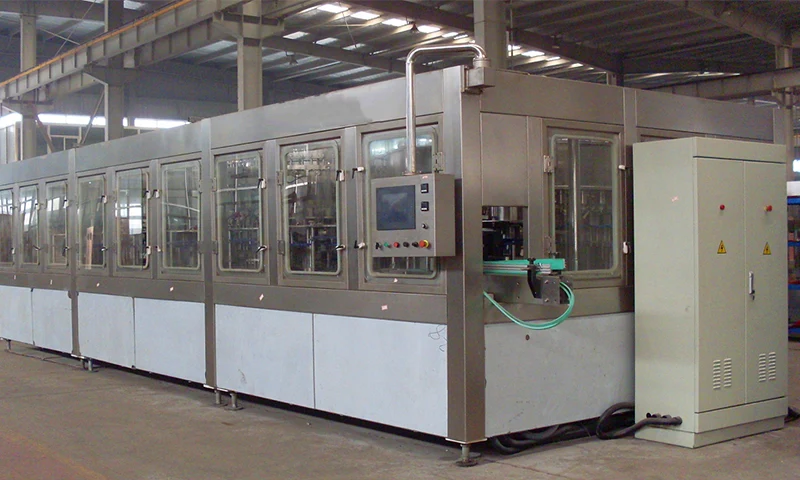
Mono-block Filling Machine 3 in 1
The monoblock filling machine brings bottle rinsing, filling and capping together in one continuous operation.
Learn more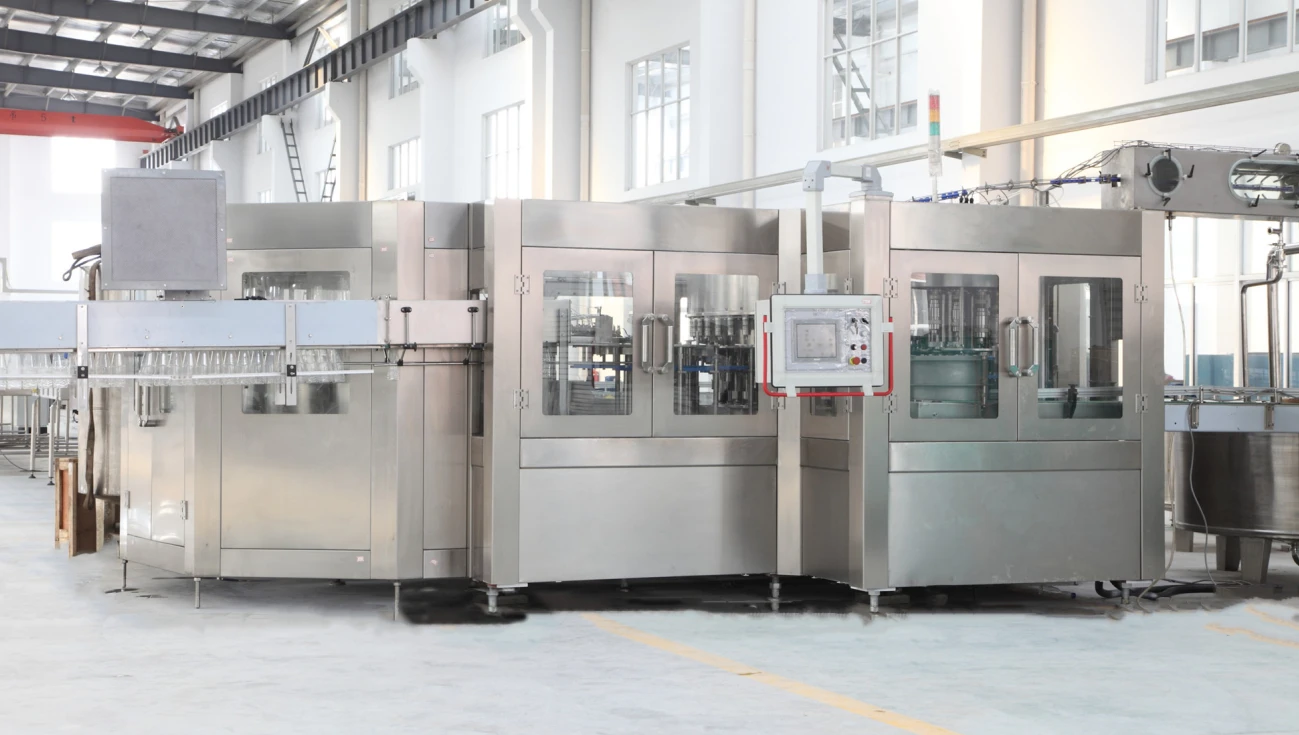
Equipment
3-in-1 PET Bottle Filling Machine , Mono-block filling machine
3-in-1 PET water bottle rinsing, filling and capping at 20,000 bottles/hour for 500 ml bottles with PCO3025 necks.
Learn more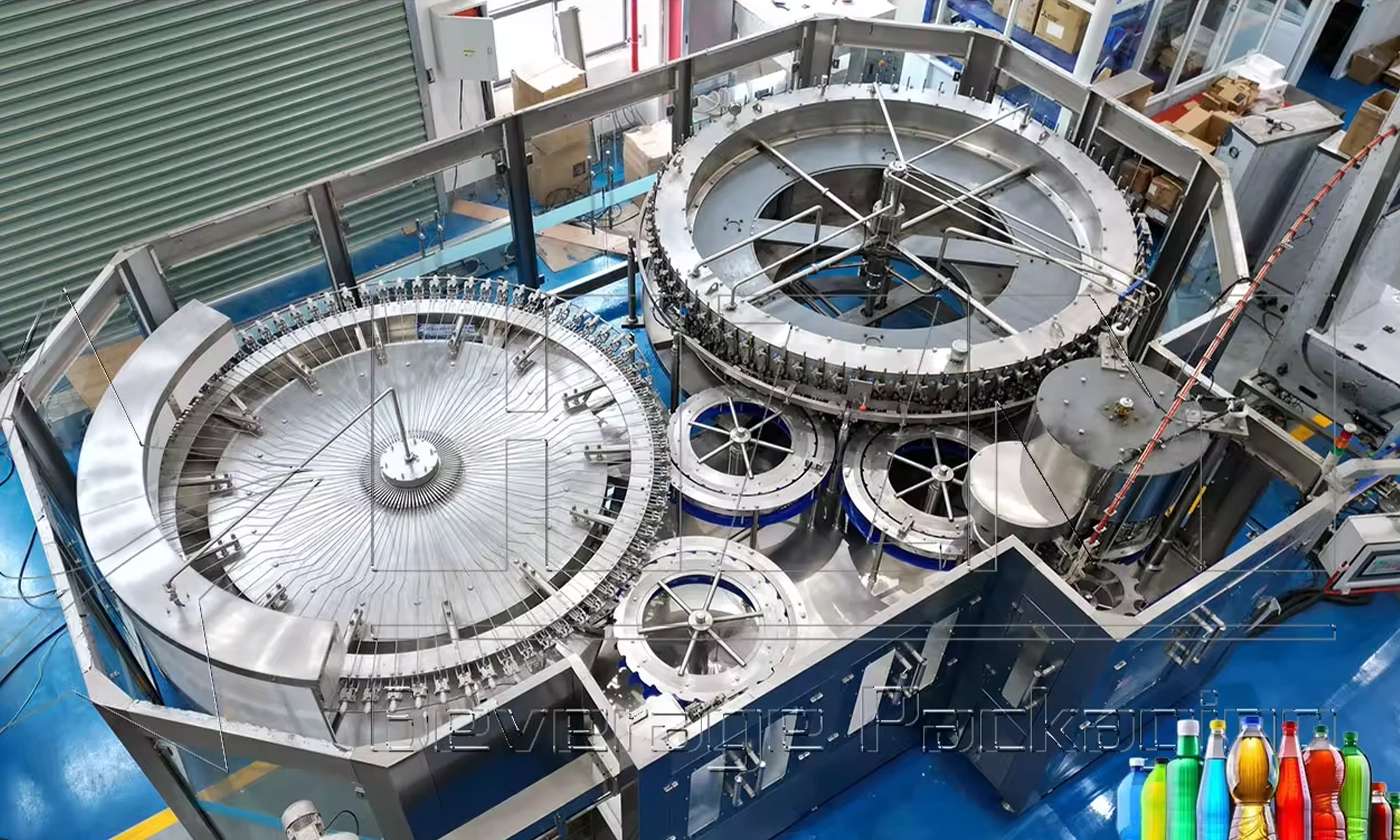
Equipment
3-in-1 Isobaric Mono-block Filling Machine
The 3-in-1 isobaric monoblock combines bottle rinsing, counter-pressure filling and capping for carbonated beverage production.
Learn moreEquipment
Mono-block Isobaric Filling Machine
DXGF40-40-10 rinsing, isobaric filling and capping for carbonated soft drinks, at 12,000–15,000 bottles/hour for 500 ml bottles.
Learn moreEquipment
Rinsing, Filling And Capping Monoblock Machines
HZM monoblock machines combine bottle rinsing, filling and capping in a continuous operation.
Learn more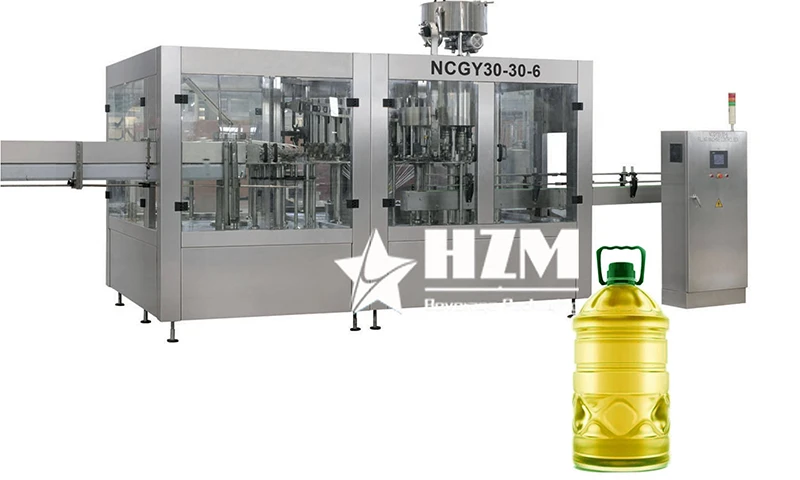
Equipment
2-in-1 Monoblock Edible Cooking Oil Filling and Capping Machine
The 2-in-1 monoblock fills and caps bottles of edible cooking oil in a continuous operation.
Learn more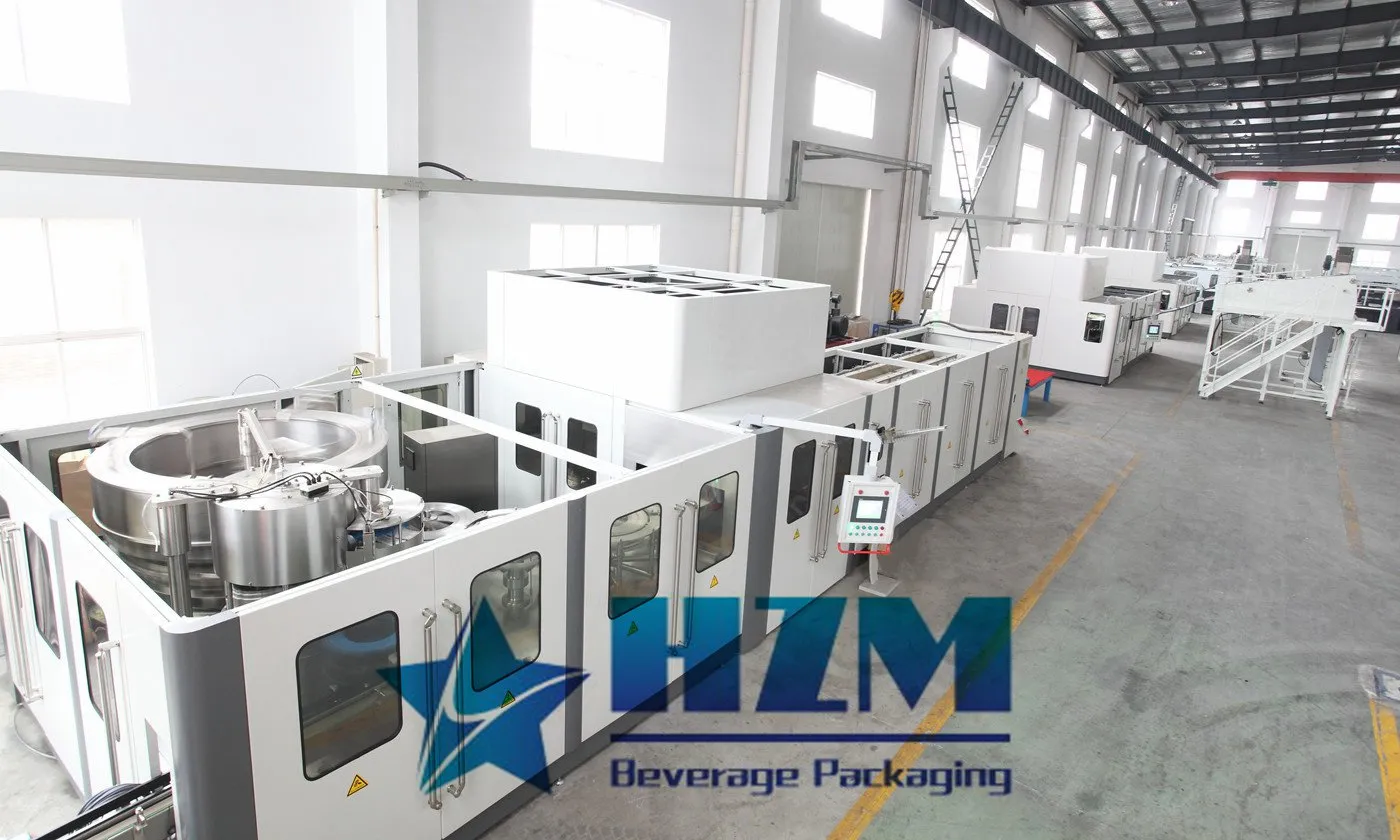
Equipment
Blowing Filling Capping Combiblock for Water and Beverage Packaging
PET bottle blowing, filling and capping in one combiblock for water and beverage production, from 12,000 to 48,000 bottles/hour at 500 ml.
Learn more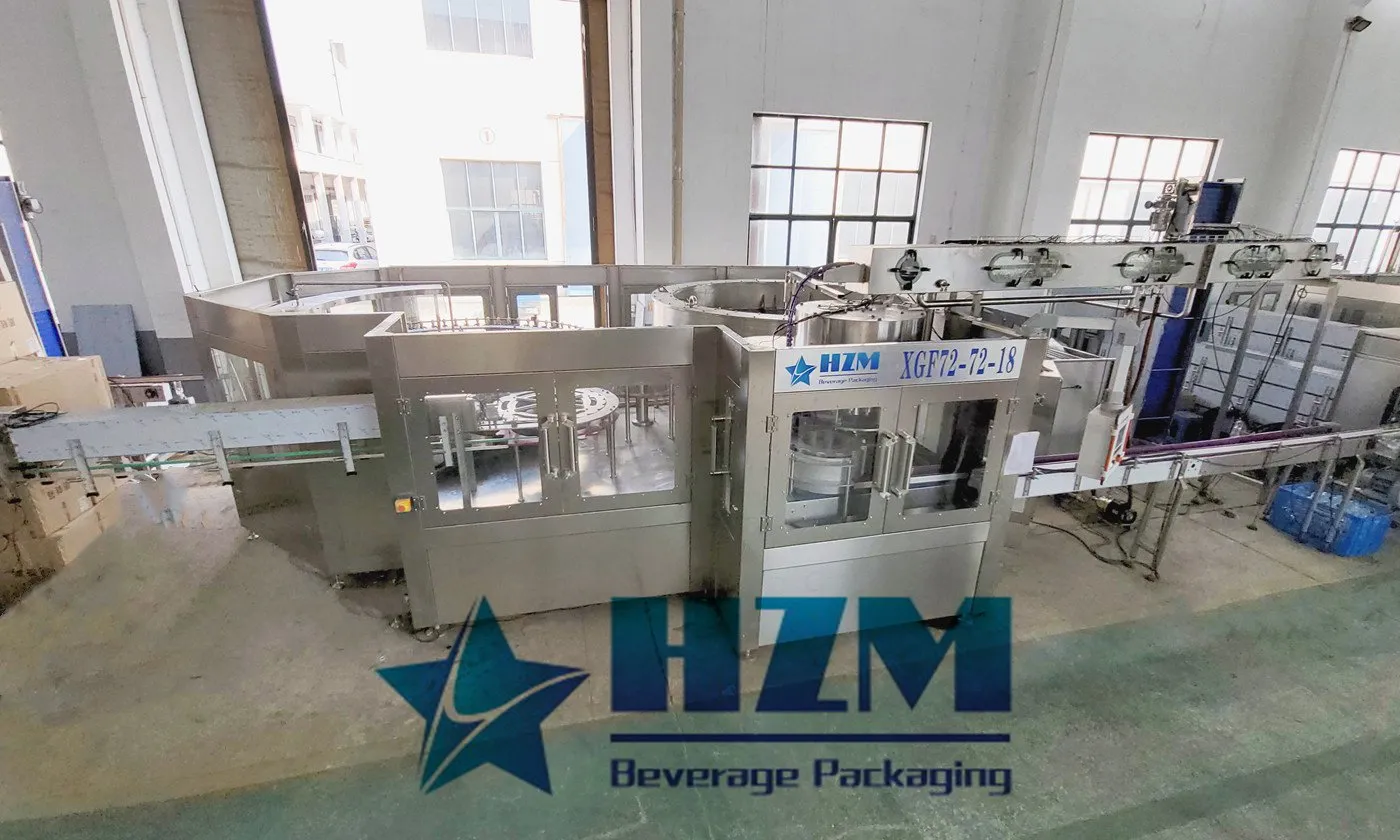
Equipment
Automatic Water Bottle Filling Machine
Automatic rinsing, filling and capping for purified and mineral water in PET bottles, with capacities of 5,000–42,000 bottles/hour at 500 ml.
Learn more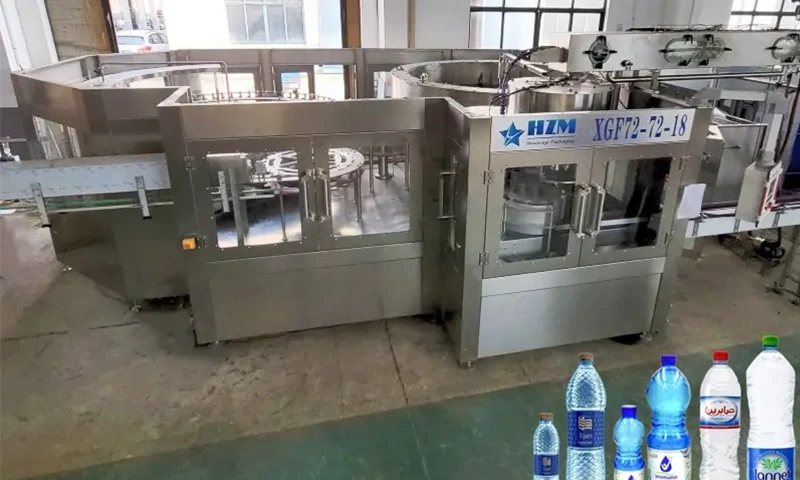
Equipment
3-In-1 Water Bottle Filling Machine
A 3-in-1 PET bottle rinsing, filling and capping machine for drinking water, from 5,000 to 18,000 bottles/hour at 500 ml.
Learn more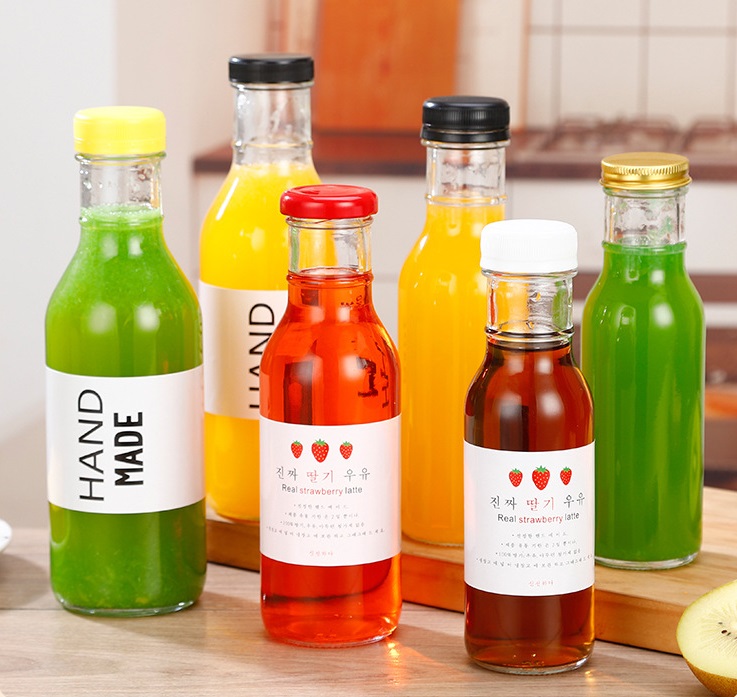
2024-05-10
Beverage Packaging: Which Is Better, PET Bottles or Glass Bottles?
In the beverage industry, selecting the right packaging material is a crucial step in ensuring product quality and consumer experience.
Learn more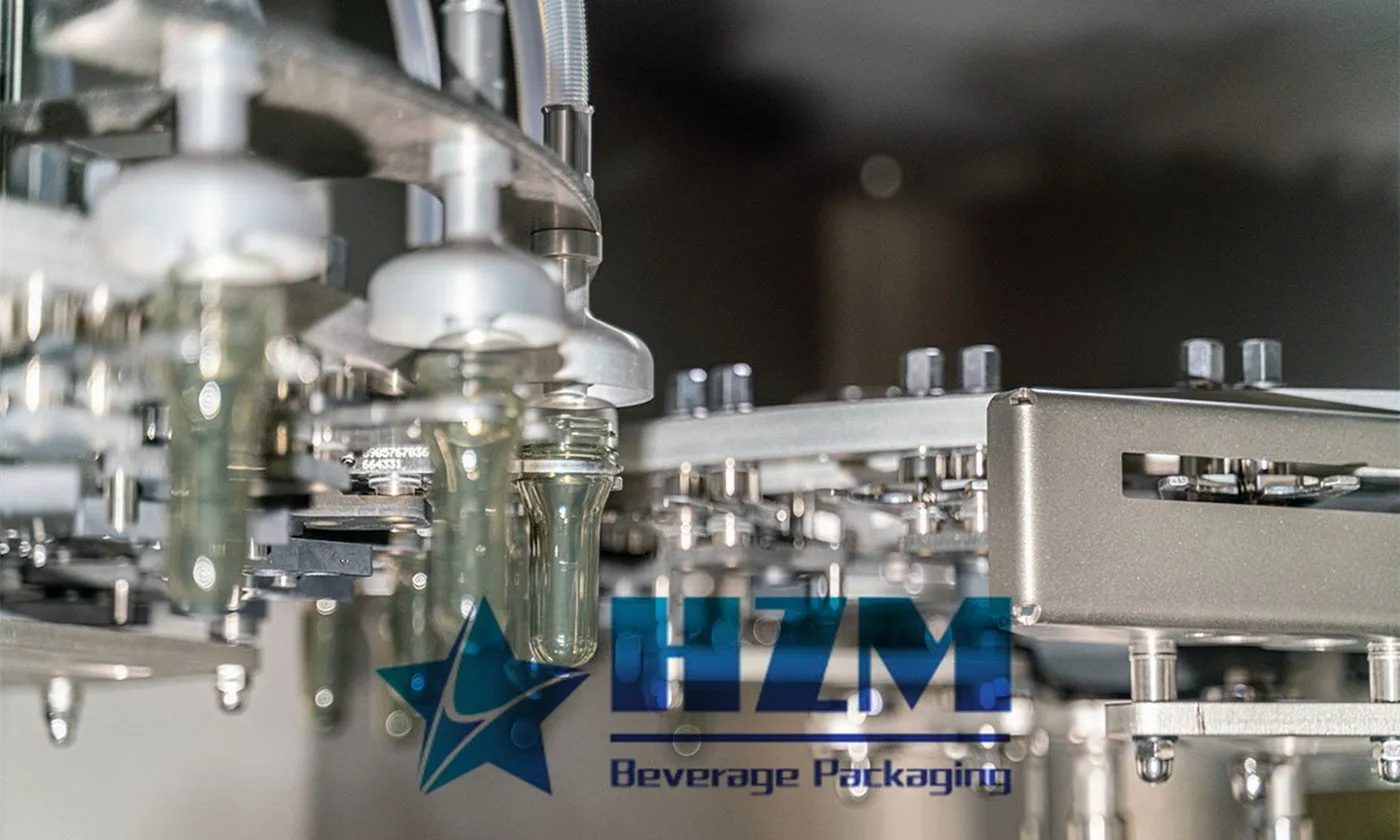
2023-05-13
Automatic Combiblock Machine: Features, Applications, and Maintenance
The Automatic Combiblock Machine is a high-speed packaging machine that combines the functions of a filler, capper, and labeler in a single unit. It is a versatile machine used for filling and packaging different types of products, such as water, soft drinks, juices, and dairy products. In this article, we will discuss the features, applications, and maintenance of the Automatic Combiblock Machine.
Learn more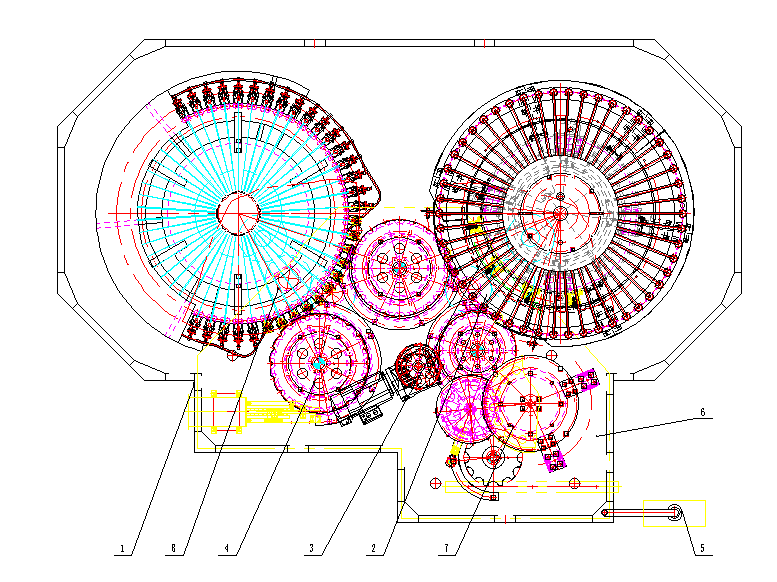
2025-02-05
How a 3-in-1 Isobaric Filling Machine Works: Rinsing, Filling and Capping
Understand the operating sequence of a 3-in-1 isobaric filling machine for carbonated beverages, the critical pressure and temperature controls, and common causes of foam, underfill and cap defects.
Learn more2024-09-04
Mono-block vs. Separate Filling Machines: Key Differences and Selection Guide
Mono-block filling machines and separate filling machines are two common types of filling equipment, differing in design, degree of functional integration, and usage scenarios.
Learn more
2023-09-26
What Is a Fully Automatic Blow Molding, Filling, and Capping Integrated Machine?
A fully automatic blow molding, filling, and capping integrated machine is a highly automated apparatus that combines several critical functions. Its primary tasks include blow molding plastic bottles, filling them with liquid products, and then capping and sealing the bottles.
Learn more2023-06-09
Three Rinsing Filling Capping 5 in 1 Monoblock Machine
High quality Three Rinsing Filling Capping 5 in 1 Monoblock Machine from China, China's leading spout pouch filling and capping machine product, with strict quality control Spout Pouch Filling Capping Machine factories, producing high quality 1500bph Pouch Filling And Capping Machine products.
Learn more