
Insights & Updates
Why Use 304 Stainless Steel in Filling Machines?
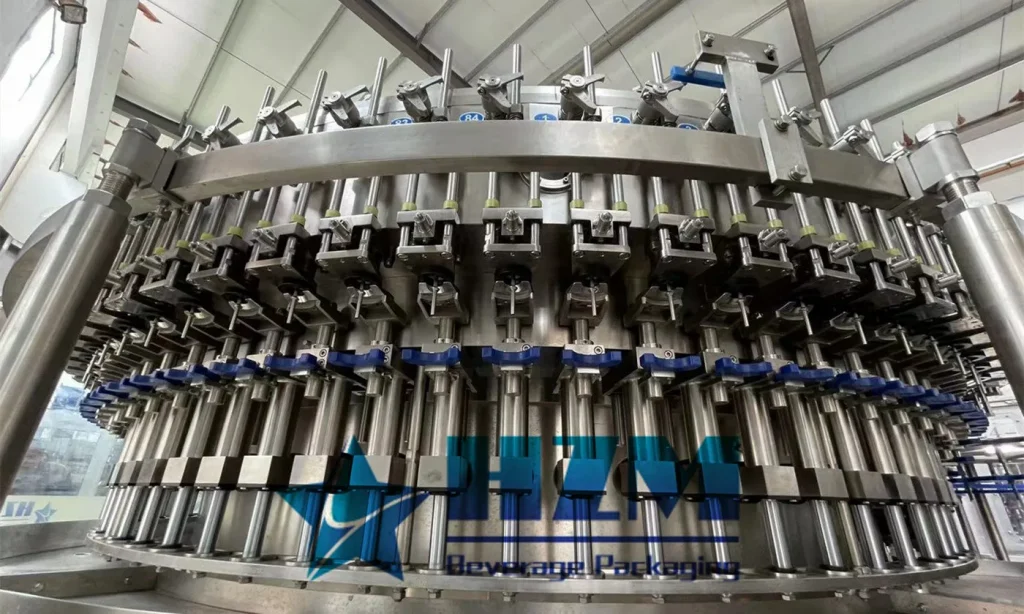
Filling machines are highly efficient mechanical devices widely utilized in industries such as food, beverages, and cosmetics. They offer advantages such as precise filling, high production efficiency, and user-friendly operation. Stainless steel materials are commonly employed in the production of filling machines, with 304 stainless steel being extensively used in their construction. So, why is 304 stainless steel chosen for filling machines?
Characteristics of 304 Stainless Steel 304 stainless steel boasts exceptional corrosion resistance, high-temperature strength, and excellent ductility. Comprising 18% chromium and 8% nickel, with trace amounts of carbon and manganese, it exhibits robust resistance to corrosion, high temperatures, and wear. This makes it an ideal choice for constructing filling machines.
Advantages of 304 Stainless Steel
- Strong Corrosion Resistance: 304 stainless steel excels in corrosion resistance, fending off erosion from most acidic and alkaline mediums, resisting rust, and extending the lifespan of filling machines.
- Outstanding Ductility: 304 stainless steel is easily pliable, allowing for straightforward processes like forming, welding, and cutting, suitable for creating filling machines of various shapes.
- Excellent High-Temperature Endurance: 304 stainless steel can withstand high-temperature environments without deformation or thermal cracking, ensuring the long-term stability of filling machine operation.
- Ease of Cleaning: The smooth surface of 304 stainless steel prevents dirt buildup, facilitating easy cleaning and meeting hygiene requirements, ensuring the sanitation and safety of filling machine products.
Conclusion In summary, using 304 stainless steel in the manufacturing of filling machines offers strong corrosion resistance, remarkable ductility, excellent high-temperature endurance, and ease of cleaning. This guarantees the smooth operation of filling machines and the hygiene safety of products. Therefore, opting for 304 stainless steel in the fabrication of filling machines is a prudent choice.
Talk to our engineering team
Need help planning your packaging line?
Share your product, bottle and capacity requirements for a practical equipment recommendation.
2023-12-03
Why Liquid Filling Machines Choose 304 Stainless Steel?
Liquid filling machines are essential mechanical devices in industries such as food, beverages, and cosmetics, known for their high filling precision, efficiency, and user-friendly operation. In the manufacturing process of these machines, stainless steel is commonly used, with 304 stainless steel being widely applied. So, why is 304 stainless steel the preferred choice for liquid filling machines?
Learn more2023-06-09
316 Stainless Steel 48000bph Beverage Can Filling Machine
High quality 316 Stainless Steel 48000bph Beverage Can Filling Machine from China, China's leading 48000 bph Beverage Can Filling Machine product, with strict quality control 1500ml Beverage Can Filling Machine factories, producing high quality 48000bph can filling production line products.
Learn more2023-06-09
Stainless Steel Glass Bottle 25TPH Beverage Processing System
High quality Stainless Steel Glass Bottle 25TPH Beverage Processing System from China, China's leading 25 TPH Beverage Processing System product, with strict quality control 3 TPH Beverage Processing System factories, producing high quality 25 TPH Glass Bottle Processing System products.
Learn more2023-06-09
Stainless Steel 36000bph Automatic Dry Filling Machine
High quality Stainless Steel 36000bph Automatic Dry Filling Machine from China, China's leading 36000 bph Automatic Dry Filling Machine product, with strict quality control 36000 bph Auto Dry Filling Machine factories, producing high quality 36000 bph Dry bottle Filling Machine products.
Learn more2023-06-09
Stainless Steel 20000 BPH PET Bottled Water Filling Machines
High quality Stainless Steel 20000 BPH PET Bottled Water Filling Machines from China, China's leading 20000bpm PET Bottled Water Filling Machines product, with strict quality control 20000bpm Bottled Water Filling Machines factories, producing high quality 20000bpm PET Bottle Water Filling Machines products.
Learn more2023-06-09
Stainless Steel Labeller 3Mpa Automatic Labeling Machine
High quality Stainless Steel Labeller 3Mpa Automatic Labeling Machine from China, China's leading 3Mpa Automatic Labeling Machine product, with strict quality control 3Mpa Stainless Steel Labeller factories, producing high quality SS304 Automatic Labeling Machine products.
Learn more